Blog

  • The ‘Alexa Cart Whisper’ Hack: How Voice-Only Promos Quietly Beat Prime Day Prices At Checkout

    The ‘Alexa Cart Whisper’ Hack: How Voice-Only Promos Quietly Beat Prime Day Prices At Checkout

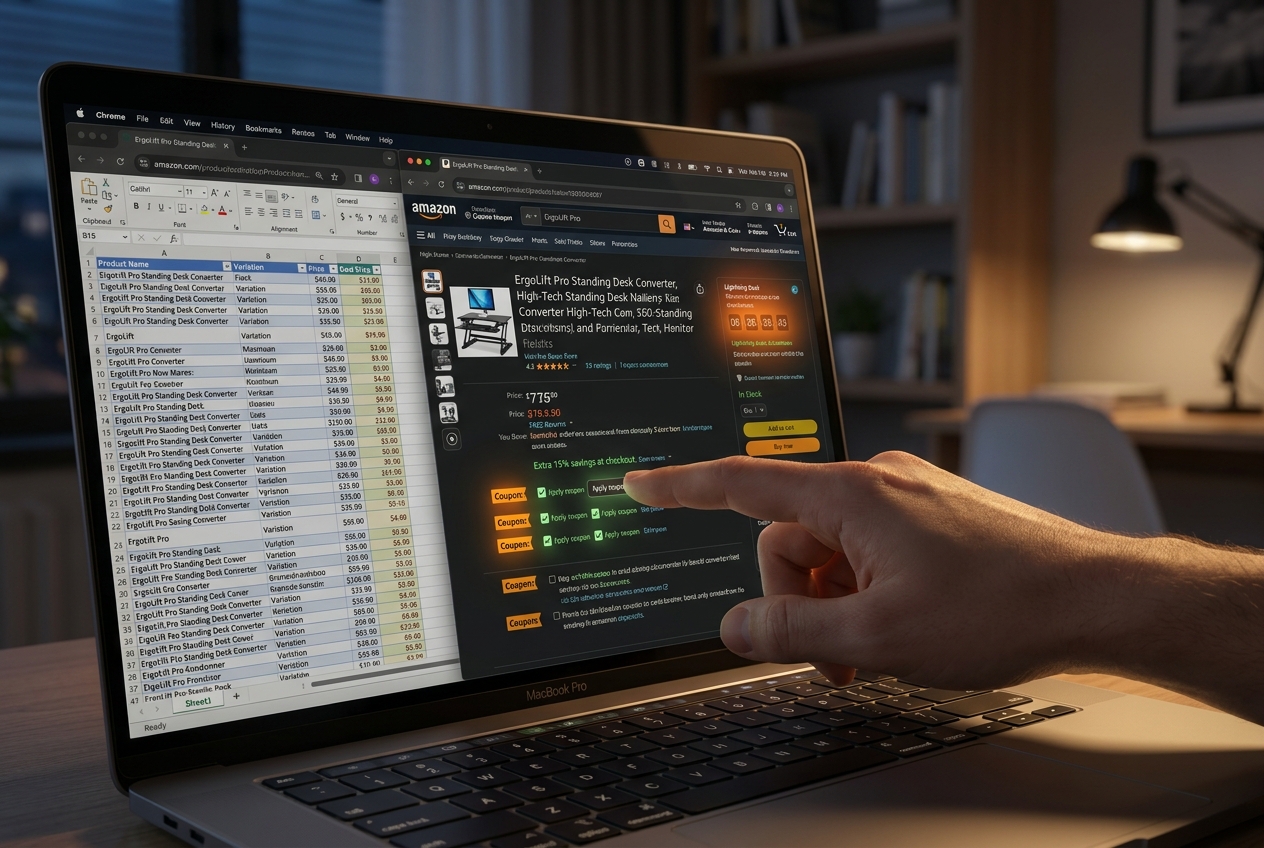
    You are not imagining it. Prime Day can feel rigged once the obvious deals are gone. You load up your cart, click every public coupon, refresh the page like a maniac, and somehow the total barely budges. Meanwhile, the best blog promo codes are already expired, the Lightning Deals vanish in minutes, and the front page keeps pushing the same noisy discounts everyone else is chasing. The twist this year is that some of the better cuts are not on the product page at all. They are showing up through Alexa and voice shopping, often as targeted extras that only appear after you add an item by voice or during a narrow time window. That is the hidden Alexa Amazon promo code hack Prime Day 2026 shoppers should know about. It is less a magic trick and more a smart way to test for quiet discounts, bonus credits, and checkout surprises that regular browsing never shows you.

    ⚡ In a Hurry? Key Takeaways

    • Some Prime Day 2026 discounts only trigger through Alexa or voice-added items, and they may not appear on the product page first.
    • Use a small test order, ask Alexa to add the item, then compare the cart and final checkout screen against the normal app or website price.
    • Do not buy blindly. Confirm the subtotal, promo line, cashback, or gift card credit before you place the order.

    What this Alexa cart trick actually is

    This is not a pirate coupon code and it is not some shady browser extension stunt. It is Amazon doing what Amazon loves to do. Testing offers on small groups of shoppers without making a big public announcement.

    Sometimes that means a voice-only deal. Sometimes it means a targeted credit if an item is added through Alexa. Sometimes it is a bonus gift card tied to a Haul order or a delayed cashback that only shows up in the fine print.

    The key point is simple. The discount may not be visible where most people look first. Not on the search result. Not on the product page. Not on the Lightning Deal tile. It may only show itself after the item is added by voice, or only for eligible accounts, or only during a certain block of hours.

    Why most people miss it

    Most shoppers treat Alexa like a timer with a weather report. They do not use it to shop. Even if they do, they assume voice deals are old news or generic upsells.

    That is why these offers can slip by unnoticed. The public deals get all the attention. The quiet tests get the real bargain hunters.

    And during a big event like Prime Day 2026, Amazon has every reason to hide some of the better incentives in less crowded places. If everyone saw the same extra 15 percent off at once, stock would disappear even faster.

    How to check for hidden Alexa discounts without wasting money

    1. Start with one item, not a giant cart

    Pick one product you already planned to buy. Ideally, choose something sold by Amazon, in stock, and not loaded with third-party seller weirdness.

    Avoid testing with ten items at once. If a promo appears, you want to know which item triggered it.

    2. Use the Alexa app or an Echo device

    Open the Alexa app and make sure your Amazon account is linked correctly. Then try a plain request like:

    “Alexa, add [product name] to my cart.”

    Or:

    “Alexa, buy [product name] from Amazon.”

    I prefer adding to cart first. It gives you one more chance to inspect the order before money leaves your account.

    3. Compare the voice-added cart to the regular cart

    This is the part that matters. Add the same item the normal way in the Amazon app or website. Then compare.

    Look for:

    • A lower item price after refresh
    • An extra coupon line at checkout
    • A note about a future credit or cashback
    • A bundled gift card offer
    • A message that appears only in one cart view

    Sometimes the deal shows up immediately. Sometimes it appears only on the final review screen.

    4. Check the fine print before tapping “Place order”

    This is where a lot of people get burned. The offer might be real, but smaller than expected. Or it could be delayed, like “$10 promotional credit applied to a future eligible order.”

    That is still useful, but it is not the same as instant savings.

    Read every line around the total. If you see a promo, screenshot it. That gives you proof in case the credit does not land later.

    The best places to hunt for these offers

    Prime Day pages are not enough

    The homepage is mostly noise. Great for seeing what Amazon wants to push. Not great for finding hidden triggers.

    Better hunting spots include:

    • Your Alexa app shopping activity
    • Cart and checkout pages after a voice add
    • Amazon Haul promo banners and order summaries
    • Reddit deal communities and active forum threads where people report live triggers
    • Your email inbox for targeted Amazon offer messages

    Look for “credit later” deals too

    Not every win is an instant lower price. Some shoppers are seeing bonus credits, gift card kickbacks, or cashback offers that post after shipment. Those can still beat the public Prime Day price, especially if the headline sale is weak.

    If the item is something you were going to buy anyway, a later credit can be worth taking.

    A simple rinse-and-repeat method that works

    If you want to turn this into a system instead of a lucky guess, do this:

    1. Make a shortlist of 5 to 10 items you actually want.
    2. Check the current regular Prime Day price.
    3. Add one item by voice.
    4. Inspect the cart and final checkout screen.
    5. Take screenshots of any promo line or future credit.
    6. Remove the item if there is no extra value.
    7. Repeat at different times of day.

    That last part matters more than people think. Reports from deal hunters suggest some of these incentives are time-sensitive. An item that shows no bonus at noon may trigger one in the evening.

    What “voice-only” can mean in real life

    Amazon does not always label these offers in a clean, obvious way. “Voice-only” can mean a few different things:

    • The item must be added by Alexa to qualify
    • The offer appears only to accounts with an Alexa device linked
    • The discount is attached to a voice shopping promotion running during certain hours
    • The reward is not a price cut, but a later credit after a voice-initiated order

    So if you test once and see nothing, that does not prove the trick is fake. It may just mean your account, item, or timing did not match the offer.

    Watch out for these common mistakes

    Buying from the wrong seller

    If the deal chatter is about an item sold by Amazon and you buy from a marketplace seller, the promo may not trigger.

    Forgetting to verify Prime eligibility

    Some hidden offers still require Prime, even if they are not listed as standard Prime Day deals.

    Confusing a coupon with a delayed credit

    A lower checkout total and a future promo credit are not the same thing. Both can be good. Just know which one you are getting.

    Testing with expensive items first

    Do not start your experiment with a $900 TV. Use a small item to learn how your account behaves, then move up.

    Is this safe and legit?

    Yes, as long as you are simply using Amazon’s own app, site, and Alexa features. You are not hacking Amazon. You are checking whether your account qualifies for incentives Amazon is quietly testing.

    The only real risk is buying too fast because the word “secret” makes people sloppy.

    Slow down. Confirm the math. Screenshot the offer. Then decide.

    Who should bother with this?

    This trick is worth your time if:

    • You already own an Echo device or use the Alexa app
    • You are shopping Prime Day after the obvious doorbusters are picked over
    • You do not mind doing a little comparison work
    • You want actual checkout savings, not just flashy list prices

    If you hate tinkering, this may feel annoying. But if you are the type who checks CamelCamelCamel graphs, clips coupons, and waits for one more stackable discount, this is right in your lane.

    At a Glance: Comparison

    Feature/Aspect Details Verdict
    Public Prime Day deals Easy to find, but heavily trafficked and often sold out fast. Good first stop, not always the best final price.
    Alexa or voice-added offers Can reveal hidden discounts, credits, or gift card bonuses not shown upfront. Best for patient shoppers willing to test and compare.
    Safety and reliability Legit if you stay inside Amazon and verify every promo line before ordering. Safe, but only if you check the details instead of rushing.

    Conclusion

    Prime Day 2026 is loud on the surface and strangely quiet where some of the better experiments are happening. Amazon is filling the homepage with obvious deals while also testing Alexa and voice-only incentives that can slip extra value into your cart without much warning. That can mean limited-time cashback, bonus gift card offers on Haul purchases, or percentage cuts that only trigger when an item is added by voice at the right moment. Most people will never see those because they are still stuck refreshing dead public promo links. You do not need inside access to do better. You just need a calmer system. Test one item at a time, compare the voice-added cart to the normal cart, check the final checkout page carefully, and keep screenshots when a credit appears. Do that, and Prime Day stops feeling like chaos and starts feeling like a controlled bargain hunt where the hidden Alexa Amazon promo code hack Prime Day 2026 angle can actually pay off.
  • The ‘Social Feed Code Drop’ Hack: How Viral Shorts Hide Real Amazon Promo-Size Discounts

    The ‘Social Feed Code Drop’ Hack: How Viral Shorts Hide Real Amazon Promo-Size Discounts

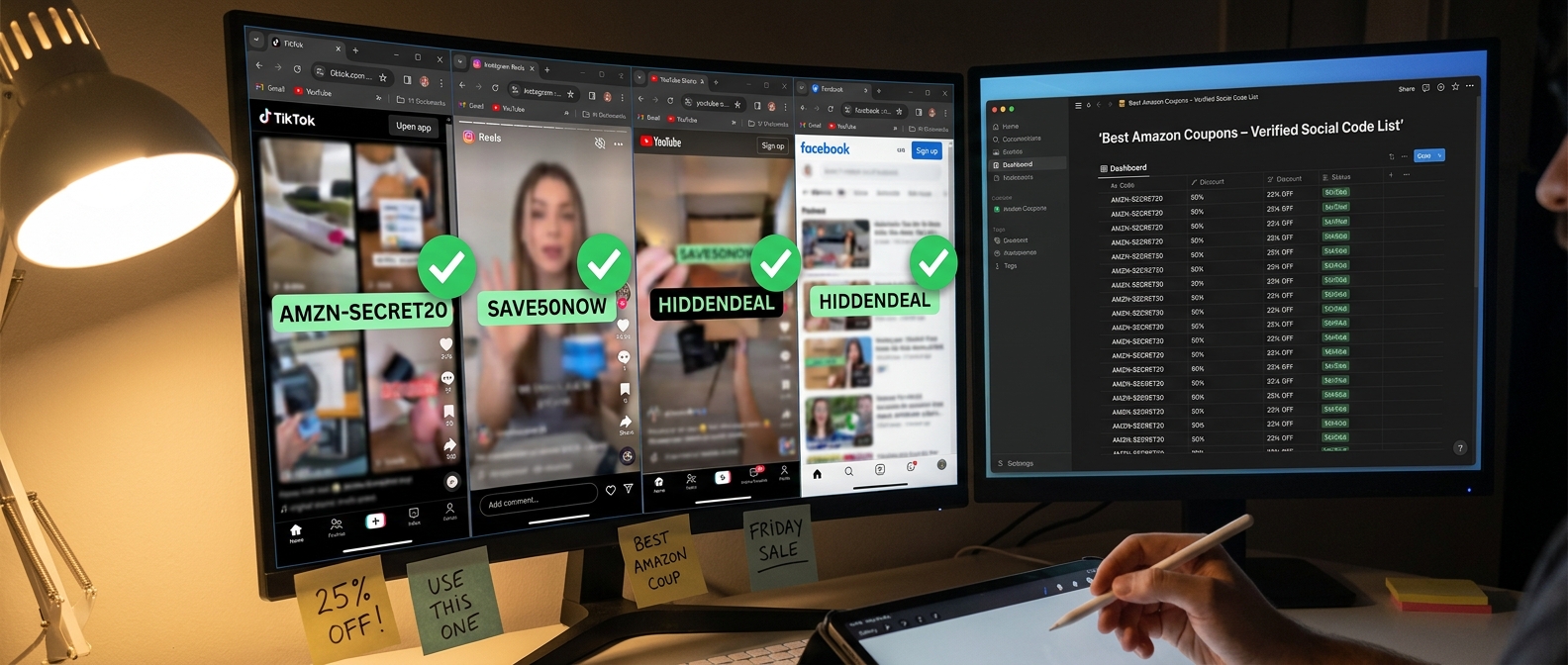
    You have probably done this already. You spot a TikTok or Instagram Reel promising a “hidden Amazon code,” pause three times to read the tiny text, tap the link, add the item to your cart, paste the code, and get… nothing. Invalid. Expired. Not available in your region. Or worse, the post was really just fishing for affiliate clicks. It is annoying, and it wastes way more time than the so-called deal is worth. The frustrating part is that some of these clips do share real discounts. They just get buried under junk. The trick is not to trust the video. Trust a process. If you know how to pull the code from the caption or pinned comment, test it quickly, spot category locks, and save only the codes that survive checkout, you can turn all that scrolling into actual savings instead of a full-price Amazon order and a bad mood.

    ⚡ In a Hurry? Key Takeaways

    • Most amazon secret promo codes from tiktok and instagram are either expired, limited, or tied to specific products, so always verify them at checkout before you get excited.
    • Pull the code from the caption, pinned comment, or creator bio link, then test it on a few related listings to find the exact item family it works on.
    • Skip fake “code generator” sites and save only verified winners in a trusted coupon hub like Best Amazon Coupons for faster repeat use.

    Why these viral code videos are so hit-or-miss

    Short-form social posts move fast. That is the good news and the bad news.

    A creator may post a real code the minute they get it from a brand. For a few hours, it works. Then the coupon hits its redemption cap, the brand edits the landing page, or Amazon limits it to one color, one seller, or first-time buyers only. But the video keeps spreading long after the deal is half-dead.

    That is why people searching for amazon secret promo codes from tiktok and instagram often feel like they are always one step late. The code might have been real. It just was not real anymore by the time you saw it.

    The “Social Feed Code Drop” method that actually saves time

    Instead of treating every Reel or TikTok like a treasure map, use a simple filter system.

    Step 1. Ignore the hype and find the actual code source

    Do not rely on the text flashing inside the video. It is often blurry, cropped, or missing a character.

    Check these in order:

    • The video caption
    • The pinned comment
    • The creator’s bio link or link page
    • A follow-up comment where viewers report success or failure

    If the creator says “comment DEAL and I’ll DM you,” be careful. Sometimes that is just engagement bait. A good code post usually gives you the code or a direct product link without a lot of games.

    Step 2. Copy the code exactly once

    Promo codes fail for dumb reasons all the time. A zero looks like the letter O. A one looks like a capital I. Some codes are case-sensitive. Copy and paste if you can. If you must type it manually, double-check every character before assuming the deal is fake.

    Step 3. Test the code on the product page first

    Before heading to checkout, look for clues on the listing itself:

    • An on-page coupon box you can tick
    • A banner showing a percentage-off promotion
    • A note that says “applied at checkout”
    • A specific seller name, since codes often work only with one seller

    If none of that appears, the code may still work, but your odds go down.

    Step 4. Try nearby product variations

    This is the part most shoppers skip.

    A social post might show one water bottle, phone stand, or storage bin, but the code may actually apply only to a certain size, color, pack count, or bundled version. If the code fails on the main product, test a few related listings from the same brand or seller.

    Think of it like checking the whole shelf, not just the one item at eye level.

    What “hidden rules” usually kill the deal

    Most failed code attempts come down to restrictions the video never mentioned.

    First-time purchase locks

    Some Amazon promos only work if you have never bought from that brand before. If you ordered from them six months ago, the code can silently stop working for you.

    Category or family locks

    A code may work on one branch of a product line, like kitchen organizers, but not on the same brand’s bathroom organizers.

    Seller locks

    Amazon often has multiple sellers on one listing. If the code was created for Seller A and your cart defaults to Seller B, it will fail even though the product page looks identical.

    Regional limits

    A lot of viral posts spread across countries. A code made for Amazon US may not work in Canada, the UK, or another local storefront.

    Redemption caps

    This is the big one. Many social-first promo drops are limited to the first few hundred or first few thousand uses. Once that cap is hit, the code is basically a ghost.

    How to verify a viral code in under three minutes

    If you want a practical routine, use this:

    1. Open the video.
    2. Pull the code from the caption or pinned comment.
    3. Open the exact product link, not just a search result.
    4. Clip any on-page coupon first.
    5. Add one item to cart.
    6. Paste the promo code at checkout.
    7. If it fails, try one or two close variations from the same brand or seller.
    8. Note any rules you discover, like new-customer only or one color only.

    If it still does not work after that, move on. The mistake is spending 20 minutes trying to revive a dead coupon.

    How to spot affiliate bait before you waste your evening

    Not every creator is being shady, but some clear warning signs pop up again and again.

    • The code is visible for half a second and never written anywhere else
    • The link leads through multiple redirect pages
    • The caption is vague, like “works on everything”
    • Comments are full of “doesn’t work” and the creator never responds
    • The post pushes a mysterious external coupon site instead of Amazon

    If a post sends you away from Amazon to a random “generator” or “unlock page,” close it. Real Amazon promotions do not need a secret decoding tool.

    Build your own tiny verification system

    You do not need a spreadsheet obsession to stay organized, but a small system helps.

    Keep four quick notes

    • Code
    • Product or brand
    • Discount amount
    • Rules or limits you noticed

    That way, when a code works, you do not have to go hunting for it again. You can also tell whether it worked because of a clipped coupon, a promo code, or both stacked together.

    Save only the survivors

    The smartest move is to park verified deals in one trusted place. If you already use a reliable coupon hub like Best Amazon Coupons, save the code there only after you confirm it works. That gives you a cleaner, reusable shortlist instead of a social feed full of maybe-deals.

    Why social video still matters for deal hunters

    For all the frustration, TikTok and Instagram are still where some of the freshest deals show up first. Brands seed offers there because creators can move inventory fast. That means shoppers willing to verify quickly can sometimes catch a discount hours before bigger deal sites or tech blogs notice it.

    So no, the social feed is not useless. It is just noisy.

    The win comes from treating it like a lead, not the final answer.

    At a Glance: Comparison

    Feature/Aspect Details Verdict
    Video-only code claim Code appears briefly on-screen, with no caption or pinned comment backup. Low trust. Usually not worth the effort.
    Caption or pinned-comment code Easy to copy, easier to verify, often includes product link or rules. Best starting point.
    Verified code saved in trusted hub Tested at checkout, with notes on seller, category, and limits. Most reliable and best for repeat savings.

    Conclusion

    The best part of this approach is that it gives you a filter, not just hope. Right now, short-form viral clips are where a lot of fresh Amazon promo codes and stacking tricks appear first, often hours before they hit bigger deal roundups, but almost nobody has a system for catching the real ones without burning half an evening doomscrolling. If you pull the code from the description or pinned comment, test it across a few related items, watch for hidden rules like first-time-buyer or category locks, and save only the working deals in a trusted place like Best Amazon Coupons, you give yourself a real edge on today-only and limited-redemption drops. Better yet, you stop feeding fake generator sites and sketchy coupon pages. You turn the social content you are already watching into a steady stream of verified checkout savings. That is a much better deal than replaying the same blurry Reel five times and still paying full price.

  • The ‘Real‑Time Code Scanner’ Hack: How To Turn Sketchy Amazon Promo Sites Into Verified Checkout Savings

    The ‘Real‑Time Code Scanner’ Hack: How To Turn Sketchy Amazon Promo Sites Into Verified Checkout Savings

    You find a promising Amazon deal, open six coupon tabs, copy three codes, fight through pop-ups, get to checkout, and see the same message again. “This promotion cannot be applied.” That is the moment most people give up and just pay full price. Fair enough. Coupon hunting has started to feel like a part-time job with terrible pay.

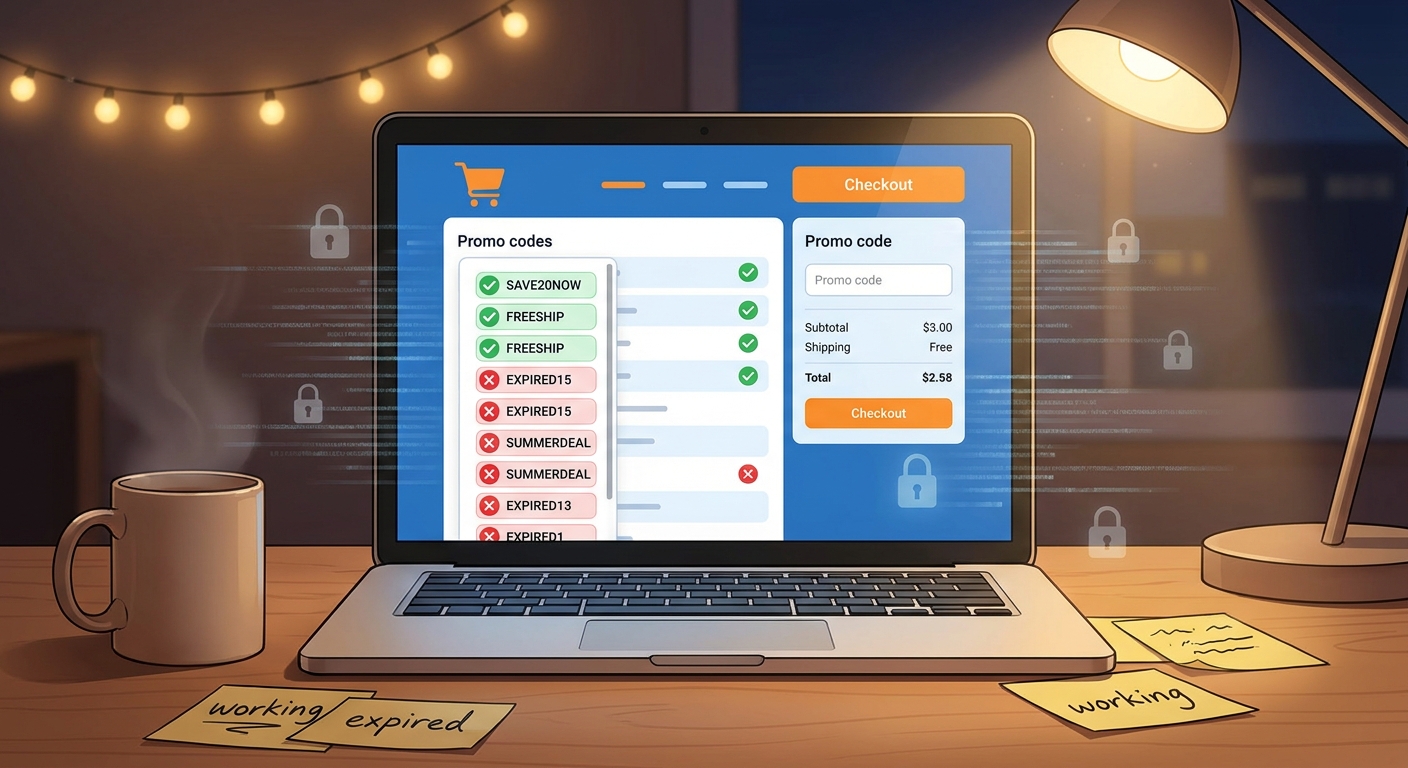
    The better move is not to collect more promo codes. It is to verify them faster. Think of the internet as the messy pile, and a real-time checker as the filter. Instead of trusting whatever “Amazon promo codes June 2026” page ranks highest on Google, you use a tool or method that tests whether a code is still alive, whether it only works on a certain seller, and whether it applies to the exact item in your cart. If you want an amazon promo code checker that actually works, the goal is simple. Kill dead codes quickly, spot seller restrictions before checkout, and spend two minutes saving money instead of thirty minutes getting annoyed.

    ⚡ In a Hurry? Key Takeaways

    • Use a real-time promo code checker or live-tested deal page, not random Google results full of stale Amazon codes.
    • Check seller, item variation, region, and coupon timing before you assume a code is broken.
    • Never hand your Amazon password to a coupon site. A safe checker should verify deals, not ask for account access.

    Why Amazon promo codes fail so often

    Most “bad” codes are not really fake. They are just limited in annoying ways.

    One code might only work on the blue version of a product. Another only works if the item is sold by a specific third-party seller, not Amazon itself. Some have a tiny redemption cap, so the first few hundred shoppers get the deal and everyone else gets nothing. Others are region-locked or expire without the coupon page being updated.

    That is why the usual coupon-site routine feels so useless. You are not just checking if a code exists. You are checking if it works right now, on your exact item, from your seller, in your location.

    What the “real-time code scanner” hack actually means

    This is less “hack” in the movie sense and more “smart shortcut.”

    The idea is simple. Treat Reddit threads, Telegram deal channels, coupon sites, browser extensions, and promo blogs as a raw feed. Then use a live verification layer to sort the junk from the working offers. A good checker does not just show codes. It tests or confirms whether people are successfully applying them at checkout in near real time.

    In plain English, you want three things:

    • Fresh timestamps
    • Clear notes about item and seller restrictions
    • A visible success or failure rate based on recent tests

    That is what separates a useful tool from another glorified list of expired codes.

    How to use an amazon promo code checker that actually works

    1. Start with the exact product page, not a generic coupon page

    Open the Amazon item you want first. Check the seller name, price, color or size variation, and whether there is already a tick-box coupon on the page. Amazon often hides the easiest discount in plain sight.

    If the product page already has a “Save 10% with coupon” box, clip that before doing anything else. It matters because many external promo codes do not stack.

    2. Copy the full product title or ASIN

    If your checker lets you search by product link or ASIN, use that. This is much better than searching broad terms like “air fryer” or “Bluetooth earbuds.” Broad searches flood you with close-enough offers that fail at checkout.

    The more specific you are, the fewer dead ends you hit.

    3. Check the code’s last verified time

    A live checker should tell you whether a code was verified five minutes ago, this morning, or three weeks ago. Three weeks ago might as well be ancient history in coupon land.

    If there is no timestamp, be skeptical.

    4. Read the fine print people skip

    Look for notes like:

    • Only works on first order
    • Only works for Prime members
    • Only works when sold by Brand X Store
    • Only applies after a minimum spend
    • Only valid in the US or UK

    This is where most “failed” codes die. Not because they are dead, but because they were never meant for your order.

    5. Test the best one or two codes only

    Do not paste in ten random promo codes. Amazon may limit repeated promo attempts, and you will waste time. Start with the codes showing the most recent successful verification and the clearest match to your product.

    If one fails, move on quickly.

    The fastest manual method if you do not trust coupon sites

    If you want to do your own filtering, here is the low-drama version.

    1. Search for the product plus “promo code” on Google, Reddit, and deal forums.
    2. Ignore pages with giant walls of generic codes.
    3. Look for exact product matches and recent comments from actual users.
    4. Cross-check the seller and variation on Amazon.
    5. Try only the most recent, best-matched code.

    This still takes a few minutes, but it beats copying stale codes from ten SEO pages built to trap search traffic.

    Red flags that a promo site is wasting your time

    Some coupon sites are not dangerous. They are just lazy. Others are a bit sketchy. Watch for these signs:

    • No last-tested date
    • The same Amazon code repeated across dozens of products
    • Claims like “100% success” with no proof
    • Buttons that say “Reveal Code” but only open ads
    • Requests to install unknown browser extensions
    • Requests for your Amazon login details

    If a site wants your password, close it. Immediately. A legitimate checker should help you verify savings, not stand between you and your Amazon account.

    Why browser extensions sometimes help, and sometimes make things worse

    Auto-apply extensions can be handy. They save time by trying multiple codes in the background. But they are not magic.

    Some are great at testing public coupon databases. Others just repeat the same stale code lists faster than you can. You still need a little common sense. If the extension cannot tell you when a code was last tested or what item it applies to, it is basically spray-and-pray couponing.

    The best ones do two things well. They test quickly, and they explain why an offer is relevant.

    The seller problem most shoppers miss

    Here is the part that tricks a lot of people. On Amazon, the product page can look identical while the actual seller changes.

    One code may work only when the item is sold by the brand’s own storefront. If Amazon rotates the Buy Box to another seller, your code suddenly fails even though the item name and photo look the same.

    So before blaming the code, check:

    • Who is selling the item
    • Who is shipping it
    • Whether a different seller is available on the same listing

    Sometimes switching sellers is the difference between “code invalid” and 20% off.

    Can you trust crowd-sourced verification?

    Usually, yes, if it is recent and specific.

    A real comment saying “Worked on the 64GB black model from ABC seller at 2:15 p.m.” is far more useful than a polished coupon page with no testing details. Crowd reports are not perfect, but they often reflect reality faster than coupon databases do.

    The trick is to trust fresh, detailed reports, not vague cheerleading.

    How to build your own simple verification routine

    If you shop Amazon a lot, create a repeatable system.

    Use this 2-minute checklist

    • Clip the on-page Amazon coupon first
    • Confirm seller and item variation
    • Search by exact product or ASIN
    • Use only recently verified codes
    • Try one or two high-confidence codes, then stop

    That “then stop” part matters. Coupon fatigue kicks in when you keep chasing a maybe. If the code is not verified, move on and decide whether the current price is still good enough.

    Safety matters more than an extra 5%

    People get so focused on savings that they click through anything promising “hidden Amazon discount.” Slow down.

    A safe deal workflow should never require:

    • Your Amazon password
    • Turning off browser security warnings
    • Installing random software from a pop-up
    • Giving a coupon site permission to manage your account

    If your site or tool is acting as the live filter, that is the sweet spot. It does the boring verification work and leaves the checkout control in your hands.

    What this means for frustrated shoppers right now

    The big shift is mental. Stop expecting coupon sites to be libraries. Think of them as noisy tip lines.

    Your job is not to read everything. Your job is to find the few signals that are current, specific, and proven. A real-time code checker makes that possible by sorting for what still works now, not what worked last month.

    That is why this method feels better. It saves money, sure. But it also saves your patience.

    At a Glance: Comparison

    Feature/Aspect Details Verdict
    Generic coupon site Often packed with expired, copied, or poorly labeled Amazon promo codes. Low trust unless it shows recent verification.
    Real-time code checker Filters codes by recent success, seller match, item match, and timing. Best option for fast, practical savings.
    Manual Reddit/forum search Can uncover real working deals, but takes more time and needs careful cross-checking. Good backup method if you want more control.

    Conclusion

    Coupon fatigue is real, and it is not because people are lazy. It is because too many Amazon promo pages are stuffed with codes that are expired, geo-locked, seller-specific, or barely relevant to the item in your cart. The fix is not more hunting. It is smarter filtering. If you use an amazon promo code checker that actually works, you can treat the whole web as a messy stream of deal tips while relying on a live verification layer to throw out the dead stuff and surface the few offers that still apply. That means less copy-paste nonsense, fewer checkout surprises, and a much better shot at saving money before you lose patience and pay full price. Quietly verifying the boring details is what really helps shoppers, and honestly, that is the part most coupon sites never bother to do.

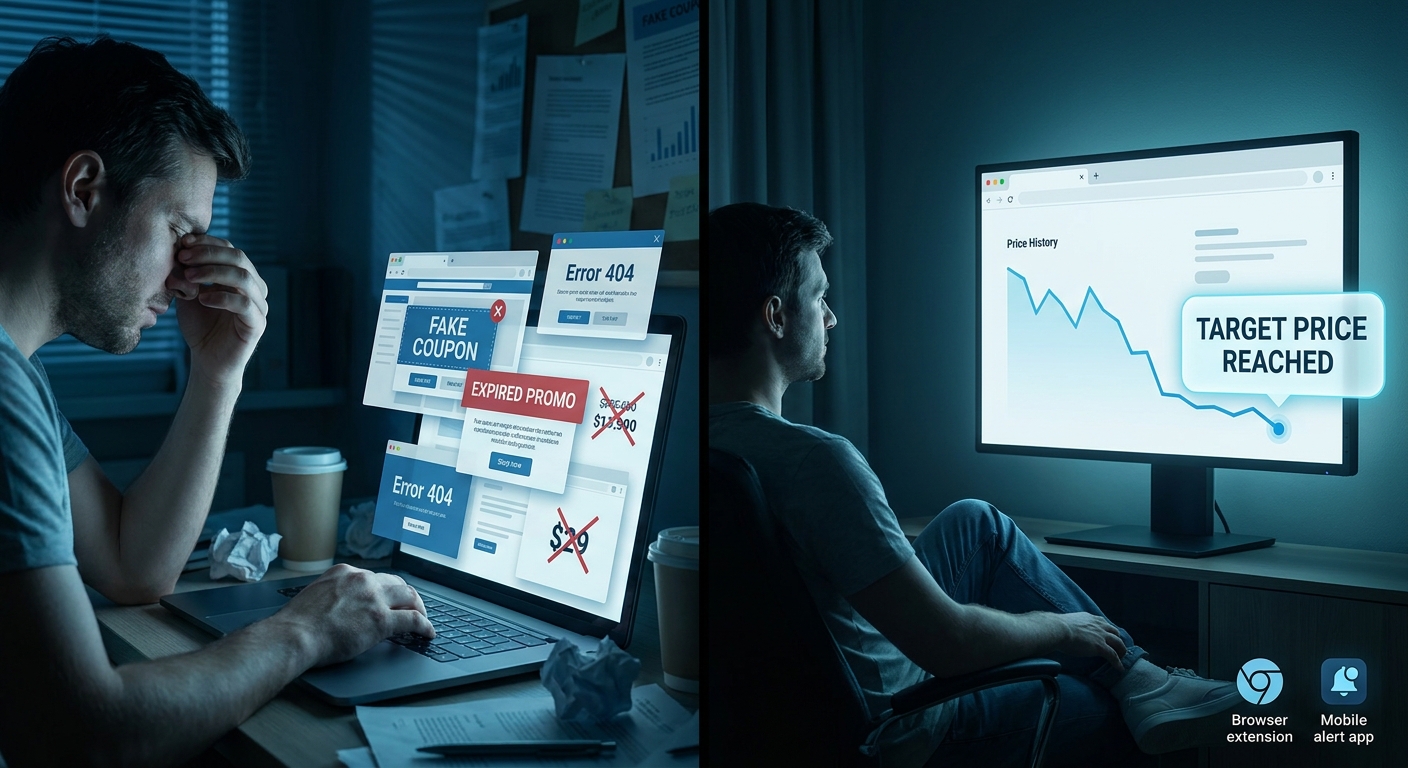
  • The ‘Price Drop Trap’ Hack: How 24‑Hour Watchdogs Turn Random Amazon Discounts Into Secret Promo‑Level Scores

    The ‘Price Drop Trap’ Hack: How 24‑Hour Watchdogs Turn Random Amazon Discounts Into Secret Promo‑Level Scores

    You know the routine. You find a coupon code site promising a huge Amazon discount, click through, paste the code, and get nothing. Or worse, the “sale” turns out to be the same price the item was last week. That gets old fast. The more annoying part is that the real deals often do exist, but they show up quietly for a few hours, then vanish before most people even notice. If you are at work, asleep, or just not checking Amazon every afternoon, you miss them.

    That is where the amazon price drop alert hack comes in. Instead of hunting random promo codes, you let a 24-hour price tracker watch the exact item you want and notify you only when it drops into a price range you actually care about. It is simple, low effort, and a lot smarter than refreshing product pages or trusting inflated “list prices.” For expensive gear, household staples, and things you buy again and again, this little setup can save real money without turning bargain shopping into a part-time job.

    ⚡ In a Hurry? Key Takeaways

    • The best Amazon deals are often short price dips, not public promo codes, and a price alert catches them automatically.
    • Set a target price on a tracker like CamelCamelCamel or Keepa for the exact product version you want, then wait for the alert.
    • Always check price history before buying so you can spot fake “discounts” and avoid impulse purchases dressed up as deals.

    Why Amazon “sales” can feel fake

    Amazon pricing is messy. One item can have multiple sellers, different colors with different prices, clip-on coupons, lightning deals, and temporary markdowns that disappear by lunch.

    That is why a big red discount badge does not always mean much. Sometimes the price was lower a week ago. Sometimes the “regular” price is inflated. Sometimes only one variation is actually discounted.

    So when people talk about getting secret promo-level savings on Amazon, they often are not using secret codes at all. They are catching a real price drop at the right moment.

    What the “Price Drop Trap” hack really is

    The name sounds sneaky, but the method is very simple. You pick an item. You check its price history. Then you tell a tracking service to alert you when it falls to a number you like.

    That is it.

    The trick is that these tools watch the listing all day and all night. They do the boring part for you. When the item suddenly dips because of seller competition, low stock movement, or a brief algorithm change, you get the email or notification.

    That turns random discounts into something useful. Not guaranteed, but useful.

    How 24-hour watchdogs help you buy smarter

    A good tracker gives you two things that promo-code sites usually do not.

    1. Actual price history

    You can see whether today’s “deal” is really special or just normal pricing with a marketing sticker on it.

    2. A target-based alert

    You decide what counts as a deal. Not Amazon. Not a coupon blog. You do.

    That matters because a 10 percent drop on a phone charger is nice, but a 15 percent drop on a robot vacuum, laptop, air fryer, or baby formula subscription can be worth waiting for.

    The easiest way to set up the amazon price drop alert hack

    You do not need to be technical for this. Most people can do it in five minutes.

    Option 1: CamelCamelCamel

    This is one of the best-known Amazon price trackers. You paste in an Amazon product link, create a free account, and set your target price.

    When the item drops to that amount, you get an alert.

    Option 2: Keepa

    Keepa is more detailed and especially handy if you like charts, seller history, and browser integration. It can feel a little busier at first, but it is powerful once you get used to it.

    Basic setup steps

    1. Open the exact Amazon product page you want.
    2. Copy the product URL.
    3. Paste it into your price tracker of choice.
    4. Look at the price history for at least the last 30 to 90 days.
    5. Set a target price based on the low end of that history, or a number you would be happy to pay.
    6. Turn on email or push alerts.

    Then leave it alone. That is the beauty of it.

    How to pick the right target price

    This is where people either save money or set themselves up for disappointment.

    If your target is unrealistically low, you may never get an alert. If it is too high, you will get notified for a price that is not special.

    A simple rule

    Look at the product’s recent history and ask, “What price would make me buy this today without second-guessing it?”

    For example:

    • If a blender usually sits at $99 and drops to $79 every few weeks, set your alert near $79 or $75.
    • If a laptop normally ranges between $899 and $999, an alert at $849 may be realistic and worth waiting for.
    • If a household item bounces between $22 and $30, even a $4 drop can matter if you buy it often.

    What kinds of items work best with this trick

    Not every item is worth tracking. The best candidates are products where timing matters.

    Great items to track

    • Electronics
    • Kitchen appliances
    • Robot vacuums
    • Headphones and earbuds
    • Office chairs and desks
    • Coffee, vitamins, and repeat household buys
    • Baby gear
    • Seasonal items

    Less useful items to track

    • Cheap impulse buys under about $10
    • Products with unstable listings or lots of knockoff replacements
    • One-off novelty items where quality matters more than price

    Common mistakes that ruin the savings

    This hack works best if you avoid a few easy traps.

    Tracking the wrong variation

    That blue version may be $20 more than the black one. The 128GB model may behave very differently from the 256GB model. Always track the exact listing you want.

    Ignoring seller details

    A low price from a third-party seller is not always the same as a low price sold by Amazon. Check shipping, return policy, and seller ratings.

    Buying just because you got an alert

    An alert is not a command. It is a signal. If you no longer need the item, skip it.

    Forgetting lightning deals and coupons can stack oddly

    Sometimes the tracker catches the base price, but Amazon also adds a coupon checkbox on the product page. That can make the final price even better, so always look before checking out.

    How this compares to coupon-code hunting

    Coupon-code hunting feels active, but it often wastes time. Price alerts feel passive, but they are usually more accurate.

    Why? Because you are tracking the item itself, not hoping a generic promo works on a category or seller.

    Coupon lists also go stale quickly. A price tracker does not care whether a deal is trendy. It just watches the number.

    Is it safe to use price trackers?

    Generally, yes, if you stick to reputable services and use common sense.

    • Use well-known trackers.
    • Do not give your Amazon password to random extensions or deal sites.
    • Read the privacy policy if you install a browser add-on.
    • Use email alerts if you want the simplest and lowest-risk setup.

    The safest version of this hack is also the easiest one. Paste in the item link, set a target price, get an email later.

    When this trick saves the most money

    The biggest wins usually come from patience.

    If you need something tonight, you buy tonight’s price. But if you can wait two weeks for an air purifier, one month for headphones, or a couple of days for printer ink, you give the system time to work.

    This is especially good for:

    • Holiday shopping done early
    • Back-to-school gear
    • Home office upgrades
    • Big-ticket appliance replacements
    • Everyday supplies you buy on repeat

    A smart routine that takes almost no effort

    If you want this to become a habit, keep it very simple.

    1. Any time you think, “I want this, but not at this price,” add it to a tracker.
    2. Set one realistic target.
    3. Check the alert when it arrives.
    4. Buy only if it still makes sense.

    That is a lot better than opening ten coupon tabs and wondering which one is lying to you.

    At a Glance: Comparison

    Feature/Aspect Details Verdict
    Price alerts vs promo codes Alerts track the exact item and notify you when the live price drops. Promo codes are often expired, limited, or not as good as they sound. Price alerts are usually more reliable.
    Time required A tracker takes a few minutes to set up, then runs in the background. Manual deal hunting can eat up a lot of time. Set-and-forget wins.
    Best use case Works best for expensive items, seasonal purchases, and repeat-buy products where a small drop adds up. Excellent for planned purchases.

    Conclusion

    If you are tired of chasing shaky coupon codes and wondering whether an Amazon sale is real, this is one of the easiest shopping habits to start. Amazon prices are changing multiple times per day across different sellers and product variations, and most of those drops never show up in the big coupon roundups. A simple set-and-forget alert system flips the whole process in your favor. Instead of hunting for deals, you let the deals come to you. For big-ticket products and repeat-buy essentials, one well-timed alert can save more than a pile of generic promos ever will. That is the real value of the amazon price drop alert hack. It saves money, yes, but it also saves your time and your patience.

  • The ‘Secret Coupon Page Split-Test’ Hack: How To Turn Amazon’s Hidden Deal Hub Into A Real-Time Promo-Code Lab

    The ‘Secret Coupon Page Split-Test’ Hack: How To Turn Amazon’s Hidden Deal Hub Into A Real-Time Promo-Code Lab

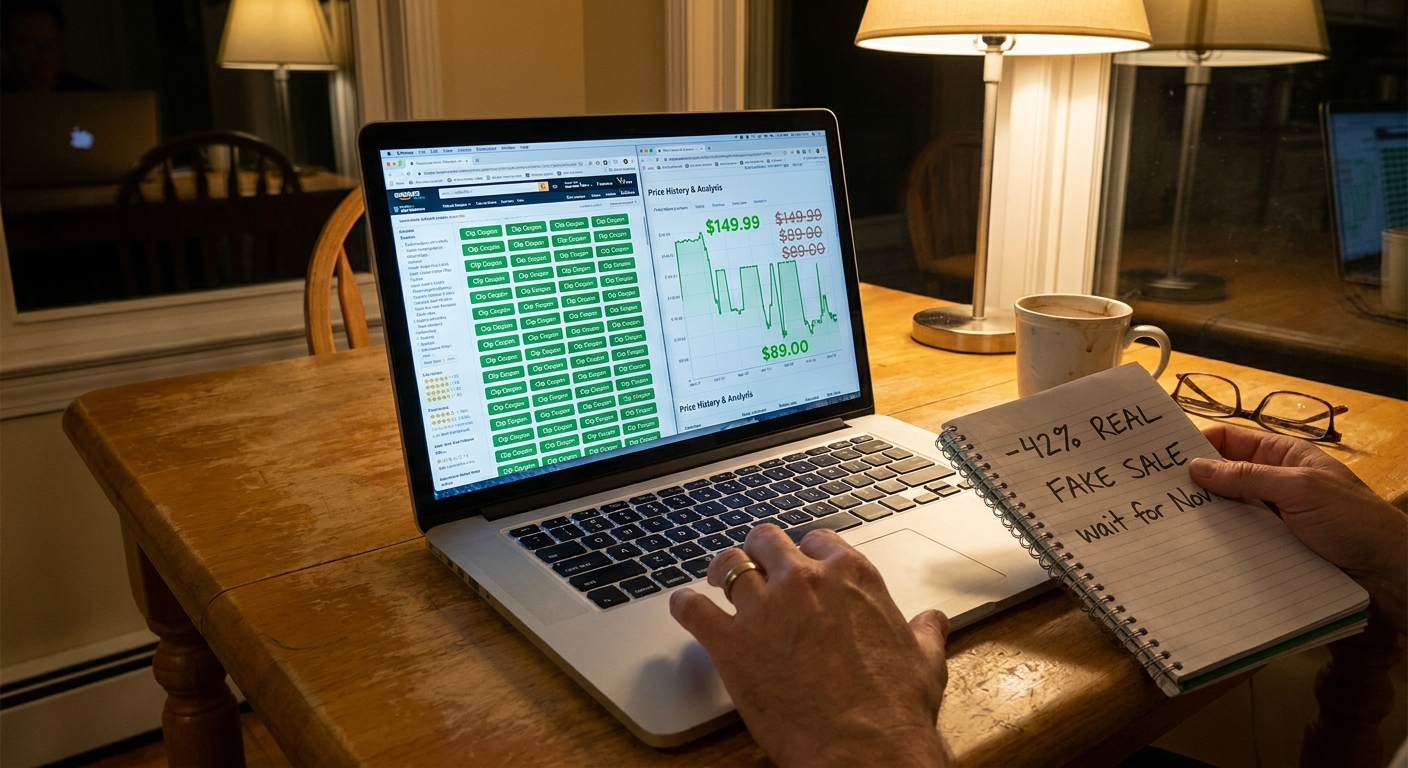
    Prime Day coupon hunting is frustrating for a reason. Amazon makes it very easy to see a big orange coupon badge, and very hard to tell whether that “save 40%” is a real deal or just a dressed-up markup. Most shoppers end up doing the same thing. Click fast, hope for the best, and assume the coupon page must be showing the lowest price. A lot of the time, it is not. The good news is you do not need a complicated tracker or a dozen browser tools to spot the difference. You can run a simple two-tab split test in about five minutes. One tab shows the item through Amazon’s hidden coupon hub. The other shows the exact same product through normal search, alternate sellers, and any stackable Prime or multi-buy offer. That quick side-by-side check is the amazon secret coupon page hack that helps you stop chasing fake percentages and start finding the few coupons that really matter.

    ⚡ In a Hurry? Key Takeaways

    • The best amazon secret coupon page hack is a two-tab test: compare the coupon-page price against the same item’s actual checkout price from regular search.
    • Always check for stacked savings like Prime-only discounts, Subscribe & Save, and multi-buy offers before trusting the coupon badge.
    • A giant percentage off means very little if the starting price was inflated. Judge the final total, not the flashy claim.

    Why the Secret Coupon Page Trips People Up

    Amazon’s coupon hub is useful, but it is also noisy. It mixes real bargains with items that only look cheap because the list price was puffed up first.

    That is the trap. Your eyes see “50% off” and your brain thinks, “I need to grab this now.” But the number that matters is the final checkout total, not the marketing label.

    On Day One of Prime Day 2026, that matters even more. Prices move fast. Sellers change. Coupons appear and disappear. A deal list from this morning can be stale by lunch.

    The Two-Tab Split-Test Hack

    This is the simple move. Open two tabs for the same item.

    Tab 1: The coupon-page version

    Go through Amazon’s coupon hub and open the product listing from there. Clip the coupon if one is offered. Write down three numbers:

    • The displayed price before clipping
    • The coupon amount or percentage
    • The estimated final total at checkout

    Tab 2: The normal listing version

    Now search for the exact same item in regular Amazon search. Match the size, color, pack count, and seller if possible. Then check for:

    • A lower everyday price with no coupon needed
    • A Prime-exclusive discount
    • A multi-buy deal like “save $20 when you spend $100”
    • Subscribe & Save if the item is household stuff
    • Alternate sellers on the same listing

    Then compare the final total in both tabs. Not the claimed savings. The real total.

    What You Are Actually Testing

    You are testing whether the coupon badge is adding real value or just adding drama.

    Here is what often happens:

    • The coupon tab shows 35% off, but the base price is higher.
    • The regular listing has a lower starting price, plus a Prime discount at checkout.
    • The “huge” coupon turns out to be worse by a few dollars.

    That is why this works so well. It turns a vague shopping hunch into a quick price test.

    The 5-Minute Routine That Works During Prime Day

    Step 1: Start with the final price

    Ignore the list price and the crossed-out number for a minute. Go straight to what you will actually pay.

    Step 2: Match the item exactly

    This is where people get fooled. A coupon may be attached to a smaller size, a weaker model, or a different seller. Make sure both tabs are truly the same product.

    Step 3: Check stackable offers

    Some of the best deals are not obvious on the coupon page. Prime offers, “buy 2 save 10%,” and category promos can quietly beat a flashy clip coupon.

    Step 4: Look at shipping and delivery speed

    A lower price from a third-party seller is not always better if shipping is slower, return policies are weaker, or the item is not sold by a seller you trust.

    Step 5: Make a quick call

    If the coupon version wins by a meaningful amount, buy it. If not, skip the badge and use the better path.

    Red Flags That Usually Mean the Coupon Is Not Special

    • The item has a giant discount percentage but still costs about the same as similar products.
    • The coupon only works on one odd color or low-demand variation.
    • The listing shows a high “was” price that does not match what people usually pay.
    • The coupon page version is sold by a different seller than the cheaper search result.
    • The coupon disappears at checkout, or only applies after a quantity requirement you did not notice.

    When the Secret Coupon Page Really Does Win

    To be fair, there are real gems in there. The best ones usually have one or more of these traits:

    • A coupon on top of an already reduced Prime Day price
    • A stack with a multi-buy offer
    • A brand trying to move inventory fast in a crowded category
    • A listing where the coupon beats not just today’s search price, but the recent normal sale price too

    Those are the deals worth pouncing on.

    Use This Hack Alongside Email-Only Discounts

    If you also chase promo codes from brand emails and Amazon storefront messages, pair this trick with The ‘Newsletter Bait-and-Switch’ Hack: How Off-Amazon Email Deals Turn Into Real Secret Promo-Code Savings. It is a smart companion strategy because some of the best savings never show up cleanly on the coupon page at all.

    A Few Common Mistakes to Avoid

    Do not trust the percentage

    A 20% coupon on a fair base price can be better than a 50% coupon on an inflated one.

    Do not forget quantity math

    Multi-pack items can look cheaper until you compare the per-unit price.

    Do not assume all sellers are equal

    Returns, shipping times, and seller ratings still matter. A “deal” becomes expensive fast if the product is wrong or late.

    Do not wait too long on a verified winner

    Once your two-tab test proves a coupon is genuinely better, act. The real bargains are the ones that disappear first.

    At a Glance: Comparison

    Feature/Aspect Details Verdict
    Coupon page discount Fast to spot, but often based on inflated anchor pricing or incomplete savings info. Good starting point, not proof of a real deal.
    Two-tab split test Compares the coupon version against regular search, alternate sellers, and stackable offers in real time. Best quick method for Prime Day shoppers.
    Stacked savings Prime-only promos, multi-buy offers, and Subscribe & Save can quietly beat clip coupons. Always check before you buy.

    Conclusion

    Today is Day One of the 2026 Prime Day window, and the internet is already filling up with giant “Top 100 Deals” lists that go stale almost as soon as they are published. What most people need is not another pile of links. They need a fast sanity check. This amazon secret coupon page hack gives you exactly that. Open two tabs, compare the same item, test the final total, and look for stacks that beat the flashy coupon label. It is simple, repeatable, and it helps you separate fake urgency from the rare discounts that are actually worth your money. If you use it while you shop this week, you will waste less time, skip more fake bargains, and catch the real winners before they vanish.

  • The ‘Newsletter Bait-and-Switch’ Hack: How Off-Amazon Email Deals Turn Into Real Secret Promo-Code Savings

    The ‘Newsletter Bait-and-Switch’ Hack: How Off-Amazon Email Deals Turn Into Real Secret Promo-Code Savings

    You are not imagining it. Hunting for Amazon promo codes has become a mess. You find a code on a coupon site, paste it in at checkout, and get the same dead-end message every time. Expired. Not eligible. Only valid on one weird color, one size, or one seller you would never pick. Worse, the internet is now full of fake “generator” pages, shady PDFs, and social posts that promise secret Amazon discounts and deliver nothing but spam. The smarter move is not chasing public codes after everyone else has already used them. It is watching for brand email newsletters, welcome offers, and influencer discount blasts, then comparing those deals against Amazon listings. That is the real bait-and-switch here. The “newsletter deal” looks like it is only for the brand’s own store, but it often reveals the real sale price you should be targeting. Sometimes Amazon quietly matches it. Sometimes a marketplace seller beats it. Either way, you stop guessing and start saving.

    ⚡ In a Hurry? Key Takeaways

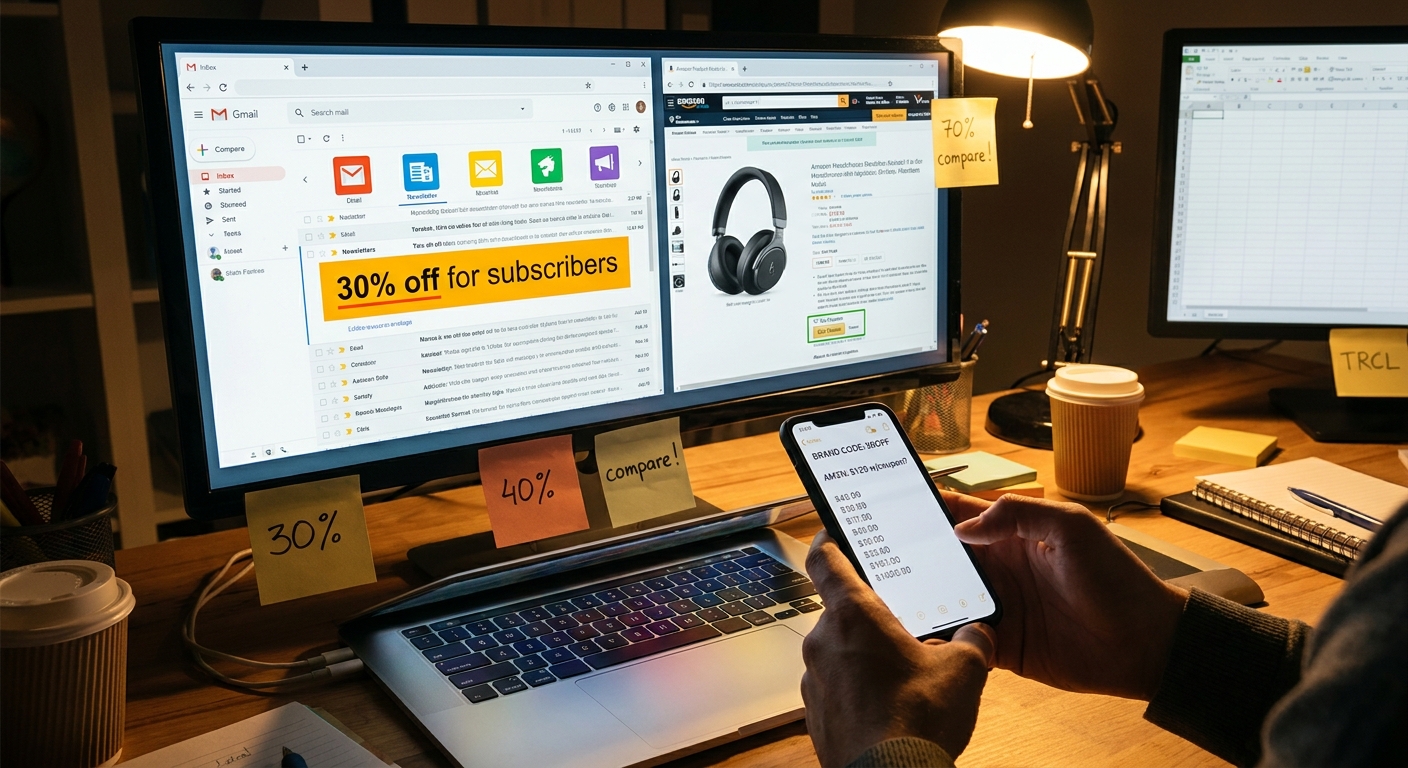
    • The best amazon promo code hack using brand email newsletters is to use brand-direct offers as your price signal, then check whether Amazon has quietly matched or beaten that discount.
    • Sign up for a few trusted brand newsletters, save the welcome code, and compare the final price on the brand site versus Amazon before you buy.
    • Avoid coupon generators, random PDF “code lists,” and social posts that push sketchy links. Legit savings usually come from the brand itself, not a mystery website.

    The problem with public Amazon promo codes

    Most public Amazon promo codes are bad by the time regular people see them.

    That is the simple truth. Good codes spread fast. Once they hit coupon sites, deal forums, and TikTok slideshows, they are often picked over, restricted, or already gone. Some were never meant for the general public in the first place. They may be tied to one seller account, a tiny inventory batch, or a limited ad campaign.

    That is why shoppers keep feeling tricked. The code looks real. The listing looks close enough. Then checkout says no.

    It is not always a scam. Sometimes it is just stale information. But the result is the same. Wasted time, frustration, and a cart full of things you no longer trust.

    What the “newsletter bait-and-switch” hack really is

    This is less of a magic trick and more of a change in direction.

    Instead of starting on Amazon and hunting for a code, you start with the brand that makes the product. Sign up for its email newsletter, look for a first-order discount, seasonal sale, or influencer code, and use that offer as your benchmark. Then check Amazon for the same product.

    Here is the switch. The email makes you think the only savings live on the brand’s own site. But many brands and sellers know shoppers compare prices. So one of three things often happens:

    • Amazon already has the same item at a matched sale price.
    • An Amazon seller drops the price close to the brand’s email offer.
    • The Amazon listing adds a coupon checkbox or limited-time deal that makes the final price similar or better.

    You are not using the newsletter code on Amazon. Usually, you cannot. You are using the newsletter to expose the real market price.

    Why this works better than chasing random codes

    Brands reveal the real discount first

    Brands often send their best direct offers to email subscribers before deal sites notice. That means you get an earlier view of what the “true” sale price should be.

    Amazon reacts fast

    Amazon pricing changes constantly. If a brand runs 20 percent off on its own site, Amazon or a third-party seller may quietly move to stay competitive. It may not be advertised as a promo code at all. It may just show up as a lower price, a clipped coupon, or a bundle discount.

    It cuts out the junk

    You stop relying on mystery sites with made-up codes and start using offers from actual brands. That is a much safer place to begin.

    How to use this amazon promo code hack using brand email newsletters

    1. Pick a product you were already going to buy

    This works best when you start with intent, not impulse. Think headphones, skincare, supplements, kitchen gadgets, phone accessories, pet supplies. Things that are sold both on brand sites and on Amazon.

    2. Visit the brand’s official site

    Look for the little pop-up or header bar. Many brands offer 10 percent, 15 percent, or even 20 percent off for joining their email list. Some also text a code, but email is usually enough.

    3. Check your inbox for the welcome offer

    Do not just look at the percentage. Look at the final price after the code, and check shipping costs. A 15 percent discount is not exciting if the brand charges $9.95 for shipping.

    4. Open the same product on Amazon

    Now compare carefully. Same model. Same size. Same count. Same color if that matters. A lot of fake “savings” disappear the second you notice you were comparing a two-pack to a single item.

    5. Look for hidden discounts on Amazon

    Check for:

    • A coupon checkbox under the price
    • A “Save with Prime” note
    • A Subscribe & Save option
    • A lower price from another seller on the same listing
    • A limited-time deal that appears only on the product page

    6. Compare the final checkout price, not the sticker price

    This is where people get fooled. The brand may show $40 with 20 percent off, while Amazon shows $33.99 with a 5 percent coupon. Once you factor in shipping, tax, and delivery speed, the winner may flip.

    7. Save the newsletter for later

    Even if Amazon wins today, keep that email. Brands often send follow-up offers a week later. Sometimes the second email is better than the welcome code.

    A quick example

    Let’s say a grooming brand emails you a 20 percent off code for a beard trimmer listed at $49 on its own site. That brings the price to $39.20, but shipping adds $6.

    Now your real comparison number is $45.20 before tax.

    On Amazon, the same trimmer might be listed at $44.99 with a clipped $5 coupon. Suddenly the Amazon price is effectively $39.99, with faster shipping and easier returns.

    No Amazon promo code needed. The brand newsletter did the heavy lifting by showing you that the item was ripe for a discount.

    Where this trick works best

    It is especially useful for products from brands that sell in multiple places and run frequent email campaigns.

    • Beauty and skincare
    • Supplements and wellness products
    • Small electronics
    • Kitchen tools
    • Pet products
    • Fitness gear
    • Home organization items

    It is less useful for Amazon-exclusive items or no-name products that only exist inside Amazon’s marketplace.

    Red flags to avoid

    “Amazon code generator” sites

    These are almost always nonsense. At best, they waste your time. At worst, they try to collect your email, push malware, or bait you into surveys.

    Coupon PDFs and giant code dumps

    If a file claims to contain hundreds of active Amazon codes, be skeptical. Real Amazon discounts are usually limited, targeted, or tied to specific listings.

    Influencer posts with no product match

    Some social posts recycle old codes or attach them to the wrong item. Always verify the exact product and seller.

    Off-site checkout tricks

    If a site says you need to “verify” your Amazon account somewhere else to unlock savings, leave immediately. That is not how legitimate discounts work.

    Make your inbox useful without turning it into a junk drawer

    I know the obvious objection. “Great, now I have to sign up for even more email.” Fair point.

    The easy fix is to make a separate shopping email account or use your main inbox with filters. Create a folder for store offers. That way, you can keep the good discounts without drowning in daily marketing messages.

    Also, be picky. Do not sign up for every store on earth. Start with brands you already buy or have been meaning to try.

    When the brand site is still the better deal

    Sometimes Amazon does not match the offer. That is fine. The hack still worked because it kept you from overpaying on Amazon just because it felt convenient.

    Brand sites can win on bundles, gifts with purchase, loyalty points, and better warranty support. If the price difference is small, those extras may matter more than two-day shipping.

    The point is not to force every purchase through Amazon. The point is to stop treating Amazon as the only place where a “real” discount exists.

    At a Glance: Comparison

    Feature/Aspect Details Verdict
    Public coupon sites Codes are often expired, overused, restricted, or copied from old deals Low success rate
    Brand email newsletters Welcome offers and seasonal discounts reveal the real sale price for a product Best starting point
    Amazon cross-check Look for matched pricing, clipped coupons, Subscribe & Save, and seller competition Often where the final savings appear

    Conclusion

    Right now, there is a flood of bad “Amazon promo code” advice online. Some of it is harmless but useless. Some of it is outright scammy. The better approach is simpler and safer. Stop chasing public codes that have already been picked clean. Start with brand-direct email offers, use them as your benchmark, and then cross-check Amazon for a matched or better final price. It is a repeatable habit, not a one-time trick. And it fits this moment perfectly, because inboxes are already stuffed with early summer sale emails and influencer discount blasts that most people ignore. Hidden in that pile are real, legit savings. You just need to use them as a clue, not a destination.

  • The ‘Gift Card Double-Dip’ Hack: How Stacking Quiet Card Bonuses With Amazon Deals Becomes a Secret Promo Code

    The ‘Gift Card Double-Dip’ Hack: How Stacking Quiet Card Bonuses With Amazon Deals Becomes a Secret Promo Code

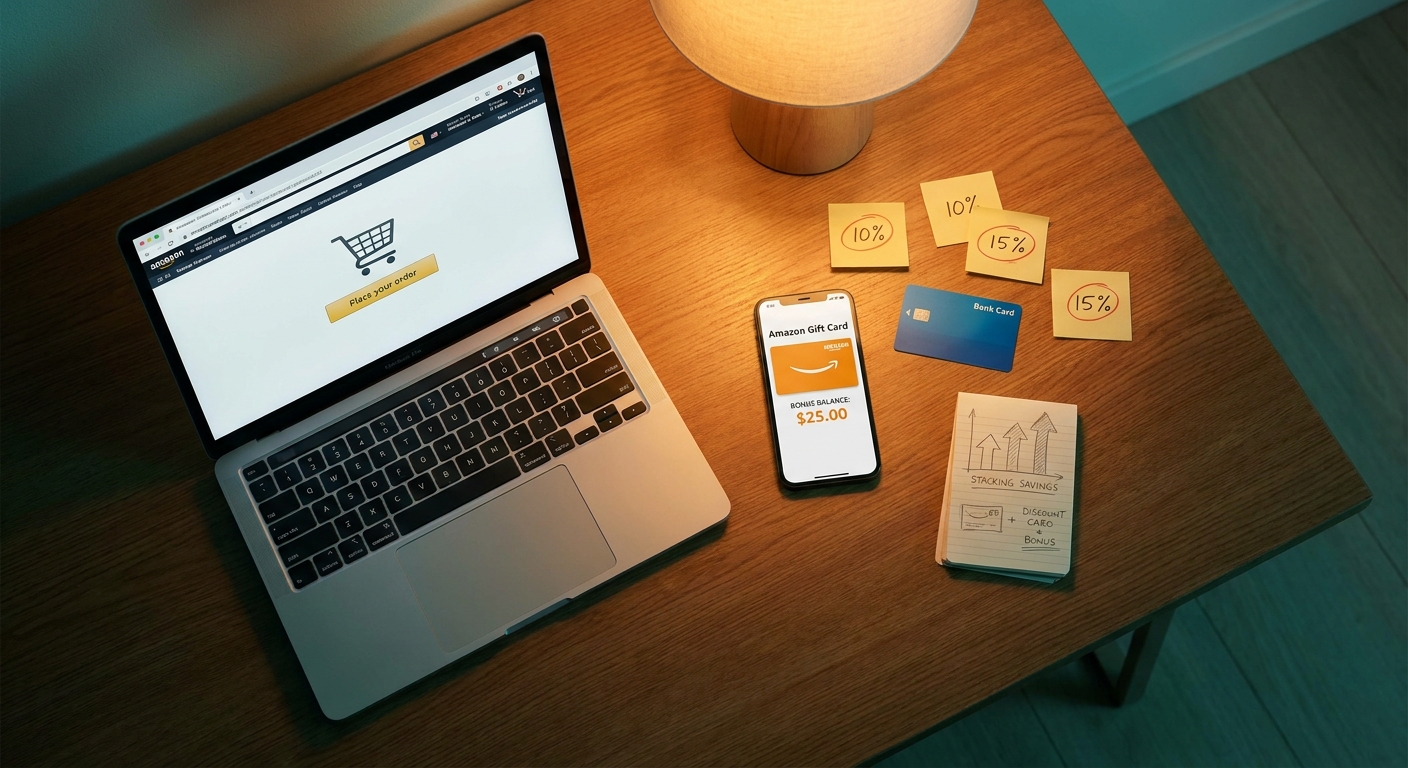
    You are not imagining it. Hunting for Amazon promo codes has become a chore. Half the codes are dead, the other half only work on one oddly specific item, and the “secret code” posts on social media often lead nowhere good. The funny part is that some of the best Amazon savings are not on Amazon at all. They start before you shop, when banks, warehouse clubs, rewards apps, and deal sites quietly offer Amazon gift cards at a discount or with a bonus. That is the amazon gift card stacking hack in plain English. You buy $100 in Amazon spending power for $90, or get a $100 card plus a $10 bonus, then use that balance on top of a real Amazon sale, coupon, or Lightning Deal. Done right, it works like a private promo code you made for yourself. Simple. Calm. No fake generators, no shady PDFs, and a lot less wasted time.

    ⚡ In a Hurry? Key Takeaways

    • Yes, the real trick is buying discounted or bonus Amazon gift cards first, then spending that balance on already-discounted Amazon items.
    • Wait to redeem those gift card savings on Lightning Deals, clipped coupons, outlet markdowns, and brand promos instead of using them on random everyday purchases.
    • Stick to trusted sources like your bank, major retailers, or well-known rewards programs. Avoid “free code” generators and sketchy coupon files.

    What the “double-dip” really means

    There is no magic here. You are simply stacking two kinds of savings.

    Step one, you get Amazon credit for less than face value. Maybe your bank rewards portal offers a 10 percent bonus on gift cards. Maybe a grocery app has a limited-time deal. Maybe a warehouse club sells digital gift cards at a slight discount.

    Step two, you spend that credit only when Amazon itself is already offering a deal.

    That second step is where most people miss the point. They buy a discounted gift card, toss it into their account, then use it three weeks later on paper towels at full price. Technically they saved a little, but they did not really stack anything.

    The better move is to treat that balance like a hidden coupon. Save it for the moment a real deal appears.

    Why this works better than chasing public promo codes

    Public Amazon promo codes are hit or miss. Many are limited to new accounts, certain brands, invite-only offers, or tiny categories most people do not need.

    Gift card bonuses are different. If you already know you shop on Amazon, discounted balance is flexible. It can often be used across thousands of products, and it usually works alongside the site’s normal discounts because the gift card is just a payment method.

    That is what makes the amazon gift card stacking hack so useful. It is less flashy, but often more reliable.

    If you also want to mix this with card-linked savings, it pairs nicely with The ‘Bank Card Shuffle’ Hack: How Hidden Issuer Offers Turn Regular Amazon Orders Into Secret Promo-Size Discounts. That approach focuses on issuer offers. This one starts even earlier, with the money you use to fund the purchase.

    Where these quiet gift card bonuses usually show up

    You do not need to camp out on deal forums all day, but you do need to know where to look.

    Bank and credit card reward portals

    Some issuers run limited promos where points stretch further on gift cards, or where a $100 card comes with an extra bonus value. These offers come and go quietly.

    Grocery and warehouse clubs

    Some stores sell third-party gift cards at a discount during special events. Others offer store rewards, fuel points, or cash back tied to gift card purchases.

    Cash back and rewards apps

    A few legitimate apps offer temporary boosts on digital gift cards. The key is making sure the math is real and the seller is reputable.

    Membership and employee perk portals

    If your job, union, insurer, or alumni group has a discount portal, check there too. These are easy to forget and sometimes have surprisingly decent gift card deals.

    How to do it without making it complicated

    You do not need a spreadsheet unless you enjoy spreadsheets. A simple routine is enough.

    1. Buy only what you can use soon

    If you normally spend about $100 to $200 a month on Amazon, do not buy $1,000 in gift cards just because a promo looks good. Gift cards are best when they support planned spending, not when they create it.

    2. Load the balance and wait

    Once the gift card is in your Amazon account, let it sit there until a true sale comes along. Think Prime events, brand coupons, Lightning Deals, Subscribe and Save discounts, Amazon Outlet, or warehouse markdowns.

    3. Clip every on-page coupon

    Amazon hides a lot of savings in plain sight. Many listings have a small checkbox coupon on the product page. It is easy to miss. Your gift card balance can usually pay for the remaining total after that coupon comes off.

    4. Compare prices before you click

    A deal is still only a deal if the final price is good. Sometimes a product with a 20 percent badge is still more expensive than the same item sold elsewhere.

    A simple example

    Let’s say your card issuer runs a 10 percent bonus on Amazon gift cards. You spend $100 and get $110 in Amazon balance.

    Later, Amazon discounts a kitchen gadget from $80 to $60. There is also a clipped coupon for another $10 off.

    Your checkout total becomes $50 before tax. You pay with gift card balance that you effectively bought at a discount. Since that balance came with a 10 percent bonus, your real out-of-pocket cost for that $50 purchase is closer to about $45.

    That is the “double-dip.” One discount got you cheaper Amazon money. The next discount lowered the item itself.

    Best times to use this trick

    This works especially well during busy sale periods.

    Early Prime and Prime Day build-up

    Amazon often starts seeding smaller deals before the big event. That is a good time to have discounted balance ready.

    Brand-specific promo weeks

    Some brands run extra coupons or limited-time markdowns that do not get much attention.

    Back-to-school and holiday ramps

    These periods bring both outside gift card promos and inside Amazon deals. That overlap is where stacking gets stronger.

    When you already planned a bigger purchase

    If you know you need headphones, a vacuum, printer ink, or a coffee maker soon, building in the gift card discount first can shave off more than most public coupon codes ever do.

    What to avoid

    This is the part where being calm saves money.

    Do not trust random code generators

    If a site claims it can produce unlimited free Amazon codes, close the tab. Best case, it wastes your time. Worst case, it wants your login or payment info.

    Do not buy from unknown gift card sellers

    Stick with established banks, major stores, and trusted rewards programs. A “too good to be true” resale deal can turn into a drained or invalid card.

    Do not force purchases just to use the balance

    The hack works only if the item was worth buying anyway. Saving 15 percent on something you did not need is not really saving.

    Do not forget returns can be messy

    If you return an item bought with gift card balance, the refund often goes back to your Amazon account, not your bank card. That is fine for regular Amazon shoppers, but it is worth knowing.

    Who benefits most from this

    This trick is great for people who already buy household basics, tech accessories, books, or gifts on Amazon throughout the year.

    It is less useful if you barely shop there or if you tend to impulse-buy the second you see account credit waiting. Honest self-awareness matters here.

    If you are disciplined, though, this is one of the easiest repeatable savings moves around. It does not depend on one lucky code. It depends on timing and patience.

    At a Glance: Comparison

    Feature/Aspect Details Verdict
    Savings source First savings comes from discounted or bonus gift cards. Second savings comes from Amazon deals, coupons, or markdowns. Strong if you stack both steps instead of using the balance on full-price items.
    Ease of use Fairly simple once you know where to look. Buy, redeem, wait for a real sale, then pay with balance. Beginner-friendly and less frustrating than chasing unreliable public promo codes.
    Risk level Low when using trusted banks, stores, and rewards portals. Higher if you buy from unknown sellers or fake code sites. Safe when you keep it boring and stick with reputable sources.

    Conclusion

    The nice thing about this approach is that it does not ask you to outsmart Amazon or chase mystery codes across the internet. It helps the community right now because Amazon is pushing early Prime and brand-specific promos, while banks and deal sites are quietly running 10 to 20 percent bonus offers on digital gift cards in the background. Most shoppers use those balances on random full-price buys and barely notice the savings. If you instead treat those gift card bonuses like a private promo code, then apply them on top of clipped coupons, Lightning Deals, and outlet markdowns, the numbers get much better. It is a steady, repeatable habit, not a gimmick. And in a moment when social feeds are full of fake “unused code” PDFs and junk generators, that kind of boring, real-world savings is exactly what most people need.

  • The ‘Lightning Code Stack’ Hack: How 1-Hour Flash Coupons Turn Into Real Amazon Promo‑Level Savings

    The ‘Lightning Code Stack’ Hack: How 1-Hour Flash Coupons Turn Into Real Amazon Promo‑Level Savings

    You know the feeling. You finally spot a decent Amazon deal, click fast, and then realize the best version of that deal disappeared an hour earlier. The coupon box is gone. The promo code people are talking about on Reddit is nowhere to be found. And now you are staring at a price that is just okay instead of great. That is the annoying part of today’s Amazon sale game. The best discounts often do not sit neatly on the main product page for long. They pop up as short Lightning Deals, extra coupon checkboxes, and hidden promo code stacks on similar listings from the same brand. The good news is this is not magic, and it is not just for deal hunters with six browser tabs open all day. If you learn how to read the signals around a Lightning Deal, you can often find a second layer of savings and get much closer to true promo-level pricing.

    ⚡ In a Hurry? Key Takeaways

    • Yes, the amazon lightning deal promo code stacking hack is real, but it usually means pairing a public Lightning Deal with an on-page coupon, a related listing, or a short-lived promo code.
    • Check brand storefronts, variant listings, and “other sellers” pages during the Lightning Deal window. That is often where the extra savings hide.
    • Never buy just because a timer is running. Make sure the stacked price beats the recent normal price, not just the crossed-out one.

    Why Lightning Deals matter more than most people think

    Most shoppers see a Lightning Deal as a countdown clock. That is only half the story.

    Right now, a Lightning Deal often acts like a flare in the sky. It tells you Amazon or the brand is pushing traffic to that product family. When that happens, extra discounts sometimes go live on nearby listings too. Same item, different color. Same brand, slightly different bundle. Same product, but sold under a close variation with a coupon attached.

    That is where the real savings can show up.

    Amazon has also been under more pressure to clean up fake list prices and lazy markdowns. So when you do see a deep drop today, it is more likely to be tied to a short, real promo window. That makes speed important, but it also means the discount may be worth the effort.

    What the “code stack” usually looks like in real life

    Despite the dramatic name, this is usually pretty simple. You are not hacking Amazon. You are just combining discounts that happen to overlap for a short time.

    The most common stack

    A real stack often looks like this:

    • Lightning Deal price drops the item by 20 to 35 percent
    • An on-page coupon adds another 5 to 20 percent off
    • A promo code from the listing, brand page, or search results cuts a bit more

    Sometimes the code is shown plainly on the page. Sometimes it appears as “Extra savings at checkout.” Sometimes it only works on one color or one pack size. That is why people miss it.

    The quieter version that people overlook

    The public Lightning Deal listing gets all the clicks. But the better value may be on a close variant.

    Example. The blue water bottle gets the Lightning Deal. The black version does not. But the black version still has a 25 percent coupon and a hidden “Save 10% when you apply promo code” note. End result, the non-featured listing is cheaper.

    This is the part many shoppers never test.

    How to spot the signals that a hidden stack may be live

    You do not need special software. You just need a quick routine.

    1. Treat the Lightning Deal as the starting point, not the finish line

    Open the deal page, then immediately check:

    • Other colors or sizes
    • The brand storefront
    • Sponsored listings from the same brand
    • The “Compare with similar items” section

    If one product in a line is on a Lightning Deal, related items often get small side promos around the same time.

    2. Look for the magic phrases

    These are the wording clues that matter:

    • “Extra savings”
    • “Apply coupon”
    • “Redeem”
    • “Savings applied at checkout”
    • “Limited time deal” paired with a coupon checkbox

    If you see two of those together, it is worth testing the cart.

    3. Check the cart, not just the product page

    Amazon is not always great at showing the final price clearly on the listing page. Add the item to cart and watch what changes. Some discounts only appear in the cart or at the final checkout screen.

    Do not assume the page tells the whole story.

    4. Search the brand name plus “coupon” during the deal window

    This sounds almost too basic, but it works. Search Amazon for the brand name plus the product type. Then scan nearby listings. Brands often spread promos unevenly across duplicate or near-duplicate pages.

    The 10-minute method I would use

    If you want a repeatable system, here it is.

    1. Open the Lightning Deal listing.
    2. Clip any visible coupon.
    3. Check all variants, especially colors and bundles.
    4. Open the brand storefront in a second tab.
    5. Search the product name on Amazon again and scan for duplicate listings.
    6. Add the top two or three candidates to cart.
    7. Compare final checkout prices, not headline discounts.

    This entire process takes about 10 minutes once you get used to it.

    And yes, it often finds prices that are 30 to 60 percent below the normal going rate on everyday items like chargers, kitchen gear, storage products, supplements, and small home gadgets.

    Where promo codes usually hide

    People often expect a promo code to be pasted in big letters near the buy button. Sometimes it is. Often it is not.

    On-page code boxes

    These are the easiest. Amazon may display a small promo field or a note saying a discount is applied at checkout.

    Brand-funded coupon pages

    Some brands push traffic to a coupon page or a store page with offers that do not show cleanly from the main listing.

    Trial or targeted codes

    These are hit or miss. During heavy sale periods, some shoppers test known types of brand promo codes or landing offers within the short window. Not every code will work, and many are targeted, but it is worth checking if you are already close to buying.

    And if you want to stack even further, card-linked savings can sometimes add one more layer. That is where The ‘Bank Card Shuffle’ Hack: How Hidden Issuer Offers Turn Regular Amazon Orders Into Secret Promo-Size Discounts fits nicely. It covers a separate trick many shoppers miss, where the discount comes from your card issuer rather than the listing itself.

    What not to do

    This is where people get burned.

    Do not trust the crossed-out list price

    The only number that matters is the final out-the-door price compared with the item’s usual recent selling price.

    Do not wait too long once the stack is confirmed

    If you have verified the final price is genuinely good, move. These coupons and codes can vanish in hours, sometimes minutes.

    Do not buy junk just because the stack looks dramatic

    A 60 percent discount on something you do not need is still wasted money.

    Best categories for this trick

    This works best on items where sellers use aggressive short-term promotions to climb rankings or clear stock.

    • Phone accessories
    • Small kitchen tools
    • Home organization items
    • Personal care products
    • Supplements and wellness gear
    • Budget electronics and smart home accessories

    Big-name products can do this too, but third-party brands tend to be more generous with stackable discounts.

    When the deal window is most useful

    The best time is usually right before or just ahead of major sale events.

    That is when brands are trying to build momentum. You will often see a public deal used as bait, then a coupon or promo layered onto close variants to catch shoppers who keep digging.

    That is also why this works better now. As Amazon gets stricter about fake markdown theater, brands need real short-window offers to stand out.

    At a Glance: Comparison

    Feature/Aspect Details Verdict
    Lightning Deal alone Fast, visible, easy to spot, but often not the absolute lowest final price Good starting point, not always the best endpoint
    Lightning Deal plus coupon or code Can cut another 5 to 25 percent if the listing or close variant carries extra savings Best value when verified in cart
    Waiting too long Coupons disappear, codes stop working, and variant prices change quickly Main reason people miss the deepest discount

    Conclusion

    The big lesson here is simple. A Lightning Deal is often a clue, not the whole deal. Right now Amazon is ramping up short-window markdowns ahead of major sale events, and that means more real discounts are showing up as brief stacks of deal price, coupon, and promo code that vanish fast. Most shoppers still treat Lightning Deals like simple timers. If you start treating them like signals, then check related listings, extra-savings notes, and quick cart totals, you can turn ordinary browsing into regular 30 to 60 percent wins on useful items. That matters even more now because as fake markdowns get trimmed back, the deep cuts left standing are more likely to be genuine, time-boxed promos. You do not need insider access. You just need to know where to look, and to look while the window is still open.

  • The ‘Third‑Party Message Match’ Hack: How Hidden Seller DMs Turn Into Real Amazon Promo‑Code Discounts

    The ‘Third‑Party Message Match’ Hack: How Hidden Seller DMs Turn Into Real Amazon Promo‑Code Discounts

    You are not imagining it. A lot of Amazon promo codes floating around Reddit, coupon sites, and “secret deal” lists are stale, limited, or never meant for your account in the first place. That is why you hit checkout, paste in the code, and get the digital equivalent of a shrug. Meanwhile, another shopper somehow gets 20 percent off an item that looks full price to everyone else. Frustrating, right?

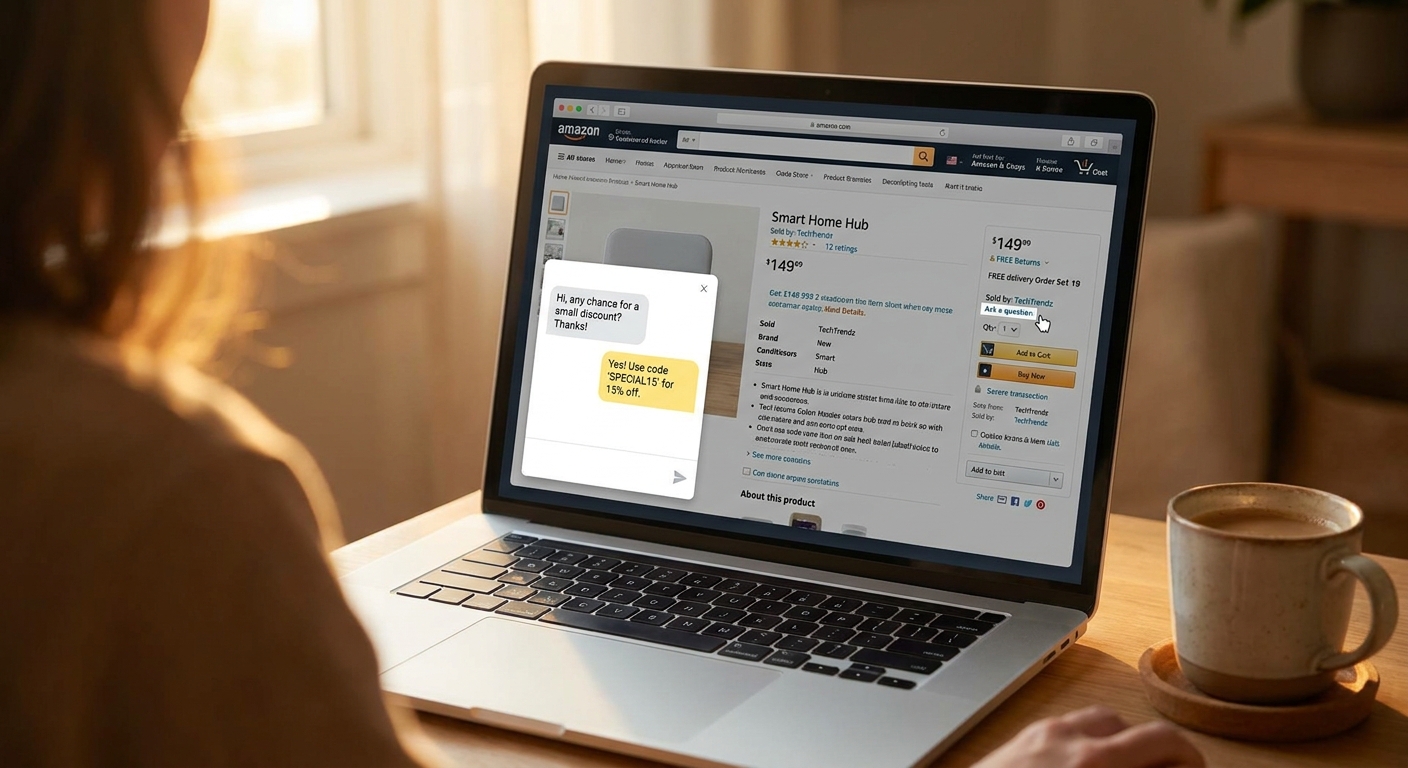
    Here is the part most deal roundups miss. Many smaller Amazon sellers quietly send one-off discounts through Amazon Messages when a buyer asks the right way. It is not magic, and it is not a scam by default. It is more like a backchannel sales tactic. Sellers want movement, reviews from verified buyers, and fewer abandoned carts. If you know how to contact them politely, and you know what to look for, this amazon secret promo code hack contact seller method can turn hidden seller DMs into real discounts that actually work at checkout.

    ⚡ In a Hurry? Key Takeaways

    • This “hack” is usually just contacting an Amazon seller and asking whether they have a private promo code or buyer discount for that item.
    • Your best shot is with smaller third-party brands, especially on products with no visible coupon but lots of competition.
    • Stay inside Amazon messaging, never pay off-platform, and avoid any seller asking for reviews in exchange for a discount.

    What the “Third-Party Message Match” trick actually is

    The name sounds more dramatic than the reality. In plain English, this is what happens.

    You find a product sold by a third-party seller on Amazon. There is no visible coupon box, no lightning deal, and no public promo listed on the page. Instead of hunting random code databases, you contact the seller through Amazon and ask if they have any current promotion for your account, or for first-time buyers, or for that specific item.

    If the seller is trying to boost sales, clear stock, or compete with similar listings, they may reply with a private code, a percentage-off offer, or instructions to apply a discount at checkout. Sometimes the code is generic. Sometimes it is limited-use. Sometimes it is tied to a specific ASIN or buyer account.

    That is why these discounts feel “secret.” They are often real, but they are not broadly advertised.

    Why sellers do this in the first place

    Small Amazon brands are under pressure all the time. They are fighting for attention against bigger names, sponsored listings, and constantly shifting prices. Public discounts can attract bargain hunters, but private discounts let a seller be more selective.

    Here is what a seller gets out of it:

    • A better chance of saving a sale that might otherwise disappear
    • Control over how many discounts get used
    • A way to move slower inventory without publicly slashing the price
    • A direct line to a buyer who is already interested

    In other words, they are not doing you a personal favor. They are trying to close the deal. That is fine. You just want the discount to be real and safe.

    How to use the amazon secret promo code hack contact seller method

    Step 1: Pick the right kind of product

    This works best on items sold by third-party sellers, not items sold directly by Amazon. You usually have a better chance with:

    • Small kitchen gadgets
    • Phone accessories
    • Home organizers
    • Beauty tools
    • Fitness add-ons
    • Private-label brands with lots of competitors

    If the listing already has a coupon checkbox, a big sale banner, or a lightning deal, the seller may have less reason to offer more. But if the product looks full price and the seller seems active, it is worth a try.

    Step 2: Confirm it is a third-party seller

    On the product page, look for the “Sold by” line. If it says a brand or storefront name rather than Amazon, you are in the right neighborhood.

    If it says “Ships from Amazon” but “Sold by” a third party, that can still work. Fulfillment method matters less than who controls the listing and promotions.

    Step 3: Contact the seller through Amazon

    Use the seller profile or the “Ask a question” option. Keep the message short, polite, and specific. You are not writing a novel. You are opening a sales conversation.

    Message template that actually sounds normal

    You can send something like this:

    “Hi, I’m interested in buying this item today. I don’t see any coupon on the listing, so I wanted to ask if you currently have any promo code or discount available for this product. Thanks.”

    Or this:

    “Hello, I’m comparing a few similar products and wanted to check whether you have any current buyer discount or promo for this item before I place the order.”

    That is it. No games. No fake sob story. No weird coupon-hunter language.

    Step 4: Wait for the reply and read it carefully

    If the seller responds with a code, check three things:

    • Where it should be entered
    • Whether there is a minimum quantity or order value
    • How long it is valid

    Some sellers send a clean promo code. Others tell you the discount will appear at checkout. A few may say they can only offer a price break if you buy multiple units.

    That can still be useful. Just make sure the savings are real before you click Buy Now.

    How to tell a real seller discount from nonsense

    This is where people get burned. A valid private discount should still follow Amazon’s normal order flow. You should not have to leave the platform, use a strange payment method, or message a phone number.

    Green flags

    • The seller replies through Amazon Messages
    • The discount applies during normal checkout
    • The offer is tied to the product you asked about
    • The seller does not ask you to change how you pay

    Red flags

    • The seller asks you to email them directly
    • The seller offers PayPal, gift cards, or off-Amazon payment
    • The seller promises a rebate after you leave a review
    • The seller asks for a five-star review in exchange for a discount

    That last one matters a lot. Amazon does not allow compensated reviews in that form. If a seller is trying to trade discounts for ratings, walk away.

    Why this works better than random coupon lists

    Public coupon lists are a mess. Some are scraped from old posts. Some are copied from limited-use influencer campaigns. Some were valid for 100 buyers and died three weeks ago.

    By contrast, contacting the seller gives you a live answer. It is current. It is tied to a real listing. And if the seller sends you a code, you know it came from the source rather than from a recycled “secret deals” page that has not been updated since spring.

    That means fewer wasted checkouts and fewer “promotion code you entered is not valid” messages.

    Best times to try it

    You do not need a major sales event for this to work. In fact, it can work better outside the biggest shopping holidays because small brands are trying harder to get attention.

    Good times to ask include:

    • End of month, when sellers may want to hit sales targets
    • Right after a competitor cuts pricing
    • On newer listings that need sales momentum
    • On items with lots of reviews in a crowded category

    If you are watching a full-price product for a few days and it never drops, that is exactly the kind of item worth messaging about.

    What kind of savings are realistic?

    Think modest, not miraculous. Most legitimate private discounts are likely to be in the 5 to 20 percent range. Sometimes you might see more, especially on lower-cost accessories with big margins, but do not expect every message to unlock some hidden half-off deal.

    The real win is not “I got a $200 item for $8.” The real win is getting a genuine extra discount on something that looked like it had no deal at all.

    How to improve your odds without sounding pushy

    Polite buyers get better results. Sellers can tell when they are dealing with someone serious versus someone firing off spammy “discount pls” messages to twenty brands.

    Here is what helps:

    • Mention the exact item
    • Say you are ready to buy soon
    • Ask once, clearly
    • Do not demand a specific percentage

    It is also smart to compare the final price with other retailers and similar Amazon listings. A “private” 10 percent off code is not special if the same item is cheaper elsewhere.

    When this method will not work

    Some categories are tightly priced. Some sellers simply do not respond. Some brands only run public promotions through Amazon’s built-in tools. And if the item is sold directly by Amazon, your odds drop fast.

    Also, if a listing is already heavily discounted, the seller may not stack another offer. Amazon promo rules can be picky. Some discounts combine. Some do not.

    So yes, this is useful. No, it is not a magic button.

    A simple rule of thumb

    If the product is from a smaller third-party seller, has no visible coupon, and you were already considering buying it, send the message. It takes two minutes. Worst case, the seller says no or never replies. Best case, you get a valid code other shoppers never see.

    At a Glance: Comparison

    Feature/Aspect Details Verdict
    Public promo-code lists Often outdated, mass-copied, or limited to expired campaigns Low reliability
    Contacting the seller directly Gets a current answer tied to the specific product and seller Best for hidden discounts
    Safety Safe if everything stays inside Amazon and no review trade or off-site payment is involved Use with caution, but useful

    Conclusion

    The real trick here is not some mystical coupon vault. It is knowing that small Amazon sellers sometimes hand out private, make-the-sale discounts if you contact them the right way. That matters right now because most deal coverage stays glued to giant public sale events while ignoring the quieter backchannel where brands are trying to win buyers one message at a time. If you stop refreshing sketchy code lists and start asking sellers directly, you can uncover account-specific or listing-specific reductions on items that appear to be full price. That means fewer checkout dead ends, fewer fake-code headaches, and more real savings on products that otherwise would not seem to be on sale at all.

  • The ‘Search Filter Trapdoor’ Hack: How One Tiny Toggle Reveals Amazon’s Real Hidden Promo-Price Deals

    The ‘Search Filter Trapdoor’ Hack: How One Tiny Toggle Reveals Amazon’s Real Hidden Promo-Price Deals

    You know the routine. You search for an Amazon deal, click three coupon sites, get hit with giant “90% OFF” banners, then find out the code expired last week or never worked on the item you wanted in the first place. It is frustrating, and it wastes a lot of time. The annoying part is that some of the best discounts are not on those coupon pages at all. They are sitting inside Amazon’s own search results, hidden behind one tiny filter that most people never bother to switch on.

    This little amazon search filter discount hack is less about secret codes and more about forcing Amazon to show you items with real, live savings attached. Once you know where to tap, you can spot products with clipped coupons, limited-time markdowns, and better percentages off than what shows up in the regular browse view. During Prime Day season, that matters. Stock changes fast, prices move around, and the people who find the real deals first are usually the ones using Amazon’s filters properly, not the ones refreshing old coupon blogs.

    ⚡ In a Hurry? Key Takeaways

    • The fastest way to find real Amazon discounts is to search your product, then turn on the discount and coupon-related filters inside Amazon’s results instead of hunting for outside promo codes.
    • Check for stacked savings by combining the filter view with on-page coupons, percentage-off badges, and the final checkout price before you buy.
    • This works best for live, in-stock deals, but always verify the seller, return policy, and actual total so a “deal” does not turn into a bad purchase.

    What the “search filter trapdoor” actually is

    The trick is simple. Search for the item type you want on Amazon, then open the filters and look for options tied to deals, discounts, coupons, Prime offers, or percentage-off ranges. The exact wording can change a bit depending on the category and whether you are on desktop or the app, but the idea is the same.

    Most people stop after typing “wireless earbuds” or “air fryer” and scrolling. That is where they miss the good stuff. Amazon often mixes full-price items, sponsored products, and weak offers into the main results. Once you turn on the right filter, the list changes. Suddenly, products with active promotions rise to the surface.

    That is the trapdoor. One tiny toggle. A very different set of results.

    Why this works better than random coupon sites

    Coupon sites love big promises. The problem is that many “Amazon promo codes” are either category-specific, account-specific, expired, limited to one seller, or attached to products no normal person was planning to buy anyway.

    Amazon’s own filters cut through that mess because they are showing discounts connected to listings that are live right now. That can include:

    • Clickable coupons on the product page
    • Limited-time sale pricing
    • Prime-exclusive discounts
    • Percentage-off deal badges
    • Extra savings that appear only when you check the listing details

    So instead of chasing a mythical code, you are starting with products that already have active savings attached.

    How to use the amazon search filter discount hack step by step

    1. Search for the product category, not the exact model first

    Start broad. Search “coffee maker,” “gaming monitor,” or “skin care serum” instead of a super-specific item number. This gives Amazon more room to show discounted alternatives you might miss otherwise.

    2. Open the filters

    On desktop, filters usually appear along the left side or near the top. In the app, tap the filter button after your search. Look for anything related to deals, discounts, coupons, Prime, or price reduction ranges.

    3. Turn on the savings-related toggle

    This is the key move. Depending on the category, you may see options like “Deals,” “Discount,” “Coupon,” “Prime Savings,” or percentage brackets such as “10% off or more.” Turn those on.

    If there are several, try them one at a time, then in combination. Some of the best finds show up only after narrowing the list.

    4. Sort with a little skepticism

    Do not assume the first result is the best. Sponsored listings can still float to the top. Scan for the green coupon box, the crossed-out old price, and the percentage-off badge. Then open a few promising products in new tabs.

    5. Check the final price, not just the sticker

    This is where smart shoppers separate a decent deal from a fake-out. A listing might show a markdown, but the real bargain appears only after you clip the coupon. Sometimes it is the other way around. The coupon looks great, but the “sale” price is still higher than similar products.

    Always look at the final total before you hit buy.

    The three deal types this filter helps you find

    Stacked coupon deals

    These are the fun ones. You will see an item already marked down, then notice a coupon box on the listing for an extra 5%, 10%, or dollar amount off. This is one reason the filter trick is useful. It helps bubble up items that are already in discount mode.

    Quiet markdowns

    Not every deal gets a flashy banner. Some prices just drop for a short window. If you are browsing the standard search page, they can blend in. Filtered results make these easier to spot.

    Boosted percentage-off listings

    During big shopping periods, Amazon sometimes shows stronger percentage-off badges in filtered deal views than you would notice in a general search. That does not mean every discount is amazing. It does mean they are easier to find when you tell Amazon to show them.

    Best categories to try this on

    This trick works especially well in categories where Amazon rotates promotions constantly:

    • Home and kitchen
    • Beauty and personal care
    • Electronics accessories
    • Pet supplies
    • Cleaning products
    • Office gear
    • Small appliances

    If you are bargain hunting ahead of a major sale event, it also pairs nicely with early-deal browsing. If you want another smart way to spot those, read The ‘Hidden Prime Preview’ Hack: How Early Deals Turn Into Secret Promo-Level Savings Before Prime Day. It fits the same theme. The best deals are often hiding in plain sight, just not on the pages most people check first.

    Common mistakes that make this hack seem like it does not work

    Searching too narrowly

    If you search an exact brand and model, Amazon may show only a handful of listings. That leaves less room for filtered deal discovery.

    Ignoring the coupon checkbox on the product page

    Some savings do not fully show until you open the item. If you skip that step, you can miss the extra discount.

    Forgetting to compare sellers

    The cheapest option is not always the safest. Check whether the item is sold by Amazon, the brand itself, or a third-party seller with solid ratings.

    Confusing “discounted” with “best value”

    A 30% discount on an overpriced item is still not a great buy. Compare features, reviews, and size. A genuine deal is about the final value, not just the biggest red number.

    How to tell if the deal is actually worth it

    Here is my simple test.

    • Is the item from a trustworthy seller?
    • Does it have enough reviews to feel real?
    • Is the discount visible at checkout, not just on the search page?
    • Would you still want this item if the discount were slightly smaller?

    If the answer to those is mostly yes, you probably found a real deal. If not, keep moving. The beauty of this method is that it gives you more live options without sending you into promo-code fantasy land.

    When to use this hack

    Use it when Prime Day chatter gets loud, when social feeds are full of “hurry, 50% off” posts, and when Google keeps feeding you the same tired coupon pages. It is also useful on normal shopping days, especially if you need something practical right away and do not want to wait around for a miracle code that may never show up.

    This is not about gaming Amazon. It is about using the search tools Amazon already gives you, just more carefully than most shoppers do.

    At a Glance: Comparison

    Feature/Aspect Details Verdict
    Outside coupon sites Often show expired, limited, or misleading promo codes that may not apply to your item. Low reliability for everyday shopping.
    Amazon filtered search results Surfaces live deals, coupon listings, and current markdowns that are still tied to products in stock. Best starting point for real-time savings.
    Final checkout verification Confirms whether the clipped coupon, sale badge, or Prime discount actually lowers your total. Essential before buying.

    Conclusion

    If you are tired of chasing promo codes that lead nowhere, this is the better route. Right now, with Prime Day hype flooding Google and social feeds, everyone is chasing the same headline “50% off” codes that either do not apply to what they actually want or were gone yesterday. This hack helps you cut through that noise by using Amazon’s own search tools to find real discounts that are still in stock. That means stacked instant coupons, time-limited markdowns, and quietly boosted percentages off that only appear once you filter for them. It saves time, cuts down on checkout disappointment, and gives you something actually useful today, whether you are shopping for batteries, blenders, or a new office chair. Small toggle. Big difference.