You know the routine. A creator posts a “secret” Amazon promo code, people rush to copy it, and then the code either works on weird off-brand stuff or refuses to apply to the one thing you actually wanted. That is the part that drives shoppers nuts. It is not just the failed discount. It is the wasted time clicking through random listings, testing dead ends, and wondering whether the code is bad or your cart is. The good news is there is a cleaner way to do this. Instead of treating each code like a one-time lottery ticket, you can use one small filter move to turn it into a targeted shopping list. Think of it as building your own private shelf of Prime-eligible items that are far more likely to accept the code. Once you learn the hidden Prime list shuffle, the whole amazon promo code hack prime filter process starts feeling less like luck and more like a system.
⚡ In a Hurry? Key Takeaways
- Use the Prime filter after opening a promo code’s product pool to strip out non-matching junk and surface the items most likely to qualify.
- Save the filtered results as your own repeatable “Prime-only code shelf” so the next viral code is faster to test against what you actually want.
- Always verify the final discount on the checkout screen, because Amazon can hide valid savings until the last step.
What the “Hidden Prime List Shuffle” actually is
This is not a browser extension or some shady script. It is just a smarter way to sort Amazon’s own results after you land on a promo code’s eligible-item list.
Most viral codes point to a broad collection page, search result, storefront, or bundle of “eligible” items. The problem is that these lists are messy. They often mix in non-Prime sellers, slow shipping, odd variations, or products you would never buy.
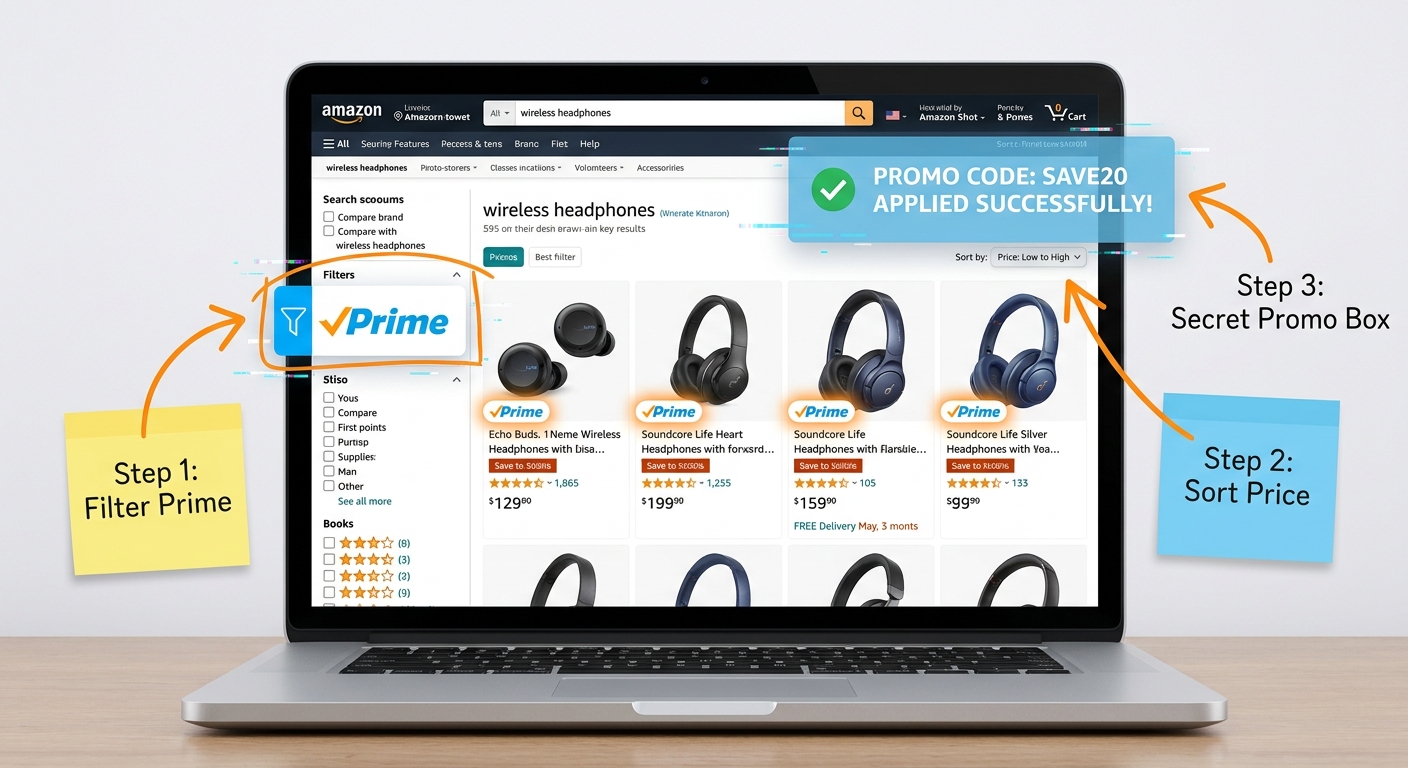
The shuffle is simple. Open the item pool connected to the code, then apply the Prime filter right away. After that, sort and refine again by category, rating, brand, or price range. You are not hunting for the code anymore. You are shrinking the list until only useful options are left.
That is the real amazon promo code hack prime filter trick. You stop testing random products one by one and start forcing Amazon to show the best candidates first.
Why this works better than copying codes blind
Amazon promo codes are rarely universal. They usually attach to a seller, product family, brand page, or hidden set of ASINs. When a TikTok or newsletter shares only the code and a vague screenshot, shoppers end up guessing.
The Prime filter helps because Prime-eligible items often overlap with the listings people actually want. Faster shipping. Better fulfillment. Cleaner seller standards. Fewer weird marketplace surprises.
It does not guarantee the code will apply to every Prime item in view. But it cuts out a lot of junk fast.
The big benefit
You save time. A lot of it.
Instead of trying 20 random listings, you are testing a much tighter set of products that are more likely to be in stock, easier to return, and worth buying even before the discount.
How to do the Prime list shuffle step by step
1. Start with the code source, not the checkout box
If a creator gives you a direct Amazon link tied to the promotion, click that first. If they only give you a code, look for any clues. Brand name, product type, category, or a screenshot of the landing page.
You want the code’s item universe before you try to buy anything.
2. Apply the Prime filter immediately
Once you are on the search results or brand page, tap the Prime checkbox or filter. On mobile, this may be hidden in the filter menu. On desktop, it is usually easier to spot.
This is the tiny move most people skip.
3. Narrow the list again
Now add a second filter based on what you actually need:
- Price range
- Average customer review
- Specific category
- Brand
- Size, color, or pack count
This turns a chaotic promo pool into a shortlist you can actually shop.
4. Open a few strong candidates in new tabs
Pick the items that look like real buys, not filler. Check for:
- Sold by the expected seller or brand
- Prime shipping badge
- Visible coupon checkbox on the page
- Good review count and recent ratings
If you see a coupon checkbox, clip it. Some discounts stack, and some do not. It is still worth testing.
If you want to go one step further, our guide to The “Hidden Double Dip Checkout” Hack: How One Tiny Arrow Lets You Stack Amazon Coupons With Secret Promo Codes explains why a working savings combo can look invisible until later in checkout.
5. Test the code on one item first
Do not load up your cart with five maybe-eligible products. Add one likely match and test the code. If it applies, great. Then duplicate the process with similar items from that filtered pool.
If it fails, remove that item and try the next one from the same Prime-filtered shortlist.
6. Save the winners into your own “Prime-only code shelf”
This is the part that turns a one-time trick into a repeatable system.
Create an Amazon list, wishlist, or even a note on your phone with:
- The promo code
- The brand or seller
- The Prime-filtered product links that worked
- The discount amount and expiration date
Now when a fresh code drops from the same brand or seller family, you already have a map.
What shoppers usually get wrong
They assume “eligible items” means all visible items
It often does not. Sometimes only one size, color, or variation qualifies. Sometimes only a specific seller listing works. This is why the same product page can look valid but still reject the code.
They trust the first search result
Amazon loves duplicates, sponsored placements, and tiny variation traps. The first result is not always the right one.
They quit too early at checkout
Some discounts do not show clearly in the cart summary. They pop in later. If the item looks right, move carefully through checkout before deciding the promo failed. Again, that is where the Hidden Double Dip Checkout trick can save you from missing a real deal.
How to tell whether a code is worth chasing
Not every viral code deserves your time. Use this quick filter before you even start:
- If the code has no product clue at all, it is low priority.
- If the linked page has Prime-eligible results and recognizable brands, it is worth testing.
- If the discount is large but the item pool looks like clearance leftovers, skip it.
- If the code comes from a seller you have seen before, your saved Prime shelf becomes much more useful.
The goal is not to test every code on the internet. The goal is to get better at spotting the ones that can become real savings for your own cart.
Why this matters more during big deal periods
As deal events get closer, Amazon and third-party sellers tend to tighten eligibility. That means more exclusions, more variation-specific deals, and more promo codes that technically work but only on a thin slice of products.
That is exactly when the Prime list shuffle helps most.
Instead of chasing giant coupon roundups full of dead ends, you build a smaller, cleaner list based on shipping status, seller quality, and products you would actually buy. It is calmer. It is faster. And it usually leads to fewer checkout surprises.
At a Glance: Comparison
| Feature/Aspect | Details | Verdict |
|---|---|---|
| Blind code testing | Paste the promo into checkout and hope your current cart happens to match hidden eligibility rules. | Fast to try, but usually frustrating. |
| Prime list shuffle | Open the code’s item pool, filter for Prime, then narrow by category, reviews, brand, and price before testing. | Best balance of speed and real-world results. |
| Saved Prime-only code shelf | Keep a personal list of brands, sellers, and products that matched previous secret promo codes. | Most useful for repeat deal hunters. |
Conclusion
The smartest part of this hack is not the filter itself. It is the habit. Today there is a flood of creator TikToks and newsletters dropping fresh Amazon promo codes, but almost no one shows you how to flip those one-off codes into a repeatable system for your own cart. That is why the hidden Prime list shuffle matters right now. Amazon keeps tightening what counts as a valid item, especially around upcoming deal events, and this method helps you stop chasing random code lists and start building a personalized Prime-only code shelf you can reuse any time a new secret code leaks. It cuts the time you waste on dead links and mismatched items, and turns every trending code into a much more targeted discount you can actually check out with today.