Blog

  • The “Gift Card Loop” Hack: How Targeted Amazon Credits Quietly Turn Into Real Promo Code Power

    The “Gift Card Loop” Hack: How Targeted Amazon Credits Quietly Turn Into Real Promo Code Power

    You are not crazy if it feels like other people keep getting little Amazon credits that never land in your account. That frustration is real. One shopper gets a few dollars after a late delivery. Another gets a small bank-linked promo. Someone else notices a loyalty email that quietly adds money at checkout. Meanwhile, you are staring at expired coupon lists and dead TikTok promo codes that were gone hours ago. The good news is this is not always about luck. A lot of these savings are hidden in plain sight, and the real trick is learning how to spot, stack, and track them before they vanish. Think of the hidden Amazon credits promo code hack less like finding one magic code and more like building a small loop. You collect credits from different places, watch when they apply, and use them on the right order so scattered discounts start acting like real promo code power.

    ⚡ In a Hurry? Key Takeaways

    • Amazon “mystery credits” are usually targeted offers, service credits, or payment promos that auto-apply at checkout rather than traditional public coupon codes.
    • Start checking your gift card balance, promotion messages, archived emails, and checkout payment screen after every delayed order or card-linked offer.
    • This works best as a tracking habit, not a gimmick. Stay away from sketchy code sellers or “generator” sites that promise fake Amazon credits.

    What the “Gift Card Loop” really means

    The name sounds more secretive than it is. There is no hidden hacker tool here. The “loop” is just a smart shopping habit.

    You gather small Amazon credits from places most people ignore. Then you use those credits in a way that keeps creating more chances for savings. A delayed package might trigger a courtesy credit. A bank card promo might knock a few dollars off if you use reward points. A no-rush shipping offer can add digital credit. A targeted email may apply a discount only to your account.

    On their own, these are tiny. Easy to shrug off. But together they can work like your own private promo bank.

    Why these credits feel random

    Because, honestly, they often are targeted. Amazon does not hand every shopper the exact same offer.

    Common places hidden credits come from

    Here are the usual sources:

    • Late delivery or customer service courtesy credits
    • No-rush shipping rewards, often for digital items
    • Prime-related trial or retention promos
    • Credit card or debit card linked offers
    • Use-points promotions from card issuers
    • “Spend X, get Y” offers tied to your account
    • Email-only or app-only targeted discounts
    • Trade-in or return-related account credits

    This is why public coupon roundups often disappoint people. They focus on codes everyone can see, while many of the best Amazon savings are account-specific and applied behind the scenes.

    How to spot credits that are easy to miss

    This is where most people lose money. The credit exists, but it gets buried.

    1. Check your checkout screen slowly

    Amazon often applies credits automatically. That sounds convenient, but it also means you may never notice them unless you read the payment summary line by line.

    Look for language like:

    • Promotion Applied
    • Your available balance
    • Courtesy Credit
    • Rewards points discount
    • Digital promotional credit

    2. Search your email for key phrases

    Try searching your inbox for:

    • Amazon promotional credit
    • courtesy credit
    • late delivery
    • no-rush reward
    • eligible for promotion

    Some offers are buried in old messages you forgot about.

    3. Check gift card and balance areas

    Not every credit appears as a classic gift card balance, but it is still worth checking your account balance pages. Some shoppers have money sitting there and do not realize it because they expected a code, not an automatic deduction.

    4. Watch your payment method offers

    Certain Visa, Amex, Discover, or Mastercard promos only show up if the right card is attached to your account. Others only trigger if you use one reward point. Yes, one point. That tiny move can unlock a much bigger discount.

    How to build the loop on purpose

    This is the part that turns random luck into a system.

    Step 1. Keep a simple credit note

    Use your phone notes app. Nothing fancy.

    Track:

    • Date credit appeared
    • Amount
    • Where it came from
    • What it can be used on
    • Expiration date

    If you skip this step, little credits expire quietly and the loop breaks.

    Step 2. Separate flexible credits from restricted ones

    Some credits work on almost anything sold by Amazon. Others only work on digital items, select categories, or items shipped and sold by Amazon.

    This matters a lot. A $5 digital credit is useful, but not for paper towels. A card-linked promo may only work once. A courtesy credit may apply broadly or narrowly.

    Step 3. Save small purchases for credit-trigger moments

    Have a list of low-cost “filler” items you already need. Batteries. Coffee filters. Phone cable. Dishwasher pods.

    When a small credit appears, use it on something practical instead of impulse junk. That is how a $3 credit becomes real value instead of fake savings.

    Step 4. Stack when possible

    The sweet spot is when an item has a coupon, a temporary price drop, and one of your private credits.

    That is also why it helps to keep an eye on timing. If you want help reading those short-term price swings, this piece on The “Price Pulse Promo” Hack: How 72‑Hour Amazon Price Swings Quietly Unlock Extra Hidden Codes fits nicely with this strategy. Public discounts are better when they meet your hidden account credits at the right moment.

    Examples of the loop in real life

    Here is what this can look like in plain English.

    Example 1. The late package loop

    Your order arrives late. Customer service offers a small courtesy credit. You note the amount and expiration. A week later, you use it on a household item that also has a clipped coupon. The order total drops more than expected. Not flashy, but real.

    Example 2. The bank promo loop

    Your card issuer offers a discount for using one reward point on Amazon. You activate it, spend one point, and the discount applies. You make a note so you remember which card triggered it. Next time a similar promo lands, you know exactly what to do.

    Example 3. The no-rush loop

    You choose slower shipping on a non-urgent order and get a digital credit. Later, you use that credit on a movie rental, ebook, or song you would have paid for anyway. That frees up regular cash for your next physical purchase.

    What this is not

    Let’s clear up some confusion.

    The hidden Amazon credits promo code hack is not:

    • A code generator
    • A guaranteed daily promo for everyone
    • A loophole that beats Amazon’s system forever
    • A trick that requires fake accounts or shady apps

    If a website promises unlimited free Amazon balance, walk away. Fast.

    How to improve your odds of getting targeted credits

    No one can force Amazon to send targeted offers, but you can make yourself more likely to notice and use the ones you do get.

    Use one main Amazon account consistently

    Scattered shopping across different accounts makes it harder to track promos and credits.

    Do not ignore customer service resolutions

    If an order is genuinely delayed or mishandled, check whether a courtesy credit was added. Be polite. Do not game it. But do pay attention.

    Look before you click “Place Order”

    That final checkout page is where many of these quiet credits reveal themselves.

    Keep promo emails on, at least in a separate folder

    If you unsubscribe from everything, you may miss account-specific offers that never appear on public deal pages.

    Check cards and reward programs monthly

    Bank promos come and go. So do “use rewards points” offers. They are often short-lived.

    Mistakes that waste your credits

    These are the big ones.

    Using a broad credit on a low-value item too soon

    If the credit works on lots of categories, wait until you can combine it with a sale or coupon.

    Forgetting expiration dates

    This is the number one problem. Tiny credits disappear because nobody tracks them.

    Mixing up digital credits and regular credits

    A digital promo is not the same as cash-like account balance. Read the terms.

    Assuming no public code means no savings

    That mindset is exactly why this method gets overlooked. Some of the best Amazon discounts are not sitting in a big promo box waiting for you to paste them in.

    At a Glance: Comparison

    Feature/Aspect Details Verdict
    Public promo codes Easy to search for, but often expired, limited, or already overused by the time shoppers try them. Good when they work, but unreliable alone.
    Hidden account credits Usually targeted, auto-applied, and tied to your account, order history, shipping choices, or payment method. More dependable if you track them carefully.
    Gift Card Loop system A habit of collecting, logging, timing, and stacking small credits so they act like your own private discount pool. Best long-term approach for steady Amazon savings.

    Conclusion

    If you keep refreshing Reddit asking, “Any actual promo code for today?” you are not alone. Plenty of shoppers are doing the same while missing the quiet stuff already sitting in their own accounts. That is the real value of the hidden Amazon credits promo code hack. It is not about chasing one lucky code dump. It is about noticing the late-delivery credit, the loyalty email, the card promo, the no-rush reward, and then tracking those pieces like they matter, because they do. Once you start treating scattered micro-credits as your own private discount fuel, Amazon feels a lot less random. And even if the public coupon scene dries up again tomorrow, you still have a smarter system working in the background.

  • The “Browser Double‑Check” Hack: How Live Price History Turns Fake Amazon Promo Codes Into Real Savings

    The “Browser Double‑Check” Hack: How Live Price History Turns Fake Amazon Promo Codes Into Real Savings

    You are not crazy. A lot of Amazon “secret” promo codes really do feel like a waste of time. You find a flashy 30 percent or 40 percent off post, paste the code at checkout, and either it fails or it knocks a few dollars off an item that was cheaper two weeks ago anyway. That is the part most deal posts leave out. A working code is not always a good deal. The smarter move is a simple browser double-check. Before you get excited about the code, look at the item’s live price history and compare today’s final checkout price with what the product sold for last month. If the code beats the recent low, great. If not, skip it. This is one of the amazon promo code hacks that actually work because it filters out fake discounts fast and helps you keep your energy for deals that truly save money.

    ⚡ In a Hurry? Key Takeaways

    • A promo code only counts as a real deal if the final price beats or matches the item’s recent price history.
    • Check the product page with a price-history tool first, then test only verified codes at checkout.
    • This method helps you avoid fake discounts, recycled codes, and “savings” that are worse than last month’s regular price.

    Why so many Amazon promo codes feel fake

    Because many of them are not exactly fake. They are just misleading.

    A code can still work and be a lousy deal. Sellers raise the list price, add a coupon, or attach a promo code that makes the discount look dramatic. You see “40 percent off” and assume jackpot. But if the item was already selling for about that same final price last month, you did not really win anything.

    That is why the browser double-check matters. It answers the question shoppers actually care about. Not “Does the code work?” but “Does this beat the normal street price?”

    What the “browser double-check” hack actually is

    It is a two-part test.

    Step 1. Check live price history

    Open the Amazon product page and use a price-history tool or browser extension that shows how the item has moved over time. You want to see the recent lows, the average selling price, and whether today’s “sale” looks unusual or routine.

    Step 2. Compare that with the final checkout total

    Then apply the promo code and any on-page coupon. Look at the real total before tax. If that final number is lower than the recent low, or at least clearly below the usual selling range, then you probably found a real deal.

    If the code works but the final price is still higher than what the item sold for last week, move on. No guilt. No wasted time.

    How to do it in under two minutes

    Here is the quick routine I recommend.

    1. Open the Amazon product page.
    2. Check the item’s price history for the last 30, 90, or 120 days.
    3. Note the recent low price.
    4. Clip any on-page coupon first.
    5. Apply the promo code at checkout.
    6. Compare the final price with the recent low.
    7. Buy only if it truly beats the item’s normal range.

    That is it. No spreadsheet. No detective board on the wall. Just a better filter.

    What counts as a real win

    A real win is not “the code applied.” A real win is one of these:

    • The final price is the lowest you have seen in the recent price chart.
    • The final price is within a few percent of the historical low and you need the item now.
    • The code stacks with a coupon and pushes the item well below its usual selling price.

    What does not count?

    • A 40 percent code on an item with an inflated list price.
    • A code that saves $6 when the product was $12 cheaper last month.
    • A “limited time deal” that lands right in the item’s normal price range.

    Why this works better than chasing every code post

    Most shoppers are drowning in recycled coupon pages, expired social posts, and scraped lists that copy one another. The volume is the problem. Too many codes. Not enough context.

    This hack adds context. It helps you stop treating every code like a treasure map. Some are useful. Many are noise.

    If you already collect multiple codes before checkout, pair this method with The “One–Cart Code Sweep” Hack: How Daily Reddit Drops Turn A Single Amazon Checkout Into A Multi‑Code Payday. That approach helps organize the code hunt. The browser double-check helps you decide whether the hunt is even worth it.

    Common traps this hack helps you avoid

    Inflated anchor prices

    This is the classic one. The seller shows a big markdown from a higher price that the product barely sold at. The code looks generous. The final price is ordinary.

    Codes that only work on variations nobody wants

    Sometimes the promo applies only to one color, one pack size, or one odd version. Price history helps you see whether that version is truly discounted or just dressed up.

    Short-lived spikes before a “discount”

    An item jumps in price for a few days, then gets a coupon or code. The chart usually gives that away quickly.

    Bad comparisons from coupon sites

    Many coupon sites track whether a code applied, not whether it delivered a strong final price. That is a huge difference.

    Best practices for verified codes

    Try to stick with code sources that show recent success reports or community comments. If a code was tested today and other shoppers can confirm the item and version, your odds go up.

    Also, always clip on-page coupons before entering a code. Amazon deals often stack in ways that are easy to miss.

    And remember, not every product category behaves the same. Small electronics, beauty gadgets, kitchen tools, and accessories often bounce around in price. That makes price history even more important.

    When to skip the code hunt entirely

    If the item’s price history shows big swings every week, and today is nowhere near a low, save yourself the trouble. Put it on a watchlist and wait.

    If the product has very little price history, treat the discount claim with more caution.

    If the seller is unknown and the “deal” seems too theatrical, check reviews, seller ratings, and return policy before doing anything else.

    At a Glance: Comparison

    Feature/Aspect Details Verdict
    Promo code alone Tells you only whether a discount applied, not whether the item is truly cheaper than usual. Not enough by itself
    Price history check Shows recent lows, normal selling range, and whether today’s “sale” is special or routine. Essential
    Combined browser double-check Matches verified codes with live price history to judge the real final value. Best method for deal hunters

    Conclusion

    The best Amazon savings usually do not come from testing every flashy code you see. They come from slowing down for one extra check. Right now shoppers are flooded with half-expired, recycled, and AI-scraped promo codes that may technically work but save almost nothing compared with last month’s price. Pairing live price history with verified codes cuts through that noise. It helps you avoid fake discounts, skip weak “deals,” and lock in only the promo codes that actually beat past lows. In a high-inflation, code-saturated shopping world, that is one of the amazon promo code hacks that actually work.

  • The “Invite‑Only Coupon Trail” Hack: How Amazon’s Private Email Offers Turn Into Public Checkout Codes

    The “Invite‑Only Coupon Trail” Hack: How Amazon’s Private Email Offers Turn Into Public Checkout Codes

    It is annoying to watch other people brag about 40 percent off on Amazon while your screen shows the same item at full price. No special email. No lucky app banner. No secret credit waiting in your account. Just the regular price and that sneaky feeling that some shoppers are getting into a side door you never even knew existed. The good news is that a lot of these “invite only” discounts are not as magical as they look. They often start as targeted email offers, app promos, or limited landing pages, then spread through deal forums, screenshots, and shared links. If you know what to look for, you can sometimes test those same offers on your own account, a fresh cart, or a qualifying item before the discount disappears. It is not guaranteed, and it is not the same as hacking anything. It is simply learning how Amazon’s private promo trail works, and using it before the trail goes cold.

    ⚡ In a Hurry? Key Takeaways

    • Many “invite-only” Amazon discounts begin as targeted email or app links, but some can still attach to other eligible accounts or fresh carts.
    • When you see a deal screenshot or forum post, save the product link, promo page, and exact terms, then test it in a new cart before assuming it is dead.
    • Stick to real Amazon pages and checkout discounts. Never pay for access to a code, and never give strangers your login.

    What the “Invite-Only Coupon Trail” really is

    Most people imagine these deals as one-time codes sent to one lucky person. Sometimes that is true. But a lot of Amazon targeted promos work in a looser way.

    Amazon sends an email with a button. The button opens a special landing page, a promo activation page, or a product page with hidden eligibility attached. Then the original shopper posts a screenshot to a deal group. Someone else copies the link. A few more people test it. Suddenly a “private” offer starts floating around in public.

    That is the trail.

    The code itself may be private. The path to trigger it may not be. That is why the same offer can work for one shopper, fail for another, and then work again for someone using a fresh cart or a different account.

    Why these discounts feel so unfair

    Because they kind of are.

    Amazon has gotten very good at hiding the best savings behind behavior-based offers. You may get a deal because you have not bought from a category lately. Or because you use the app. Or because you ignored your cart for three days. Or because Amazon wants to push a certain brand to a certain type of buyer.

    So while public coupon pages look thinner every year, the real savings are often buried in targeted campaigns. If you are only checking the normal coupon box on product listings, you are missing a whole layer of discounts.

    This is also why deal communities matter more now. They are often the first place these hidden promos escape into the open.

    How to use targeted amazon promo codes from emails and deals

    Here is the simple version. You are not trying to guess random codes. You are trying to follow the same path the original recipient used.

    1. Look for the source, not just the screenshot

    A screenshot that says “I got 50% off” is not enough. You want the Amazon link, the product page, the promo landing page, or the exact wording from the email.

    Useful clues include:

    • “Apply promotion” buttons
    • “See if you qualify” landing pages
    • “Sent from Amazon” emails with a product-specific link
    • Checkout messages like “Promotion Applied” or “You saved with a special offer”

    If all you have is a screenshot, zoom in and look for the product ASIN, seller name, discount wording, and expiration date. Those details can help you find the original listing or promotion page.

    2. Test with a fresh cart

    This matters more than people think.

    Amazon sometimes “remembers” failed promo attempts in an old cart. A stale cart can also hold an expired coupon state. Remove the item, clear saved-for-later clutter, then build a fresh cart from the product page again.

    Sometimes the same offer shows up only after you click through the original deal link and add the item again from that page.

    3. Check if the deal is tied to the item, the account, or the path

    These promos usually fall into three buckets:

    • Item-tied. The discount attaches to a specific product or seller and works for many people until a budget cap runs out.
    • Account-tied. The promo only works on selected accounts. One person gets it, another does not.
    • Path-tied. You must click the right email link, app banner, or landing page first, or the discount never activates.

    Your job is to figure out which bucket you are dealing with. If dozens of people say “worked for me” after using the same link, that is a good sign it is not strictly locked to one account.

    4. Try the app if the desktop site fails

    Some Amazon promos are weirdly picky. They may show in the app but not on the desktop site, or the other way around. If you only test one version, you can miss a valid offer.

    Also check your in-app messages, promotional banners on the home screen, and the coupon area under your account. Sometimes the public deal thread starts from a banner that disappears later, but the linked page still works.

    5. Read the checkout line carefully

    A discount can appear in a few different places:

    • On the product page before you buy
    • In the cart subtotal area
    • At the final payment page
    • As a line-item promotion after tax and shipping are calculated

    Do not stop too early. Plenty of targeted promos do not show their full effect until the last checkout step.

    The patterns shoppers keep seeing in 2026

    The easiest way to find these deals is to notice the repeating patterns. Amazon changes the details, but the structure stays familiar.

    New account or low-activity account offers

    Some deals seem to favor accounts that have not bought much lately, or new accounts that have not used a certain promo type before. That does not mean you should break Amazon’s rules. It just means you should understand why a deal thread may be full of mixed results.

    Specific category pushes

    Beauty, household gadgets, supplements, baby items, and private-label accessories often get the weirdest hidden promos. Brands use Amazon to quietly test discounts without publicly cutting the listed price.

    Seller-funded checkout discounts

    These are especially common. A seller wants momentum. They fund a deep discount, let it spread quietly, and cap the budget. The deal may still work long after the email screenshot starts circulating, right up until the promo budget is exhausted.

    Clip plus code stacks

    One of the classic trails is a visible coupon box paired with a less visible promo code or private landing page. If the post only mentions one part, the deal can look dead when it is actually incomplete.

    This is also why stacking matters. If you want to go beyond single checkout codes, it is worth reading The “Gift Card Reload Loop” Hack: How Hidden Reload Bonuses Turn Full‑Price Amazon Orders Into Quiet 20–40% Off. It covers another layer of Amazon savings that many shoppers miss because the discount happens before the order, not on the item page.

    How to turn a shared deal post into something usable

    This is the part most people skip. They see a brag post, try one code, fail, and move on. Better approach:

    Step 1. Save everything

    Copy the product link, seller name, posted code, expiration date, and any language like “must click offer first” or “app only.” Tiny details matter.

    Step 2. Open the product from the original path

    If the post includes an email link, app deep link, or promo page, use that first. Do not search for the item manually right away. The route itself may be what activates the offer.

    Step 3. Test one variable at a time

    Do not change five things at once. Try:

    • Desktop vs app
    • Fresh cart vs old cart
    • Signed-in account vs another eligible household account
    • One quantity vs the exact quantity in the deal post

    If you change everything at once, you will never know what actually made the deal work.

    Step 4. Watch the seller

    If a third-party seller changes, the promo often dies instantly. Two listings can look identical while only one has the funded discount behind it.

    Step 5. Check comments for the real truth

    The top post may be old, but the newest comments tell you whether the discount is still attaching. This is often where people report things like “works only in app” or “had to click activate first.”

    Common reasons a targeted promo fails

    If the discount does not show up, it does not always mean the deal was fake.

    You are not in the eligible group

    This is the most obvious reason. Some promos really are limited to selected accounts.

    The promo budget ran out

    Amazon and sellers often cap the number of discounted redemptions. The link may still open fine while the savings are already gone.

    The item changed underneath the deal

    New seller. New variation. New size. Same page, different eligibility.

    You missed a required step

    Maybe the offer had to be clipped first. Maybe it needed the app. Maybe it only worked with one unit or with Subscribe & Save turned off.

    Your account already used a similar offer

    Some promos are one per account, even if the listing is still live.

    Safety rules that matter

    This part is boring, but it saves money and headaches.

    • Never buy “exclusive Amazon codes” from strangers.
    • Never hand over your Amazon login so someone can “activate” a promo for you.
    • Only test links that clearly go to Amazon pages.
    • Be careful with browser extensions or shady coupon sites that ask for too much access.
    • Check the final sold-by and shipped-by details before placing the order.

    If a deal requires weird hoops outside Amazon, skip it. Real targeted promos may be hidden, but they should still resolve inside normal Amazon checkout.

    When it is worth trying, and when to move on

    If a shared deal has multiple recent success reports, a real Amazon link, and a clear product path, it is worth a quick test. If all you have is a blurry screenshot and “DM me for code,” save your time.

    This is really the best mindset for 2026 Amazon shopping. Be curious, not desperate. Test fast. Keep records. Move on when a trail is cold.

    At a Glance: Comparison

    Feature/Aspect Details Verdict
    Email or app targeted offers Often start private, but some still work if you use the original link or activation path. Worth testing, especially with fresh carts and recent deal reports.
    Shared screenshots and deal threads Useful for clues, but the screenshot alone is rarely enough. You need the route, item, seller, and terms. Helpful starting point, not proof that a deal still works.
    Random “secret code” sellers online Usually unreliable, risky, or outright shady. Many are reselling public info or guessing. Skip it. Stick with real Amazon checkout promos.

    Conclusion

    If Amazon discounts have felt fake lately, you are not imagining it. A lot of the real savings are hiding in targeted promos that only show up through specific email links, app banners, or niche deal threads, which means most shoppers never see them or assume they are gone when a banner disappears. The trick is learning the patterns. Check whether the offer is tied to the account, the item, or the path. Try fresh carts. Watch seller changes. Save the original links when someone posts proof. That is how ordinary shoppers can turn other people’s screenshots and deal posts into reusable opportunities instead of just envy fuel. No, every invite-only coupon will not work for everyone. But once you know how to follow the trail, you stop staring at those “you’ve been selected” messages like they came from another planet. And in 2026, when public coupon pages keep getting thinner, that small unfair edge is exactly what more shoppers are chasing.

  • The “Viral Code Scrape” Hack: How TikTok’s ‘Copy These Amazon Codes’ Reels Turn Into Your Own Private Discount Database

    The “Viral Code Scrape” Hack: How TikTok’s ‘Copy These Amazon Codes’ Reels Turn Into Your Own Private Discount Database

    You spot a TikTok with a “secret” Amazon code, sprint to the app, paste it at checkout, and get… nothing. Expired. Wrong item. One-use only. Or it works, but only on a neon garlic press nobody asked for. That is the part nobody tells you when these viral videos promise easy savings. The good news is the chaos can be turned into a system. Instead of chasing every creator bio link and hoping for a miracle, you can collect TikTok Amazon secret promo codes in one place, sort them by product type and timing, and check which ones are actually alive before you waste a cart. Once you do that, those random Reels stop feeling like a scavenger hunt and start acting like your own private discount database. It takes a few minutes of setup, but after that, you can start spotting patterns, keeping the good codes, and skipping the fake or useless ones.

    ⚡ In a Hurry? Key Takeaways

    • TikTok Amazon secret promo codes can save real money, but only if you collect and verify them instead of testing them one by one in a panic.
    • Start a simple notes app or spreadsheet with the code, product link, creator, date posted, and claimed discount so you can track what actually works.
    • Always cross-check social video codes against verified listings on Best Amazon Coupons, because many viral codes are expired, product-specific, or misleading.

    Why these viral Amazon code videos feel so messy

    Creators are often pulling codes from seller dashboards, coupon tools, affiliate groups, and private deal lists. Then they package them into quick videos that make every discount look universal.

    It usually is not universal.

    A code might only work on one size, one color, one seller, or during a tiny time window. By the time the Reel hits your feed, the deal may already be gone. That is why shoppers feel like they are always late to the party.

    The trick is to stop treating each video like a one-off tip. Treat it like raw data instead.

    What the “viral code scrape” hack actually means

    No, this is not hacking in the shady sense. It is really just a smarter way to collect useful info from social videos before it disappears into the scroll.

    You are building a personal deal log from TikTok, Instagram, and Facebook Reels. Every time you see a code, you grab the details and save them in one place. Over time, you build a private list of repeat sellers, product categories, posting times, and discount patterns.

    That changes everything.

    Instead of hoping one random code works, you start seeing clusters. Maybe kitchen gadgets from one seller get fresh codes every Thursday. Maybe beauty tools posted by three creators all point back to the same promo family. Maybe pet products have codes that die within 12 hours, while home storage deals last two days.

    How to build your own private discount database

    Step 1: Capture the code fast

    When you see a promising video, save these details right away:

    • The promo code
    • The Amazon product link or ASIN
    • The product category
    • The creator name
    • The date and time posted
    • The claimed discount, like 20 percent off plus coupon

    A basic notes app works fine. A spreadsheet is better if you want to sort later.

    Step 2: Organize by category

    Do not dump everything into one giant list. Split it into useful groups like:

    • Home and kitchen
    • Beauty and personal care
    • Electronics
    • Pet supplies
    • Baby products

    This helps you spot which types of products get frequent code drops. It also saves you from testing 15 beauty codes when you only need a desk lamp.

    Step 3: Track timing

    Timing matters more than most people realize. Add a simple status note:

    • Fresh, posted today
    • Probably active, posted within 48 hours
    • Old, likely expired

    Many social promo codes burn out fast. If a creator posted it five days ago, chances are not great.

    Step 4: Note seller patterns

    If the same seller or brand keeps showing up, flag it. Repeat sellers often run similar discounts across several products. One dead code is annoying. A seller who runs codes every week is useful.

    This is also where a related trick can help. If you want to go beyond public Reels and start understanding how creator-only deals spread, this guide on The “Creator Code Cross‑Over” Hack: How To Turn Influencer‑Only Amazon Deals Into Your Own Private Promo Code Feed is worth a look. It explains why some of the best codes seem to live inside influencer circles before everyone else sees them.

    How to check if a code is real before wasting your time

    This is the part most shoppers skip. It is also the part that saves the most frustration.

    Cross-check against a verified coupon source

    Before you fill a cart around a social video claim, look for a confirmed listing on Best Amazon Coupons. If the code or matching product deal shows up there, your odds improve a lot.

    You are basically using social videos as the alert system and a verified coupon site as the filter.

    Check the product details closely

    Amazon discounts often depend on tiny details, such as:

    • Specific seller, not all sellers on the listing
    • Specific variation, like the blue model not the black one
    • Coupon box on page must be checked first
    • Prime-only or account-limited offer

    If the code fails, it may not be fake. It may just be ultra-specific.

    Look for “stacking” claims carefully

    Many viral videos say things like “40 percent off code plus 20 percent coupon.” Sometimes that is true. Sometimes one part is gone. Sometimes the creator is quoting the original launch discount from two days ago.

    Write down both parts separately. That way you know whether the code failed, the clickable coupon disappeared, or the seller changed the deal structure.

    How to turn random finds into a weekly savings routine

    The best part of this method is that it gets easier the more you use it.

    Create a short daily scan

    Give yourself 10 minutes. That is enough.

    • Check saved TikToks or Reels
    • Pull out new codes
    • Sort them into your list
    • Verify the strongest ones
    • Delete stale entries

    You do not need to become a full-time coupon detective. You just need a repeatable habit.

    Focus on products you actually buy

    This sounds obvious, but viral deals are built to distract you. A 60 percent off gadget is not a bargain if it was never on your shopping list.

    Build a short watchlist of things you buy often, like:

    • Paper goods
    • Cleaning supplies
    • Phone accessories
    • Pet food tools and toys
    • Skincare basics

    Then compare incoming codes against that list first.

    Save “code families”

    Sometimes creators post variations of the same code style from the same seller. If you notice codes with similar wording tied to one brand, keep them together. Even when one expires, the next one may follow the same pattern.

    That is when your list stops being a pile of coupons and starts being a useful map.

    Red flags to watch for

    Not every viral code is worth your time. Watch out for these warning signs:

    • No product link, just “link in bio” with vague details
    • Huge discount claim with no screenshot from checkout
    • Video reposted many times without updated dates
    • Comments full of “doesn’t work” and no creator update
    • Code applies to a weird variant nobody wants

    If a deal feels slippery, it probably is.

    At a Glance: Comparison

    Feature/Aspect Details Verdict
    Viral social video codes Fast to find, often exciting, but many are expired, niche, or missing key conditions Good for discovery, bad as your only source
    Personal code database Lets you sort by category, creator, seller, and timing so patterns become obvious Best long-term method
    Verified coupon cross-check Confirms whether a code or matching offer is still working before you build a cart around it Essential time-saver

    Conclusion

    The real win here is not chasing one lucky discount. It is building a simple system that works again and again. Creators are flooding TikTok, Instagram and Facebook Reels with hidden Amazon promo codes pulled from tools like DealSeek and private seller lists, but very few people explain how regular shoppers can make sense of that mess. Once you start pulling fresh code clusters from social videos, sorting them by category and timing, and checking them against verified working codes on Best Amazon Coupons, the whole thing gets easier. You stop wasting energy on dead links and mystery offers. You start saving on things you actually planned to buy. That is the difference between random bargain hunting and a repeatable routine that can shave real money off multiple carts each week.

  • The “S&S First‑Order Flip” Hack: How One‑Time Buyers Are Quietly Grabbing 25–40% Off With ‘Fake’ Subscriptions

    The “S&S First‑Order Flip” Hack: How One‑Time Buyers Are Quietly Grabbing 25–40% Off With ‘Fake’ Subscriptions

    You are not imagining it. Amazon’s Subscribe & Save page really can feel like a trap. One minute you see a big fat discount, then a green coupon, then a warning about future deliveries, and suddenly it sounds like you just signed up for a tiny household bill you did not mean to create. That is why a lot of shoppers skip it and pay full price. Meanwhile, people who know the pattern are quietly using what many call the amazon subscribe and save coupon stacking hack. They grab the first-order discount, stack the clickable coupon when one is offered, place the order, and then cancel or skip the next delivery before the regular higher price shows up. It is not magic, and it is not really a “glitch.” It is just knowing where Amazon hides the savings, and how to use them on stuff you were already planning to buy anyway, like detergent, dog food, coffee pods, vitamins, and toothpaste.

    ⚡ In a Hurry? Key Takeaways

    • The best Subscribe & Save deals often come from stacking a first-order S&S discount with a green on-page coupon.
    • Buy the item, then immediately check your Subscribe & Save dashboard so you can cancel or skip the next delivery before the regular price hits.
    • This works best on everyday staples you already need, but always watch for seller quality, changing prices, and coupon fine print.

    What the “S&S First-Order Flip” actually is

    Let’s strip away the mystery.

    The trick is simple. You find an item that has all three of these at once:

    • A normal one-time purchase price
    • A bigger Subscribe & Save discount for the first order
    • A green clickable coupon on the product page

    When those stack, the first shipment can drop by 25 to 40 percent, sometimes more on smaller household items.

    Then comes the “flip” part. You are not staying subscribed forever. You are using the first delivery discount, then going into your Amazon account and canceling or skipping the next shipment before it renews at the standard price.

    That is why so many shoppers like this on staples. It is not about buying weird stuff just because it is cheap. It is about catching a real discount on items you were already buying this week.

    Why this feels confusing the first time

    Amazon does not explain this well.

    The page may show a 5 percent Subscribe & Save discount in one place, a “Save 20% on your first S&S order” note somewhere else, and then a green coupon box that you have to click manually. If you miss that green box, you can leave a big chunk of savings on the table.

    Some listings are also inconsistent. The mobile app may show the deal differently than desktop. The seller may change. The coupon may vanish after a few hours. So shoppers assume it is too messy to bother with.

    But once you know the checklist, it becomes much easier.

    How to spot a stackable Subscribe & Save deal fast

    1. Start with boring essentials

    Your best odds are usually in everyday categories:

    • Pet food and treats
    • Laundry and cleaning supplies
    • Coffee and drink pods
    • Toiletries
    • Paper products
    • Vitamins and supplements

    These are the categories where brands fight hard for repeat buyers, so Amazon and the manufacturer often sweeten the first order.

    2. Look for the green coupon box

    This is the big one.

    If you see a green coupon that says something like “Apply 20% coupon” or “Save $4.00,” click it before adding the item. Many people assume it applies automatically. It often does not. You usually need to check the box.

    3. Compare one-time price vs Subscribe & Save price

    Do not just look at the bold percentage.

    Check the actual final price for one-time purchase and Subscribe & Save. Sometimes the S&S version is only a little lower. Other times the first-order offer makes it much better.

    4. Watch for “first order only” wording

    This is the sweet spot. Phrases like these are what you want:

    • Save 20% on your first Subscribe & Save order
    • Get 30% off your first S&S delivery
    • Extra savings on first subscription

    If it says “first delivery only,” that is a clue you are looking at the right type of offer.

    5. Check who sells it

    Try to stick with “Ships from Amazon” and ideally “Sold by Amazon” or a known brand storefront when possible. That lowers the odds of weird substitutions, old stock, or coupon games from shaky third-party sellers.

    How the math usually works

    Here is a simple example.

    A box of coffee pods is listed at $24.99 one-time.

    • Subscribe & Save first-order discount: 20% off
    • Green coupon: 15% off

    That can bring the final price down close to the high teens, depending on how Amazon applies the discounts. Sometimes one is taken off the list price and the other is applied after. Sometimes it is a dollar coupon instead of a percentage. The exact math varies, but the important part is this:

    The stacked total is often far better than either discount alone.

    Before you tap Buy, look at the final checkout summary. That is where the truth is.

    How to do the “first-order flip” safely

    This is the part that keeps it from becoming an annoying future charge.

    Step 1: Place the Subscribe & Save order

    After clipping the coupon and choosing Subscribe & Save, place the order like normal.

    Step 2: Wait until the order is confirmed

    Do not panic-cancel right away on the product page. Let the order process and show up in your account.

    Step 3: Go to your Subscribe & Save dashboard

    In Amazon, go to your account and find the Subscribe & Save section. You should see the item and the next scheduled delivery date.

    Step 4: Cancel or skip the next shipment

    If you only wanted the first discounted order, either cancel the subscription or skip the next delivery. Which option appears can depend on the item and timing.

    The goal is simple. Keep the discounted first shipment. Avoid the second shipment at the normal price.

    Step 5: Set yourself a reminder anyway

    Even if you cancel immediately, I still like to tell people to set a calendar reminder for a week later. Just check that the subscription really disappeared and there is no future shipment scheduled.

    Is this against the rules?

    For most shoppers, no. You are using the options Amazon gives you.

    Subscribe & Save is designed to be flexible. Amazon itself lets you skip, pause, or cancel many items. If a first-order promotion is available and a coupon can be clipped, using both is typically just smart shopping.

    Where people get into trouble is assuming every deal will stack, or buying things they do not actually need because the discount looks exciting.

    That is not saving money. That is just impulse shopping with better branding.

    Common mistakes that kill the deal

    Forgetting to clip the coupon

    This is probably the most common mistake. If the green box is there, click it.

    Not checking the final checkout price

    Sometimes the coupon does not combine the way you expected. Always verify before paying.

    Missing the next delivery date

    If you let the second shipment go through, your “deal” can get a lot less impressive.

    Buying from a sketchy seller

    A giant discount is not worth much if the product is late, damaged, or fake.

    Confusing S&S with promo code stacking

    These are cousins, not twins. If you also chase Amazon coupon codes from social posts and deal forums, it helps to understand how different discounts interact. That is where The “One–Cart Code Sweep” Hack: How Daily Reddit Drops Turn A Single Amazon Checkout Into A Multi‑Code Payday is worth a read. It explains why tossing a bunch of discounts into one cart can get messy fast.

    When this hack is actually worth your time

    Use it when all three are true:

    • You already planned to buy the item
    • The first-order S&S discount is real, not tiny
    • You are willing to take 30 seconds to cancel or skip the future delivery

    If any of those are missing, move on.

    A 7 percent discount on a random snack you do not need is not a win. A 32 percent stacked discount on dog food you buy every month anyway, that is a win.

    Best categories to watch right now

    The current wave of aggressive first-order promos has been especially noticeable on:

    • Pet food and litter
    • Dish soap, detergent, and disinfecting wipes
    • Coffee, pods, and creamers
    • Shampoo, razors, toothpaste, and deodorant
    • Baby and household basics

    That matters because these are not fantasy deals on random gadgets. These are products people burn through every month. Catching one good stack in these categories can beat clipping coupons at the grocery store, with a lot less effort.

    At a Glance: Comparison

    Feature/Aspect Details Verdict
    Discount size Best results usually come from a first-order S&S promo plus a clipped green coupon, often landing in the 25 to 40 percent range. Very good when stacked correctly
    Ease of use Not hard, but you do need to check fine print, clip the coupon, and verify the final checkout total. Easy after the first try
    Risk level Main risk is forgetting the next shipment or buying from a poor seller, not the discount itself. Low risk if you cancel promptly

    Conclusion

    If Subscribe & Save has always felt like one of those “too annoying to bother” Amazon features, this is the part worth knowing. Right now there really is a wave of aggressive first-order Subscribe & Save promos on staples like pet food, cleaning supplies, coffee, and toiletries. Add in the green coupons that many shoppers miss, and the savings can be much better than they look at first glance. The smart move is not to subscribe to everything. It is to quickly spot the stackable deals, use the first-order discount on things you already need, and then cancel or skip the next shipment before a price hike catches you. Done right, the amazon subscribe and save coupon stacking hack is less about gaming the system and more about finally getting the same cash savings other shoppers have been quietly pocketing all along.

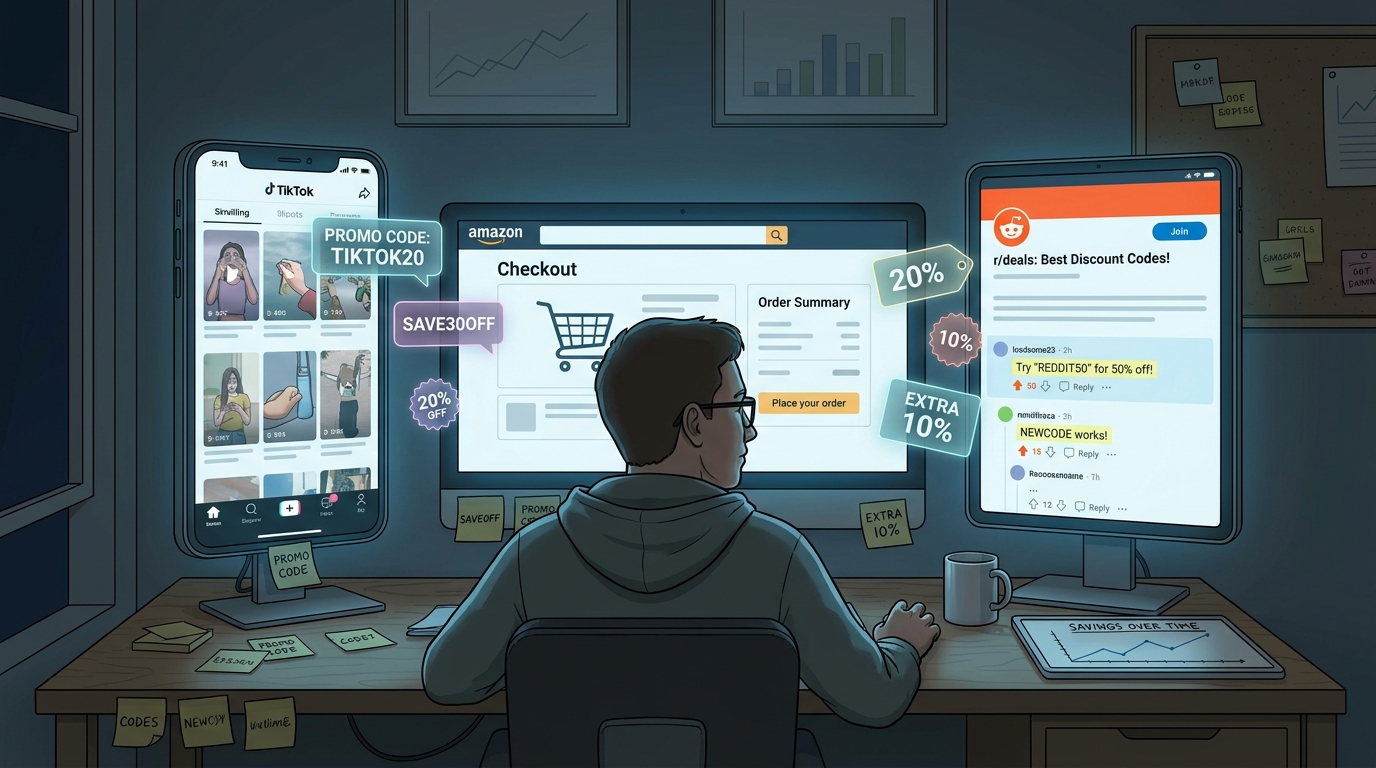
  • The “One–Cart Code Sweep” Hack: How Daily Reddit Drops Turn A Single Amazon Checkout Into A Multi‑Code Payday

    The “One–Cart Code Sweep” Hack: How Daily Reddit Drops Turn A Single Amazon Checkout Into A Multi‑Code Payday

    You find a juicy Amazon code on Reddit. Then another on TikTok. Then a deal blog says it still works. Twenty minutes later, you have six tabs open, three random gadgets in your cart, and every code says invalid. That is the part nobody talks about. The real problem is not finding Amazon promo code hacks Reddit users post every day. It is catching the right code before it expires, before the item changes sellers, or before the creator’s limit gets burned up. The fix is a simple routine I call the one-cart code sweep. Instead of testing codes all over the place, you build one temporary cart, verify deals fast, and keep only the winners. It turns discount chaos into something you can do in a few focused minutes each day, without spending your whole evening chasing savings that disappeared ten minutes before you got there.

    ⚡ In a Hurry? Key Takeaways

    • Use one Amazon cart as a daily testing zone so you can quickly spot which promo codes are real, item-specific, or already dead.
    • Start with recent Reddit roundups, add only likely matches to your cart, then test codes in a tight 10 to 15 minute sweep.
    • Never buy just because a code works. Check seller, final price, and whether the discount stacks with a coupon box or Subscribe & Save.

    Why Reddit promo code hunting feels so messy

    Reddit is fast. That is both the magic and the headache.

    People post Amazon promo codes the minute they spot them. But many of these deals are fragile. They may only work on one color, one size, one seller, or the exact product variation linked in the original post. Sometimes the code is fine, but the listing changed. Sometimes the coupon limit is already hit. Sometimes a creator-only code escaped into the wild and dies as soon as too many people try it.

    That is why random code hunting feels cursed. You are not doing it wrong. You are just testing in a scattered way.

    What the “one-cart code sweep” actually is

    The one-cart code sweep is a simple habit.

    Once a day, usually in the morning or early evening, you open your Reddit deal sources, pull only the most recent Amazon code drops, and place the likely matching items into one Amazon cart. Then you test each code against that cart in a focused pass. You keep notes. You remove the dead items. You buy only the products that still make sense at the final checkout price.

    The point is speed and clarity. One cart. One session. One decision point.

    Why this works better than tab chaos

    Amazon promo codes are often short-lived. If you spend too much time bouncing among posts, creator pages, and deal blogs, you lose the race. A one-cart sweep helps because it cuts out the slow part. You stop re-finding listings and re-copying codes over and over.

    You are also more likely to catch stacking discounts this way. Amazon often lets a promo code combine with an on-page coupon, a lightning deal, or Subscribe & Save. When everything is in one place, those little savings are easier to spot.

    How to do a daily one-cart code sweep

    Step 1: Start with fresh posts only

    For Amazon promo code hacks Reddit users share, time matters more than volume.

    Look at posts from the last few hours first. A code from this morning beats a code from yesterday almost every time. Sort by new when possible. If a post has comments saying “dead” or “worked five minutes ago,” treat that as your warning light.

    Do not grab everything. Pick 5 to 10 deals that fit things you actually buy or have been watching. If you add 30 random products, you are back in chaos again.

    Step 2: Match the exact item

    This is where many people lose money or time.

    Check color, size, pack count, and seller. Amazon codes can be weirdly specific. “Same item” is often not the same item in Amazon terms. The wrong variation can make a live code look dead.

    If the Reddit post links straight to the listing, use that link. If not, compare the details carefully before adding it to your cart.

    Step 3: Build one temporary cart

    Add your likely matches to one cart. Think of it as a testing tray, not a shopping commitment.

    At this stage, you are not buying. You are sorting the truth from the noise.

    Keep the cart small enough to manage. Five to ten items is a sweet spot for most people.

    Step 4: Test codes one by one

    Go to checkout or the cart promo code field and start testing.

    As each code is applied, note one of three outcomes:

    • Works exactly as posted
    • Works, but only on one item or one variation
    • Dead or no longer eligible

    If a code fails, do not retry it five times unless you found a likely mismatch in seller or variation. Most dead codes stay dead.

    Step 5: Check for stackable savings

    This is where the payday part comes in.

    Look for:

    • On-page coupon boxes
    • Lightning deals
    • Subscribe & Save
    • Multi-buy discounts

    A 20 percent promo code on top of a clipped coupon can beat a flashier “50 percent off” post that never actually works.

    If you want to get better at spotting those creator-style overlaps, this guide on The “Creator Code Cross-Over” Hack: How To Turn Influencer-Only Amazon Deals Into Your Own Private Promo Code Feed is worth reading. It explains why some of the best Amazon discounts look random from the outside but actually follow a pattern.

    Step 6: Compare final price, not headline discount

    This is your safety step.

    A code is only useful if the final price is actually good. Some sellers quietly raise prices before a promo. Others make the discount sound huge on social media, but the final checkout total is still mediocre.

    Ignore the drama. Look at the final number.

    What to keep in your sweep notes

    You do not need a spreadsheet if that sounds annoying. A basic phone note works fine.

    Track:

    • Product name
    • Code
    • Source post
    • Time tested
    • Worked, partial, or dead
    • Final price after discounts

    After a few days, you will notice patterns. Certain Reddit communities post faster. Certain creators burn through code limits quickly. Certain product categories, like kitchen tools or phone accessories, tend to have more stackable deals than others.

    Common mistakes that kill the hack

    Testing old roundups

    If a roundup is stale, your results will be stale too. Fresh posts win.

    Buying because the code works

    This is the classic trap. A working code is not the same as a good deal.

    Ignoring the seller

    If the seller changes, the promo often disappears. Always check who is selling the item in the cart.

    Chasing categories you never shop

    Saving 40 percent on a random gadget you did not want is still spending money you did not need to spend.

    Who this works best for

    This trick is best for shoppers who already buy everyday household items, small electronics, kitchen gadgets, beauty products, or giftable basics on Amazon.

    It is less useful if you only shop once every few months. The advantage comes from repetition. A short daily sweep beats a giant once-a-month deal binge.

    At a Glance: Comparison

    Feature/Aspect Details Verdict
    Speed One-cart testing cuts down on tab-hopping and lets you verify several codes in one session. Best for short-lived daily code drops.
    Savings potential Works especially well when promo codes stack with coupons, lightning deals, or Subscribe & Save. Can turn a single checkout into multiple real discounts.
    Risk Codes expire fast, seller changes break deals, and some discounts look better than they are. Safe if you check final price and avoid impulse buys.

    Conclusion

    If Amazon deal hunting has started to feel like a second job, the one-cart code sweep is a much saner way to do it. Right now there really is a surge of short-lived codes popping up in Reddit roundups, private groups, and creator circles. The problem is that most people either miss them or waste half the night testing junk codes on random listings. A focused daily sweep gives you a repeatable habit. You see what is real, what stacks, and what is already dead, before you overpay or doom-scroll yourself into frustration. With prices jumping around and code limits burning out faster than ever this week, a little structure goes a long way. Keep it simple, keep it fast, and let one cart do the heavy lifting.

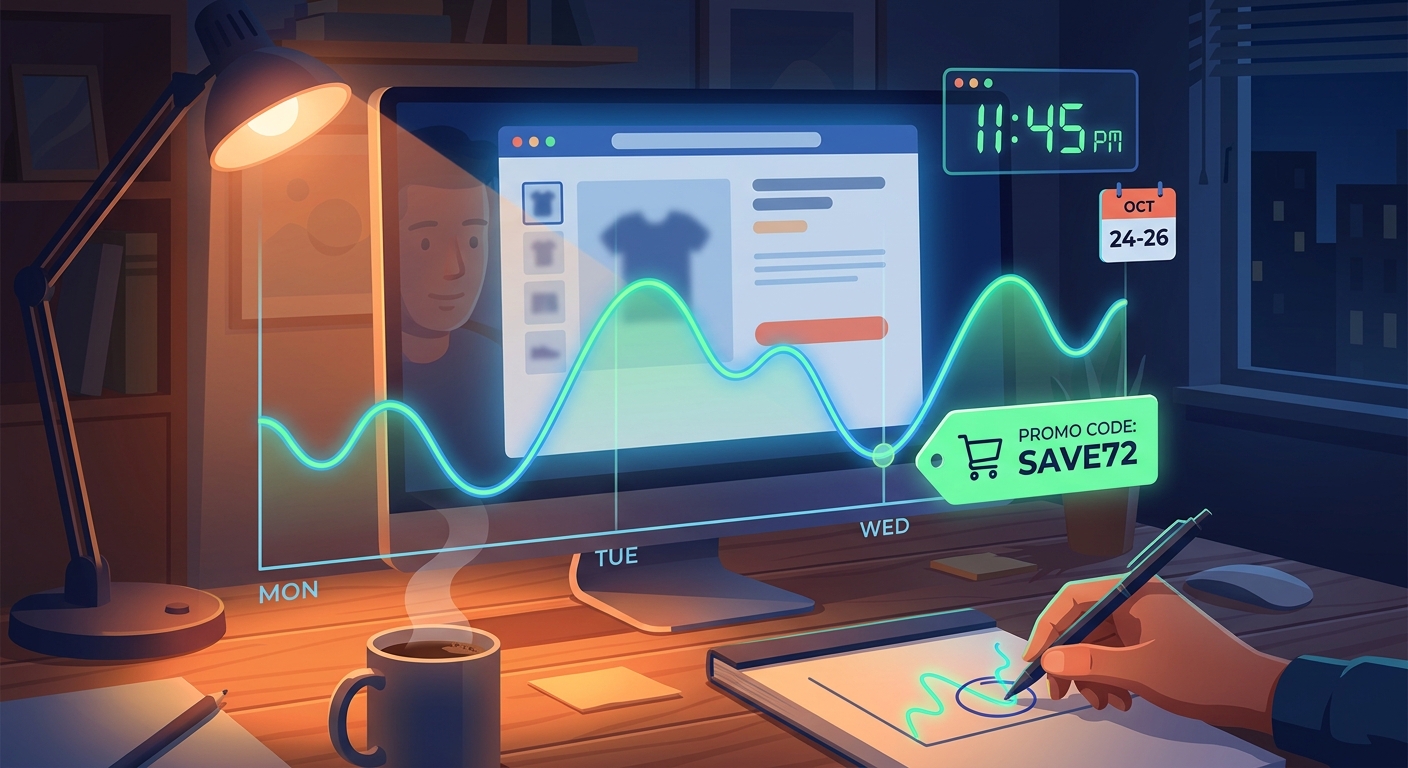
  • The “Price Pulse Promo” Hack: How 72‑Hour Amazon Price Swings Quietly Unlock Extra Hidden Codes

    The “Price Pulse Promo” Hack: How 72‑Hour Amazon Price Swings Quietly Unlock Extra Hidden Codes

    You are not imagining it. Amazon prices really do seem to bounce around for no clear reason, and it is maddening when you finally spot a promo code only to learn the item jumped back up overnight. That is why so many shoppers feel burned by every so-called amazon price glitch promo code hack they see on TikTok, Reddit, or coupon blogs. The better move is not chasing every code. It is watching the product price itself. Many items now move in short 24 to 72-hour pulses. When that dip lines up with a small verified code, coupon, or Subscribe & Save offer, that is when the real discount shows up. Think paper towels, vitamins, headphones, coffee pods, air fryers, and even office gear. The trick is simple. Track first. Buy second. Code last. That one small change can save you more than hours of random code hunting.

    ⚡ In a Hurry? Key Takeaways

    • The best “hack” is usually not a magic code. It is catching a short Amazon price dip, then applying a verified promo on top.
    • Track items for 2 to 3 days before buying, especially staples and electronics, because many discounts appear in small price pulses.
    • Be careful with viral codes. Most do not stack, many are expired, and some push you to buy at the wrong time.

    Why this feels so hard right now

    Most shoppers are using the old playbook. Search for a code. Paste it in. Hope for the best.

    That used to work better than it does now. Today, Amazon often changes the base price so quickly that a public code may save less than a simple overnight dip would have saved by itself. That is why people keep feeling one step late.

    A lot of what gets called an amazon price glitch promo code hack is not a glitch at all. It is just timing. Bad timing for some people. Good timing for the ones who were watching.

    What a “price pulse” really is

    A price pulse is a short-term drop, often lasting a few hours up to about three days. It may not get a big deal badge. It may not appear on the front page of deal sites. But it is real.

    Amazon uses constant pricing tests. That can mean one size of detergent drops for half a day. A certain color of earbuds goes lower overnight. A household item dips Tuesday morning, then climbs by dinner.

    These are the moments where small extra discounts matter most.

    Why 72 hours matters

    For many products, three days is enough time to spot a pattern. If an item has bounced twice in that window, you can usually tell whether the current price is normal, inflated, or worth jumping on.

    You do not need a spreadsheet obsession. You just need a little patience.

    How to use the smarter method

    Step 1: Pick the item before you hunt for codes

    Start with what you already need. Laundry pods. Printer ink. Protein powder. A new monitor. Not “whatever has a code today.” That is how impulse buying starts.

    Step 2: Track the product price for 48 to 72 hours

    Use a price tracker, your Amazon cart, wish list, or even a note on your phone. Check the item at different times of day. Morning and late evening are often enough.

    You are looking for one thing. Does the price keep snapping back and forth?

    Step 3: Check the on-page discounts

    Before you go searching the internet, look at the listing itself. Amazon often hides savings in plain sight:

    • Clip coupon boxes
    • Limited-time deals
    • Brand promo banners
    • Subscribe & Save discounts
    • Prime-only offers

    These are usually more reliable than random social posts.

    Step 4: Test only a small set of verified codes

    Do not paste twenty mystery codes into checkout. That wastes time and can trigger frustration fast.

    Instead, use a short list from sources that actually verify current codes. The key is that the code should be the last layer, not the first move.

    Step 5: Compare the final checkout total, not the advertised discount

    This is where people get fooled. A flashy “20% off” code sounds great, but if the item price rose 18% since yesterday, you barely saved anything.

    The checkout total is the truth.

    Where most “promo hack” advice goes wrong

    A lot of deal content is built to get clicks, not to help you buy well. It focuses on the code because the code is exciting. But the base price does most of the work.

    If the item is at a weekly high, even a valid promo may be weak.

    If the item is at a short-term low, even a small extra discount can be excellent.

    That is the whole game.

    What kinds of items this works best on

    Everyday staples

    Paper goods, vitamins, coffee, pet supplies, razors, trash bags, and cleaning products often bounce in small but useful amounts. A 6% dip plus a 10% coupon can beat a loud coupon-site promo.

    Mid-range electronics

    Headphones, smart plugs, webcams, keyboards, SSDs, and routers are famous for quick testing. The listed price may move more than the coupon does.

    Big-ticket buys

    Office chairs, robot vacuums, air purifiers, and kitchen appliances can swing enough that waiting two days matters. Here, patience can save real money.

    How to avoid fake urgency

    If you have ever bought something because a YouTube description screamed “USE CODE NOW BEFORE IT DIES,” you are not alone. That pressure works. But it often gets people to buy at the peak.

    Use this simple filter:

    • If the code is real but the price is higher than it was yesterday, wait.
    • If the code is unverified and the item is not a need, skip it.
    • If the item hits a tracked low and a code stacks, buy with confidence.

    One overlooked trick at checkout

    Sometimes your biggest hidden savings are not public codes at all. They are account-specific credits that quietly apply during checkout. If you have ever had a late package or canceled shipment, it is worth reading The “Quiet Courtesy Credit” Hack: How Package Delays Turn Into Hidden Amazon Promo Cash At Checkout. It explains why some shoppers have promo value sitting there without realizing it.

    That matters because a short price dip plus a small code plus a courtesy credit can turn an average deal into a very good one.

    Red flags that tell you to walk away

    • The code only works on one odd variation, like a strange color or bundle no one wants.
    • The item price jumped right before the code appeared.
    • The savings disappear after shipping or seller changes.
    • The listing is from an unknown third-party seller with messy reviews.
    • You were not planning to buy it until the code tempted you.

    If two or more of those show up, it is probably not a deal. It is bait.

    A simple weekly routine that actually works

    If you shop Amazon a lot, keep a small watch list of 5 to 10 items you genuinely need. Check them once in the morning and once at night for a few days. That is enough to notice pulses.

    When you see a dip, then go look for:

    • on-page coupons
    • brand promos
    • Subscribe & Save
    • one or two tested codes

    That routine beats doom-scrolling coupon pages every time.

    At a Glance: Comparison

    Feature/Aspect Details Verdict
    Public promo codes Easy to find, but often expired, weak, or blocked from stacking with other offers Useful only after you confirm the base price is already low
    72-hour price tracking Shows whether Amazon is testing higher and lower prices on the same item Best first step for finding real savings
    Stacked savings Combines a short price dip with a coupon, verified code, or hidden account credit Usually the strongest way to cut the final total

    Conclusion

    The real lesson here is simple. Stop treating every viral amazon price glitch promo code hack like a treasure map. Right now Amazon is running constant micro price tests on everyday items, and plenty of shoppers are noticing that public promo codes often do not stack or barely move the total. The edge comes from tracking short price pulses, waiting for the dip, and then using a small set of verified codes or credits at the right moment. That can save money on boring staples and bigger purchases this week, but just as important, it helps you avoid buying at the exact wrong time just because a flashy code popped up online. A little patience beats panic shopping every time.

  • The “Card Shuffle Stack” Hack: How Rotating Bank Cards Unlocks Fresh Hidden Amazon Promo Codes Over And Over

    The “Card Shuffle Stack” Hack: How Rotating Bank Cards Unlocks Fresh Hidden Amazon Promo Codes Over And Over

    You find a great Amazon deal, add it to your cart, paste in the promo, and then get the message nobody wants to see. “Not eligible for this promotion.” It feels random, and honestly, a little maddening. The annoying part is that it often is not random at all. Many of Amazon’s best discounts are targeted to specific payment methods, especially cards linked to Amex Membership Rewards, Chase Ultimate Rewards, Citi ThankYou Points, or Discover. That means the same account can look “dead” with one card and suddenly light up with savings when you switch to another. That is the idea behind the amazon pay with points promo code hack people keep talking about. It is not really a magic code. It is more like learning how Amazon decides who gets the deal. If you rotate your saved cards on purpose, enroll each one in Pay with Points, and test small purchases, you can often uncover fresh offers long after you thought the discounts were gone.

    ⚡ In a Hurry? Key Takeaways

    • Many Amazon “promo codes” are actually targeted Pay with Points offers tied to a specific eligible card, not your whole account.
    • Rotate your Amex, Chase, Citi, or Discover cards one by one, activate Pay with Points on each, and test checkout with just 1 point to see which card is currently eligible.
    • Use this carefully. Read the terms, do not overspend to chase a discount, and remember these offers change often or vanish without warning.

    What the “Card Shuffle Stack” hack really means

    This hack sounds fancier than it is. You are not tricking Amazon. You are not using shady software. You are simply changing which eligible rewards card is attached and selected at checkout, then checking whether that card triggers a targeted promotion.

    Amazon runs a steady stream of Pay with Points deals. A common one might be “Get 40% off, up to $20, when using Membership Rewards points.” Another might be 20% off, up to $50, with Discover or Chase points. The catch is that not every card, and not every account, gets the same offer.

    That is why one person swears a promo works, while you keep getting rejected.

    Why your discounts seem to “dry up”

    Most people assume Amazon promo eligibility is simple. It is not. These offers can depend on several things at once:

    • Which bank issued the card
    • Whether that card is enrolled in Pay with Points
    • Whether Amazon has targeted that specific card or account
    • Whether you used a similar offer recently
    • Whether the item in your cart qualifies

    So if you used your Amex card for a Pay with Points promo last month, that card may not be your “hot” one anymore. But your Discover card might suddenly qualify. Or an old Chase card you barely use could be the winner this week.

    Think of it like flipping through channels instead of assuming the TV is broken.

    How to try the amazon pay with points promo code hack safely

    Step 1: Gather your eligible rewards cards

    Start with cards that earn points or cash back and can connect to Amazon Pay with Points. The most common ones are:

    • American Express Membership Rewards
    • Chase Ultimate Rewards
    • Citi ThankYou Rewards
    • Discover rewards

    Not every card from those banks will qualify the same way, but these are the usual suspects.

    Step 2: Link each card to Amazon

    Add the card to your Amazon wallet if it is not already there. Then look for the option to enroll or connect rewards points for that card. Amazon usually guides you through this during checkout or in your payment settings.

    If the card is not linked for Pay with Points, the offer often will not show up at all.

    Step 3: Test one card at a time

    This is the key move. Do not leave a pile of cards selected and hope for the best. Pick one card. Make it the active payment method. Put an eligible item in your cart, then see whether a promotion appears at checkout.

    Some shoppers use a small household item as a test purchase. That is smart. You do not need to start with a $400 gadget.

    Step 4: Use the minimum amount of points

    When a Pay with Points offer appears, the sweet spot is usually to use just 1 point. Literally one point, if the terms allow it. You get the promotional discount without draining a pile of valuable credit card rewards.

    This is the part many people miss. They think the deal requires paying mostly in points. Usually it does not.

    Step 5: Rotate to the next card if nothing shows up

    If Card A gets you nowhere, switch to Card B. Then Card C. The whole “card shuffle stack” idea is really just a repeatable testing routine. You are checking which card Amazon currently likes best for that type of promotion.

    What kinds of discounts people usually find

    The offers change all the time, but the common range is pretty generous:

    • 20% off with a cap like $10 or $20
    • 30% off on select categories
    • 40% or 50% off with a maximum discount cap
    • Targeted statement-style savings at checkout for using 1 point

    The max discount matters more than the percentage. A “50% off” offer capped at $15 is still only worth $15. Still nice, of course, but not magic.

    Important fine print most shoppers skip

    This is where good deals turn into confusion.

    Not every product qualifies

    Some Pay with Points promos only work on items sold and shipped by Amazon. Third-party marketplace sellers may not count. Digital goods, gift cards, subscriptions, and certain brands can also be excluded.

    One-time use may mean one-time use per card or account

    Sometimes the offer is gone after one use. Sometimes it disappears only for that specific payment method. Sometimes it returns months later. There is no perfect rule, which is why rotating cards can still uncover fresh promos.

    The offer may appear only at checkout

    Do not expect a giant banner on the homepage. Some deals are nearly invisible until you choose the right card and apply points in the payment screen.

    Points are often worth more elsewhere

    This matters most with Amex and Chase. Travel fans know those points can be worth much more when transferred to airline or hotel programs. So if your goal is max value, use the minimum number of points needed to trigger the deal.

    Why this works better than chasing random coupon lists

    A lot of “Amazon code” pages are a mess. Expired offers. Unclear terms. Codes that never applied to your account in the first place. What makes this method more useful is that it is based on your actual payment setup, not a copied string from a sketchy list.

    That is also why targeted checkout tricks keep getting attention. If you want another example, The “Pickup Point Payoff” Hack: How Amazon Locker Deliveries Quietly Unlock Targeted Checkout Credits shows how Amazon sometimes attaches savings to a delivery method instead of a public coupon code. Different trigger, same basic lesson. Amazon discounts are often hidden in the setup, not on the product page.

    A simple routine that saves time

    If you want to make this easy, keep a short note on your phone:

    • Amex tested, no offer
    • Discover worked, 40% off up to $20
    • Chase showed no promo this week
    • Citi maybe, test again next month

    That way you are not guessing every single time. You are building your own little map of which card is worth trying first.

    When this hack is worth it, and when it is not

    Worth it for:

    • Everyday essentials you were buying anyway
    • Higher-priced items where a capped discount still makes a dent
    • Stacking with existing sale prices
    • People who already have multiple rewards cards

    Not worth it for:

    • Impulse buys just because a promo appeared
    • Burning lots of valuable points
    • Buying excluded items and hoping the system changes its mind
    • Opening new cards just for one Amazon order

    At a Glance: Comparison

    Feature/Aspect Details Verdict
    How the promo is triggered Usually by a specific eligible card linked to Pay with Points, not by entering a public coupon code. Very useful if you have multiple rewards cards.
    Best way to use it Rotate cards one at a time and use the minimum points required, often just 1 point. Best balance of savings and point value.
    Main downside Offers are targeted, inconsistent, and may exclude many items or vanish after one use. Great when it works, but never guaranteed.

    Conclusion

    If Amazon keeps telling you that you are “not eligible,” do not assume the deal is fake or that your account is cursed. Often, you just have the wrong card selected. Right now, some of the biggest secret Amazon discounts are not traditional coupon codes at all. They are targeted offers like 20 to 50% off when you use just one rewards point from Amex, Chase, Citi, or Discover, and they change constantly across accounts. Most shoppers either never see them or use one once and move on. By treating your payment methods like a deck of cards you rotate on purpose, you can surface new promotions, test which card is hot this week, and quietly cut the cost of big-ticket or everyday buys while everyone else is stuck paying list price.

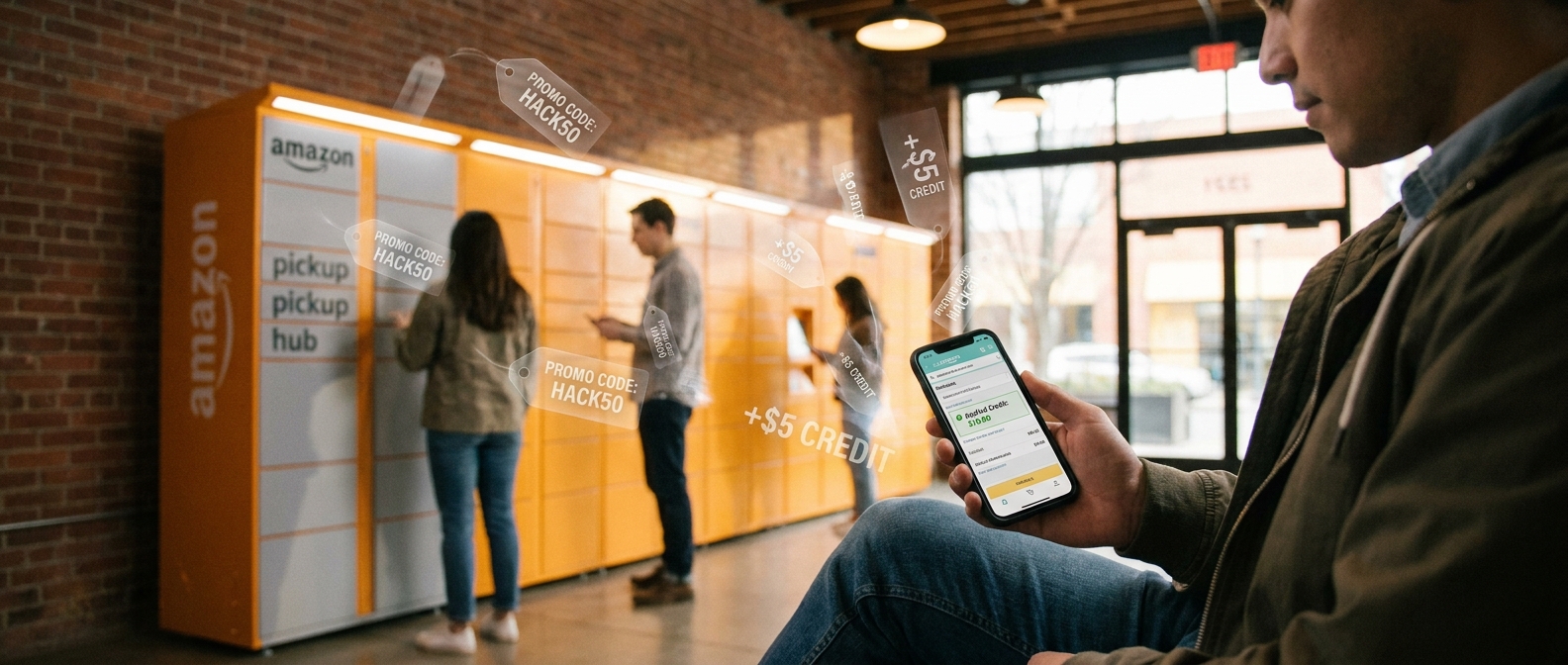
  • The “Pickup Point Payoff” Hack: How Amazon Locker Deliveries Quietly Unlock Targeted Checkout Credits

    The “Pickup Point Payoff” Hack: How Amazon Locker Deliveries Quietly Unlock Targeted Checkout Credits

    You are not imagining it. Most “Amazon promo code” lists are junk. You click through a dozen expired offers, copy random strings into checkout, and end up saving exactly nothing. That is why this Amazon locker promo code credit hack has people paying attention. It is not really a code at all. It is a checkout incentive that Amazon sometimes shows when you choose an Amazon Locker, Counter, or other pickup point instead of home delivery.

    The useful part is that these offers can be real, repeatable, and surprisingly easy to miss. They often appear as a small banner, a checkbox prompt, or a note during shipping selection. If you know where to look, read the terms, and time your orders well, you can stack up a small credit and use it on something you already planned to buy. That is the difference between a gimmick and a system. Done carefully, this can act a lot like a quiet little checkout bonus that trims $5 to $10 off future Amazon purchases.

    ⚡ In a Hurry? Key Takeaways

    • Amazon sometimes offers real credits when you choose a Locker, Counter, or pickup point instead of home delivery.
    • Check the shipping step, promo banners, and account messages, then save those credits for planned purchases instead of impulse buys.
    • Always read the terms. Minimum spend, item exclusions, and short expiry dates decide whether the credit is actually worth it.

    What this “pickup point payoff” really is

    Let’s clear up the name first. Calling it an amazon locker promo code credit hack makes it sound shady. It is not. You are not breaking anything. You are simply spotting a legitimate Amazon promotion tied to a delivery choice.

    Amazon has been testing these incentives in different countries and regions for a while. The pitch is simple. If you help Amazon avoid a doorstep delivery by sending your order to a pickup location, Amazon may reward you with a checkout credit, promo credit, or a discount on a later order.

    Sometimes it is $5 off a future order. Sometimes it is a smaller amount, like a few dollars or local-currency equivalent. Sometimes it only works for first-time pickup users. Other times it rotates back for existing customers.

    Where these credits usually show up

    This is the part most people miss. They expect a giant homepage banner. Usually, that is not where the magic happens.

    1. During checkout at the shipping step

    This is the most common place. When you pick a Locker or Counter instead of home delivery, Amazon may show a note saying you will receive a promotional credit after delivery, or that a discount applies if you switch delivery methods.

    2. On a location-specific promo page

    Some offers live on country or account-specific landing pages. These are often hard to find unless Amazon emails you directly or surfaces a small ad inside the app.

    3. In app banners and account messages

    Check your Amazon app homepage, your messages center, and promotional emails. If Amazon is testing pickup behavior in your area, that is often where the nudge appears.

    4. At the point you add or change a pickup location

    Sometimes the offer appears only when you add a new Locker or pickup point to your address book, or when you switch from a home address to a collection point for an eligible item.

    The terms that matter most

    This is where people lose the value. They see “Get $10 credit” and stop reading. Don’t do that.

    Order minimums

    A promo may require a qualifying order amount, like $25 or $50 before tax. If you spend under that number, no credit.

    Eligible products

    Not every item can go to a Locker. Oversized items, age-restricted products, some third-party seller items, and certain hazmat products are often excluded. The future credit you earn may also be limited to items sold by Amazon, not every marketplace listing.

    Expiry windows

    This is the big one. Many of these credits expire fast. Think 7, 14, or 30 days. If you do not have a plan for using the credit, it can vanish before you notice.

    One per account or one per household

    Some pickup promos are strictly limited. If you got one last month, trying to repeat it immediately may not work.

    Auto-applied versus manual redemption

    Some credits show up automatically at checkout on the next eligible order. Others sit quietly in your account and only apply when the right item mix appears. Watch the final checkout screen carefully.

    How to do the “credit farming” sequence without getting sloppy

    “Credit farming” sounds dramatic, but the smart version is just being organized. You are not buying random stuff to trigger random offers. You are using a sequence.

    Step 1: Wait for a real pickup incentive

    Do not force this. Start only when Amazon actually presents an offer tied to pickup delivery.

    Step 2: Use it on a low-risk order you already need

    Good candidates are toiletries, household basics, vitamins, cables, printer paper, and pantry items that fit Locker rules. Avoid oversized products and niche third-party items on your test run.

    Step 3: Screenshot the terms

    Take one screenshot before placing the order. Capture the credit amount, the minimum spend, and the expiry date. This saves arguments later if the credit does not post.

    Step 4: Track when the credit lands

    Some credits are issued when the order ships. Others only appear after pickup is completed. That timing matters.

    Step 5: Spend the credit on a planned purchase

    This is where people waste the deal. Do not burn a $5 credit on a novelty gadget you did not need. Keep a small Amazon list ready for things you will buy anyway.

    Step 6: Check again on your next order

    Promos rotate. Once you use one, keep watching the shipping step on future checkouts. Another pickup prompt may appear weeks later.

    Best way to use the credit so it actually saves money

    A $5 credit is only a win if it reduces spending you were going to do anyway. The best targets are practical purchases with stable pricing.

    Good uses include:

    • Household refills
    • School or office supplies
    • Phone chargers and cables
    • Baby products
    • Pet supplies
    • Basic health and personal care items

    Avoid using pickup credits on impulse items with inflated list prices. A “free” discount can disappear fast if the item itself was a bad buy.

    If you want to push savings further, pair this with other legitimate methods, like card-linked shopping portals. That is where The ‘Bank Portal Loop’ Hack: How To Turn Boring Reward Malls Into Secret Amazon Promo‑Code Level Prices fits nicely. A portal rebate plus a pickup credit can beat a lot of fake coupon-code nonsense.

    Common mistakes that kill the deal

    Choosing an ineligible item

    If the item cannot be delivered to a Locker or pickup point, the offer may disappear without much warning.

    Forgetting the expiration date

    This is the most common fail. People earn the credit, then remember it after it is dead.

    Assuming every pickup order gets a credit

    It does not. These are promos, not permanent account perks.

    Using the credit on excluded categories

    Some credits do not work on gift cards, digital goods, subscriptions, or certain seller types.

    Treating social media screenshots as universal truth

    One person’s offer in one country does not mean your account will get the same deal. Amazon tests these things constantly.

    How to spot whether your account is a good candidate

    You may be more likely to see these offers if you rarely use pickup locations, live near several eligible collection points, or shop in a market where Amazon is trying to reduce delivery costs.

    That said, nobody outside Amazon knows the exact formula. The safe rule is simple. Check each time you place a normal order. If the offer appears, great. If not, move on.

    Is this safe and legit?

    Yes, if you are only using official Amazon prompts and checkout options. This is not a code generator trick. It is not a browser exploit. It is not a gift card loophole.

    What you should not do is create account farms, open duplicate accounts to trigger “new user” promos, or buy stuff solely to return it after the credit posts. That is the kind of behavior that can get offers blocked.

    At a Glance: Comparison

    Feature/Aspect Details Verdict
    How the credit appears Usually during checkout, in app banners, emails, or pickup-location prompts. Real, but easy to miss.
    Best use case Apply earned credits to practical future purchases you already planned to make. Worth it if you stay organized.
    Biggest risk Missing exclusions, minimum spend rules, or expiry windows. Read the terms every time.

    Conclusion

    The best thing about this pickup-point trick is that it is not fantasy. It is not another expired list of promo codes copied across ten coupon blogs. Amazon really does test and rotate country-specific rewards for choosing Lockers, Counters, and other pickup options, and a lot of shoppers either never notice them or waste them on random buys. If you watch where these promos show up, pay attention to the minimum spend, item limits, and expiration dates, and use a simple earn-then-spend plan, this can work like a quiet little reusable secret code. In a time when every extra dollar matters, shaving $5 to $10 off real purchases with a method you can repeat this week is a genuinely useful edge.

  • The “Creator Code Cross‑Over” Hack: How To Turn Influencer‑Only Amazon Deals Into Your Own Private Promo Code Feed

    The “Creator Code Cross‑Over” Hack: How To Turn Influencer‑Only Amazon Deals Into Your Own Private Promo Code Feed

    You are not imagining it. Amazon deals really do feel like a private club now. One minute a TikTok creator flashes a 40 percent off kitchen gadget, and the next minute you are staring at the same listing at full price, wondering what secret handshake you missed. That frustration is real, and it has gotten worse lately because Amazon quietly pulled back the old public promo code paths that regular shoppers used to watch. The result is a messy new system where the best discounts often show up first in creator-only channels, small Facebook groups, niche subreddits, and newsletters with about 200 readers. The good news is you do not need to become an influencer to follow those trails. You just need a better map. Here is how the creator code system works now, where those hidden Amazon influencer promo code hacks tend to appear, and how to build your own private feed without wasting hours or falling for scammy fake code tools.

    ⚡ In a Hurry? Key Takeaways

    • The old public Amazon promo code page is no longer the best place to find deals. Many of the strongest discounts now appear first through creators and small deal communities.
    • You can build your own private promo feed by following the right TikTok, Instagram, Facebook, Reddit, and newsletter sources, then checking them fast before codes expire.
    • Never use “Amazon promo code generator” sites or apps. Real creator codes come from actual posts, links, and communities, not magic code tools.

    Why Amazon deals suddenly feel harder to find

    For years, deal hunters had a simple habit. Refresh the obvious places. Check Today’s Deals. Scan Amazon Coupons. Maybe peek at an affiliate promo page. Done.

    That system is breaking down.

    In the last few weeks, Amazon has pushed more discounting into private creator channels and off-Amazon sharing. That means many codes now show up in places regular shoppers rarely check. A creator posts a short TikTok. A tiny Instagram Story drops a code. A Reddit deal thread shares a limited-use coupon. A Facebook group passes it around. By the time it reaches the average shopper, it is dead.

    That is why it feels like some people are shopping at a different Amazon than you are. In practice, they sort of are. They are seeing a different stream of discounts.

    What the “Creator Code Cross-Over” hack actually means

    This is not hacking in the shady sense. No passwords. No scripts. No weird browser tricks.

    The real trick is cross-over. You stop waiting for Amazon to show you deals on its own public pages, and instead tap into the same creator channels where those promo codes are being handed out first.

    Think of it like this. Influencers are often the early warning system. You do not need to be them. You just need to watch where they post.

    The basic idea

    Build a personal deal feed from the places creators already use:

    • TikTok accounts that regularly post Amazon finds
    • Instagram Stories and broadcast channels
    • Facebook groups focused on Amazon bargains
    • Small Reddit deal communities
    • Email newsletters from niche deal curators

    Once you follow the right mix, you start seeing codes before they hit mainstream deal sites, if they ever do.

    Where hidden creator promo codes usually show up first

    1. TikTok captions, comments, and creator link pages

    TikTok is still one of the fastest places for Amazon promo codes to spread. But many shoppers miss the real code because they only watch the video.

    Look in three places:

    • The caption
    • The top comments, especially pinned comments
    • The creator’s bio link page, where they may list current Amazon deals

    Sometimes the code is not shown in the video at all. The creator uses the video to bait interest, then drops the code in the caption or links to a storefront roundup.

    If this sounds familiar, you may also want to read The ‘Influencer Cart Clone’ Hack: How To Hijack TikTok’s Secret Amazon Promo Codes Before They Vanish, which explains why these discounts disappear so fast and how to catch them before the price jumps back up.

    2. Instagram Stories and broadcast channels

    Instagram is sneaky here because Stories vanish and many deals never make it to the main grid. Creators will often post “extra 30% code in Story” because it feels more exclusive and creates urgency.

    Watch for:

    • Story slides with screenshots of the Amazon listing
    • “DM me for code” or “code in broadcast channel” prompts
    • Link stickers that go to Amazon product pages with coupon context

    Broadcast channels are especially useful because they act like mini alert feeds. If a creator uses one heavily, join it.

    3. Small Facebook groups

    Yes, Facebook still matters for deals. A lot.

    Many coupon-heavy Amazon communities have moved into private or semi-private groups because codes last longer when they are not blasted all over the public web. These groups may be run by creators, affiliate admins, or obsessive bargain hunters who repost good finds fast.

    The useful groups are usually specific, not broad. Think “Amazon home deals,” “Amazon coupon finds,” or “daily clearance and promo code alerts,” not giant catch-all shopping groups full of junk.

    4. Reddit deal subs and niche threads

    Reddit can be gold if you avoid the noisy parts. Big subreddits are useful, but smaller deal communities often surface Amazon codes earlier because members are more active and less focused on karma farming.

    Pay attention to threads where users confirm whether a code still works. That live feedback matters more than the original post.

    If five people say “worked at checkout” in the last hour, that is a much better signal than a screenshot floating around on social media.

    5. Tiny newsletters

    This is the most overlooked source. Some of the best Amazon deal curators send short, plain-looking emails that never go viral. They are not pretty. They are not polished. They are useful.

    Why? Because email lists can move codes to loyal readers without instantly burning through limited redemptions.

    If you find a creator or deal curator who consistently posts real savings, subscribe. You can always make a separate “deals” email folder to keep it tidy.

    How to build your own private promo code feed

    This is the part that makes the whole thing practical.

    Step 1. Pick 10 to 15 reliable sources, not 100 random ones

    Too many people make this harder than it needs to be. They follow every loud deal account they can find, then drown in junk.

    Start small:

    • 3 to 5 TikTok creators who focus on Amazon finds
    • 2 to 3 Instagram accounts with active Stories or broadcast channels
    • 2 Facebook groups with tight moderation
    • 2 Reddit communities with recent code confirmations
    • 2 to 3 newsletters

    Your goal is not maximum volume. It is signal.

    Step 2. Look for proof, not hype

    The best sources usually show one or more of these:

    • The before-and-after price
    • A screenshot of the code applying
    • The exact coupon stack, such as on-page coupon plus promo code
    • Comments from buyers saying it worked

    If an account constantly posts “RUN!!!” and “OMG 90% OFF” with no proof, skip it.

    Step 3. Turn on alerts selectively

    You do not need notifications for everything. That gets annoying fast.

    Turn alerts on only for your most reliable sources. Usually that means one or two TikTok creators, one Instagram broadcast channel, and maybe one Facebook group where moderators post clean deal alerts.

    That alone can save you from missing limited-use codes.

    Step 4. Check fast, but verify before buying

    Creator codes often expire quickly or have redemption caps. So yes, speed matters. But do not panic buy.

    Before checkout, verify:

    • The seller looks legitimate
    • The item has decent reviews
    • The final checkout price matches the claimed deal
    • The code is applying to the exact variation you want

    A code on the blue version of a gadget may not work on the black one. Amazon loves that kind of tiny gotcha.

    How creators are getting these codes in the first place

    This part helps explain why these deals feel scattered.

    Creators can receive discount opportunities through several paths:

    • Amazon creator programs and campaign tools
    • Seller outreach through affiliate networks
    • Third-party code distribution platforms
    • Direct brand partnerships

    Some codes are broad and reusable. Others are single-use. Some are capped at a certain number of redemptions. Some only work during a narrow window. That is why two people can click the same creator post and get two different results depending on timing.

    So no, it is not always user error. Sometimes the code is simply gone.

    How to spot the best code posts quickly

    Good signs

    • Specific discount math, like “clip 20% coupon, then use code SAVE30”
    • Actual checkout screenshots
    • Time stamps or comments showing recent success
    • A creator with a track record of posting working Amazon deals

    Bad signs

    • No product link, no seller name, no proof
    • Claims that sound impossible, like “free MacBook with secret code”
    • Links to “generator” tools or off-brand coupon apps
    • Requests for your Amazon login

    That last one should end the conversation immediately. Real deal sharing never requires your Amazon password.

    The scam wave to avoid right now

    Whenever Amazon changes how promo codes are distributed, scammy sites show up fast. They know shoppers are confused. They know people feel left out. That is when the fake “promo code generator” garbage starts spreading.

    Here is the simple rule.

    If a site claims it can generate secret Amazon codes out of thin air, it is almost certainly nonsense, a data grab, or malware bait.

    Legit Amazon influencer promo code hacks are not generators. They are discovery methods. You are finding real creator-posted codes sooner, not inventing magical ones.

    Never do these things

    • Download a browser extension from a random coupon site
    • Enter your Amazon login into a third-party tool
    • Pay for access to a “private code vault” with no proof
    • Trust a code image with no source link or comments

    How to make this sustainable without turning it into a part-time job

    This is the part most people care about. You want savings, not homework.

    Use a light system:

    • Create a private bookmark folder called “Amazon deal sources”
    • Follow only your best sources
    • Check them once in the morning and once in the evening
    • Save especially good creators to a favorites list
    • Use our live deal coverage to filter the chaos

    That last part matters. The value is not just finding codes. It is sorting them. A good deal feed should help you answer three questions fast:

    • Is the code still working?
    • Is the product worth buying?
    • Is this actually a strong discount or just fake retail-price theater?

    When these hidden deals are most likely to appear

    You will often see heavier code activity during:

    • Prime-adjacent sales windows
    • Month-end inventory pushes
    • Seasonal shopping periods
    • Product launches for cheap gadgets, home items, and beauty products

    But some of the best creator codes show up on random Tuesdays. That is another reason the old “just check Today’s Deals” habit no longer cuts it.

    At a Glance: Comparison

    Feature/Aspect Details Verdict
    Old public Amazon deal hunting Relied on Today’s Deals, Coupons, and public promo pages. Easy to check, but now often misses creator-only discounts. Still useful, but no longer enough on its own.
    Creator channel deal tracking Uses TikTok, Instagram Stories, Facebook groups, Reddit threads, and newsletters to catch codes earlier. Best way to find hidden promo codes before they disappear.
    Promo code generator sites Promise secret Amazon codes with little or no proof, often asking for clicks, downloads, or account details. Avoid completely. High scam risk, low value.

    Conclusion

    The big shift is simple. Amazon’s old public promo path is fading, and more of the real action is happening in private creator streams and off-Amazon sharing. That sounds annoying because it is. But it also means regular shoppers can still catch those deals if they stop waiting for one official page to do all the work. Build a tight feed from the right TikTok accounts, Instagram Stories, Facebook groups, Reddit deal subs, and small newsletters. Check quickly. Verify carefully. Ignore fake code generators. And when the whole thing feels scattered, lean on us to surface and sort the best working codes in real time. You do not need to become an influencer. You just need to follow the same breadcrumbs they do.