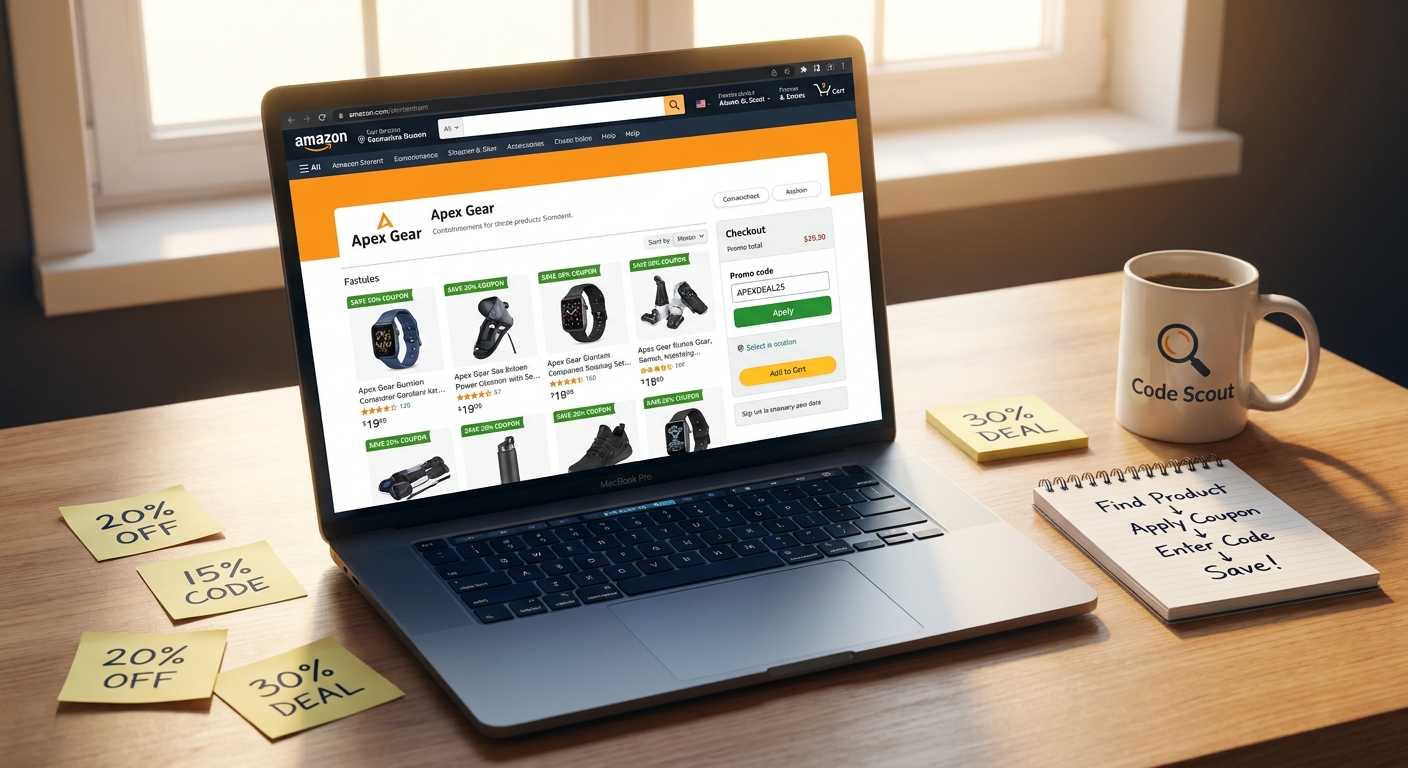
You are not imagining it. A promo code can look perfectly real on TikTok, Reddit, or a coupon page, then fail the second you try it at Amazon checkout. That is the part that drives people nuts. The missing piece is that many of the best discounts are not meant for all of Amazon, or even for a whole category. They are often tied to one seller, one brand storefront, and sometimes only a slice of that brand’s catalog. That is the amazon single seller promo code hack in plain English. Instead of hunting product by product and hoping a code sticks, you start at the brand’s Amazon storefront, look for clipped coupons or promo language there, then test the code on items sold by that same seller. It is a simple switch, but it cuts down on dead codes fast and gives you a much better shot at reaching the payment page with a real discount still intact.
⚡ In a Hurry? Key Takeaways
- The strongest Amazon promo codes often work only on one brand’s storefront or seller catalog, not storewide.
- Start with the brand storefront, clip any coupon, then apply the promo code only to items sold by that same seller.
- Always check seller name, promo terms, and final checkout math, because leaked codes expire fast and exclusions are common.
Why Random Amazon Codes Keep Dying
Most shoppers search backward.
They find a product first, then go looking for a code. Or worse, they find a code first from a social post that has already been copied all over the internet. By the time they try it, the code is dead, capped, or only works on a very specific seller listing.
That is why generic “Amazon code” hunting feels so hit or miss.
Amazon is a huge mall. Sellers inside that mall run their own promotions. A brand might offer 30 percent off, but only on items sold directly through its own storefront. If you click a similar listing sold by another seller, the code fails. Same product photo. Same item name. Different seller. No discount.
What the “Single-Seller Stack” Actually Means
The idea is simple. You stack your search in the right order.
Step 1: Find the brand’s Amazon storefront
Click the brand name on a product page, or search the brand plus “Amazon storefront.” You want the seller’s own corner of Amazon, not a random search result page.
Step 2: Look for visible coupons first
If you see a clip coupon on the product listing, that is a good sign the brand is actively pushing sales. Sellers trying to boost ranking often run both coupons and promo codes at the same time.
Step 3: Check who sells the item
This is the part many people skip. On the product page, look for “Sold by.” If the code came from Brand A’s promo push, the item usually needs to be sold by Brand A, or that brand’s official seller account.
Step 4: Apply the code only to matching items
Do not assume the code works across the whole storefront. It may apply to certain products, bundles, colors, or sizes only. Test within that seller’s catalog first.
Step 5: Verify at checkout
Amazon often shows coupons and promo deductions separately. Make sure both discounts survive all the way to the final payment page.
Why This Works Better Right Now
Sellers want ranking. They want reviews, movement, and conversion. One of the fastest ways to get that is with a sharp temporary discount that feels exclusive.
Public codes spread fast. Once they hit big deal accounts, they burn out even faster. Some hit redemption limits. Some get copied without the fine print. Some only work for a small product set from one seller, but they get reposted like they are broad Amazon discounts.
That is why a brand-driven search works better than a random search. You are following the promo back to the source.
How to Spot a Real Brand-Only Promo
Here are the signs that you may be looking at a code with a real chance of working:
- The product page has a clip coupon and promo language in the listing.
- Multiple items in the same storefront show similar percentage discounts.
- The seller name is consistent across the products you are testing.
- The code source mentions one brand, not “all Amazon” or “sitewide.”
- The discount is tied to a mini sale, product launch, or ranking push.
The Fastest Way to Run the Hack
If you want a repeatable routine, use this:
- Search for a product type you want.
- Pick a brand that appears to be actively promoting.
- Open the brand storefront.
- Sort through products with coupons or sale tags.
- Check that the listing is sold by the same seller.
- Add one or two matching items to cart.
- Apply the code before checkout.
- Keep only the items where the discount actually sticks.
It sounds basic, but this beats copying ten random codes and getting ten rejection messages.
Common Reasons the Code Still Fails
Even good codes can fail for boring reasons.
Wrong seller
This is the big one. The item may be shipped by Amazon but sold by a third party that is not the brand running the promo.
Wrong variation
The black version may qualify, but the blue one does not. The two-pack may work, while the single pack will not.
Coupon conflict
Sometimes the clipped coupon stacks with the code. Sometimes it replaces it. You have to test the cart total.
Expired or maxed-out redemption
A real code can still die quickly if too many people use it.
Account targeting
Some promos are broader than personalized offers, but still may not apply to every buyer. If you want to understand that side of the puzzle, this guide on The Hidden ‘Personalized Promo Vault’ Hack: How One Login Link Reveals Amazon-Only Checkout Codes You Were Never Told About explains why some deals seem to appear for one shopper and not another.
How This Compares to the Old Coupon-Site Method
Coupon sites are not useless. They just tend to flatten everything into one messy pile.
A code that was meant for one seller’s blender, one variation, and one short promo window gets reposted as “Amazon 40% off.” Then thousands of people try it on the wrong listing and conclude all Amazon promo codes are fake.
The better approach is to use public codes as clues, not promises. If a code mentions a brand, go to that brand’s storefront and work from there.
A Safer Way to Test Without Wasting Time
You do not need to place risky orders or buy things you do not want. Just build a quick cart test.
- Add only one qualifying item first.
- Clip the coupon if available.
- Paste the promo code.
- See if the discount appears before you commit.
- Remove filler items that break the promo.
If the discount vanishes when you add another item, that tells you the code is narrow. Good information. Move on or adjust.
When This Hack Works Best
You will usually see the best results during:
- Small holiday weekends
- Price wars in crowded categories
- Product launches
- Season changes
- Prime-adjacent sales periods
That is when sellers are most likely to quietly post deep brand-only deals to push visibility.
At a Glance: Comparison
| Feature/Aspect | Details | Verdict |
|---|---|---|
| Random code search | Fast to try, but codes are often leaked, expired, or tied to the wrong seller listing. | High frustration, low reliability |
| Single-seller storefront method | Starts with the brand storefront, checks coupons, seller name, and matching eligible items. | Best chance of finding live working promos |
| Checkout verification | Confirms whether coupon and promo code both survive to the payment page. | Essential final step |
Conclusion
The big shift is this. Stop treating Amazon promo codes like a sitewide treasure hunt. Treat them like brand-level promotions hidden inside a giant marketplace. Right now sellers are quietly dropping deep single-brand codes to boost rankings, while broad public codes get copied, killed, or drained fast. If you flip your routine from random product searches to a smarter “brand storefront, coupons, then code” path, you will hit more real discounts and waste less time on checkout failures. It is not magic. It is just a better map. And when deals are changing by the hour, a repeatable map is worth a lot more than one flashy code that never works.