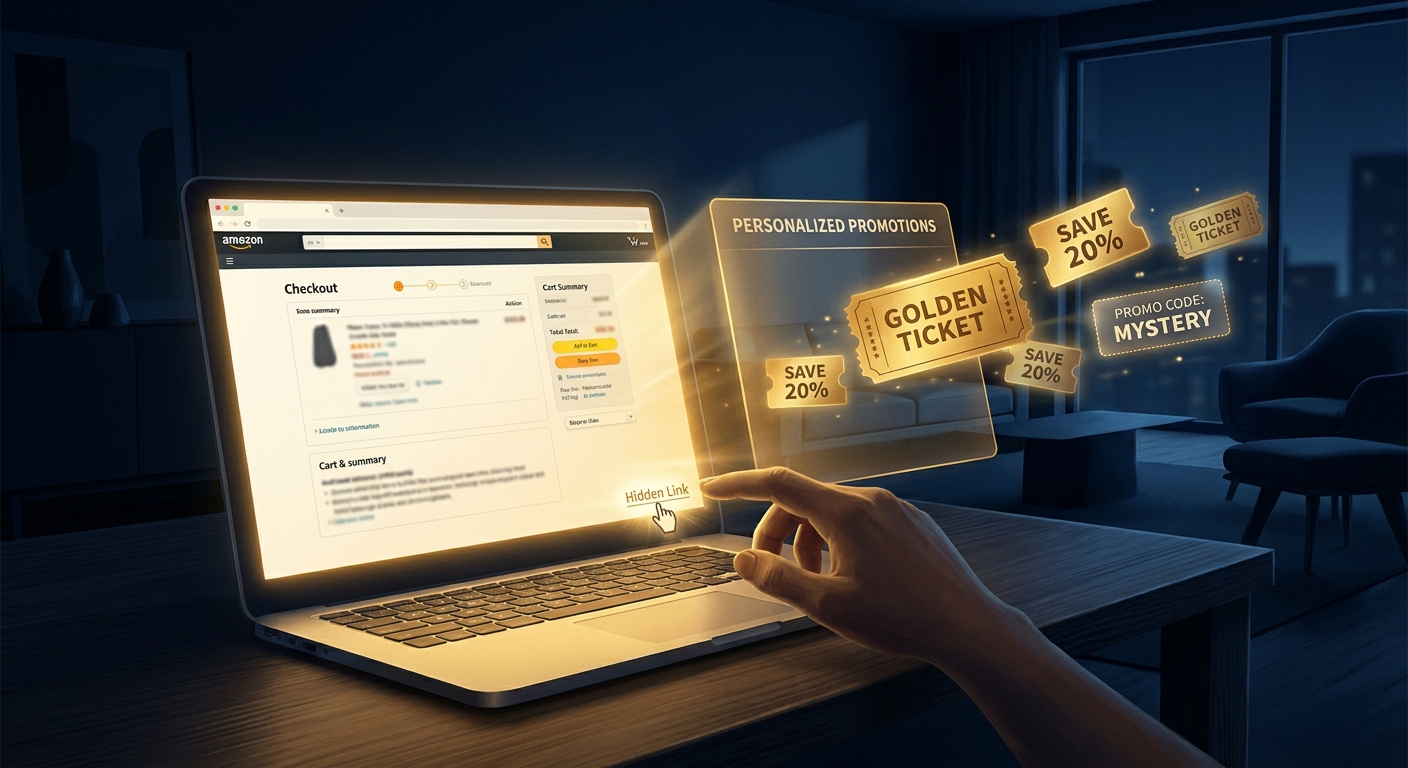
You have probably done this before. You see a “working Amazon code” on TikTok or a coupon site, paste it in at checkout, and get that annoying message saying the promotion is not valid. It is frustrating, and worse, it makes it feel like everybody else got the deal except you. What most shoppers miss is that Amazon often runs account-based offers hidden behind login pages, claim buttons, and personalized banners that never show up as broad public promo codes. That is the real trick behind many so-called secret discounts.
If you want to find amazon personalized promotions hidden promo codes, stop hunting random screenshots and start checking the places Amazon quietly uses to attach offers to your account. These can include one-time coupons, category-specific discounts, gift card reload bonuses, credit card rewards, and checkout promos that only appear after you sign in. Once you know where that “personalized promo vault” lives, you can quickly tell what is real, what is claimable, and what will actually stack with your normal sale price or Subscribe & Save discount.
⚡ In a Hurry? Key Takeaways
- Amazon does hide account-specific promotions, and many only appear after you sign in and actively claim them.
- Check promo landing pages, the coupon hub, gift card offer pages, and checkout messages before trusting social media “sitewide” codes.
- Never buy from shady code sellers or enter your Amazon login on third-party sites. Real targeted offers stay inside Amazon.
What the “Personalized Promo Vault” really is
It is not a single button with a big label that says “your secret discounts.” Amazon is not that generous with directions.
Instead, the vault is more like a mix of places where Amazon stores or surfaces account-based deals. Some promotions are tied to your shopping history. Some are tied to whether you have used a feature before, like Amazon Fresh, Prime delivery windows, or gift card reloads. Others are tied to your payment method, your region, or whether Amazon is trying to nudge you back into buying.
That is why one person sees “Get $15 credit when you reload $100” while another sees nothing at all.
Where Amazon quietly hides these promotions
1. The Coupons page
Start with Amazon’s own Coupons section. Clip-style coupons often sit there in plain sight, but not every user sees the same list. Once you are logged in, what you see can differ from what someone else sees. That alone tells you these are often personalized.
Look for:
- Checkbox or “Clip Coupon” offers on product pages
- Category coupon pages for home, beauty, groceries, and electronics
- Short-term discounts tied to Prime events or shopping weeks
2. Promo landing pages with claim buttons
Some of Amazon’s best offers live on dedicated pages. These are usually built around an action. Add a payment method. Use pickup. Reload a gift card. Buy from a category. Spend a minimum amount. The page often says “claim now” or “activate offer,” and nothing happens unless you are signed in.
This is where many amazon personalized promotions hidden promo codes are found. They are not really “codes” in the old coupon sense. They are account flags. Once claimed, they apply later at checkout if you meet the rules.
3. Gift card and reload bonus pages
This is one of the most overlooked areas. Amazon regularly tests offers like:
- Reload $50, get $5 credit
- Buy a certain amount in gift cards, get a bonus credit
- Use a gift card balance on a qualifying purchase for a promotional reward
These are usually one-time or very limited. They also tend to disappear fast during heavy promo periods.
4. Checkout messages and payment-specific promos
Sometimes the offer does not show up until you are close to buying. You might see a line at checkout saying you qualify for a credit by using an eligible card, selecting no-rush shipping, or applying points.
That is why it pays to click through the final checkout screen carefully before placing the order.
5. Your email and message center
Amazon still sends targeted offers by email, and many people ignore them because they look generic. Bad move. Some of the best personal offers arrive there first. If you want help spotting those, this guide on The “Hidden Targeted Email Coupon” Hack: How One Inbox Sweep Turns Random Amazon Shoppers Into Secret 20% Off Power Users is worth reading.
How to check your hidden promo vault step by step
Here is the simple version.
Step 1. Sign into your Amazon account first
Do not start in incognito mode. Do not rely on screenshots from other people. Personalized deals often only appear after Amazon knows exactly which account is viewing the page.
Step 2. Visit the Coupons page and clip anything relevant
Search within Amazon for “Amazon coupons” and browse by category. Clip what you might use, even if you are not buying that second. Some offers stay attached long enough to help later.
Step 3. Search Amazon for key offer types
Use Amazon’s own search and try phrases like:
- gift card reload offer
- promotional credit
- Prime member offer
- Amazon Fresh promotion
- Shop with points offer
You are looking for Amazon-hosted landing pages, not outside websites promising miracle codes.
Step 4. Check your cart and checkout for attached promotions
Add the item. Go far enough into checkout to see if a discount, coupon, or credit appears. Many deals do not announce themselves clearly on the product page.
Step 5. Read the fine print
This matters more than people think. Most hidden offers have strict rules:
- one per account
- must click claim first
- minimum spend required
- sold by Amazon only
- exclude third-party sellers
- credit arrives after shipping, not instantly
If you skip the terms, you can think the promo failed when it is actually pending.
What counts as a real hidden promo code versus internet nonsense
Here is the easy test. A real Amazon promotion will usually do one of three things:
- Show on an Amazon page after login
- Be attached through a claim button or clipped coupon
- Appear in checkout or in an official Amazon email
Fake or useless promo chatter usually looks like this:
- “Works for everyone” with no proof
- Expired screenshots with no date
- Vague videos saying “try this now” without terms
- Third-party sites listing random letter-number codes that fail for most accounts
If the offer cannot be traced back to Amazon itself, be skeptical.
Can these promotions stack?
Sometimes, yes. That is what makes them so valuable.
A personalized offer may stack with:
- a sale price
- a clipped coupon
- Subscribe & Save
- credit card rewards or points
- gift card balance use
But stacking is never guaranteed. Amazon can block combinations, especially if two deals are trying to discount the same part of the order. The only reliable way to know is to test the cart before you buy.
Best times to check for short-lived hidden offers
Amazon tends to get more aggressive with targeted promotions during high-shopping windows.
- Prime Day week
- Black Friday and Cyber Monday
- Back-to-school season
- Holiday gift buying periods
- Big grocery and household sale events
During those periods, Amazon may quietly drop credits that expire within days, or even hours. That is why checking once a month is good, but checking more often during promo weeks is better.
Common hidden offers worth watching for
Not every account gets all of these, but these are the usual winners:
- Buy X, get Y promotional credit
- Spend on select categories, earn a future credit
- Gift card reload bonuses
- Shop with points discounts
- First-time feature-use promos, like pickup or locker delivery
- Prime member-only category coupons
- Amazon device bundle promos
Think of them as small hidden switches Amazon turns on for selected users.
How to avoid missing your best account-specific deals
Create a quick routine.
Weekly promo check
- Open Amazon while signed in
- Visit the Coupons page
- Search for gift card reload and promotional credit offers
- Check your email for Amazon deal messages
- Review checkout carefully before placing larger orders
It takes a few minutes, and it beats wasting half an hour on fake coupon sites.
Save screenshots of live terms
If you find a good offer, save the terms page. This helps if the credit fails to post later and you need to talk to customer support.
Do not chase every rumor
If a social post sounds too broad, too dramatic, or too easy, it usually is. Amazon is much more likely to run targeted, narrow offers than big sitewide promo codes for everyone.
Safety note: where people get tripped up
The biggest risk is not usually malware. It is giving your time, and sometimes your login, to junk sites.
Never sign into Amazon through a random discount page. Never pay for access to a “private code list.” And do not trust browser extensions that promise to “unlock all hidden discounts” unless you know exactly who runs them and what data they collect.
The legit path stays inside Amazon. That is the rule.
At a Glance: Comparison
| Feature/Aspect | Details | Verdict |
|---|---|---|
| Public coupon codes | Often shared widely, frequently expired, and may not apply to your account or item. | Low hit rate. Use with caution. |
| Amazon personalized promotions | Tied to your login, claim action, purchase history, or payment setup. Usually found on Amazon-hosted pages. | Best value when available. |
| Social media promo “leaks” | Can point you toward a real offer, but often missing terms, dates, and account limits. | Useful only if you verify on Amazon itself. |
Conclusion
The real savings are not coming from flashy “sitewide” codes floating around social media. They are coming from account-based offers, hidden coupon pages, and short-lived claimable credits Amazon barely advertises. Once you know where to look for amazon personalized promotions hidden promo codes, you can stop guessing, stop overpaying, and start pulling discounts that actually apply to your account today. Make checking your signed-in coupon pages, promo landing pages, gift card offers, and checkout messages part of your normal shopping routine. Especially during big sale weeks, that little habit can uncover credits and bonus offers that vanish fast if you do not claim them in time.