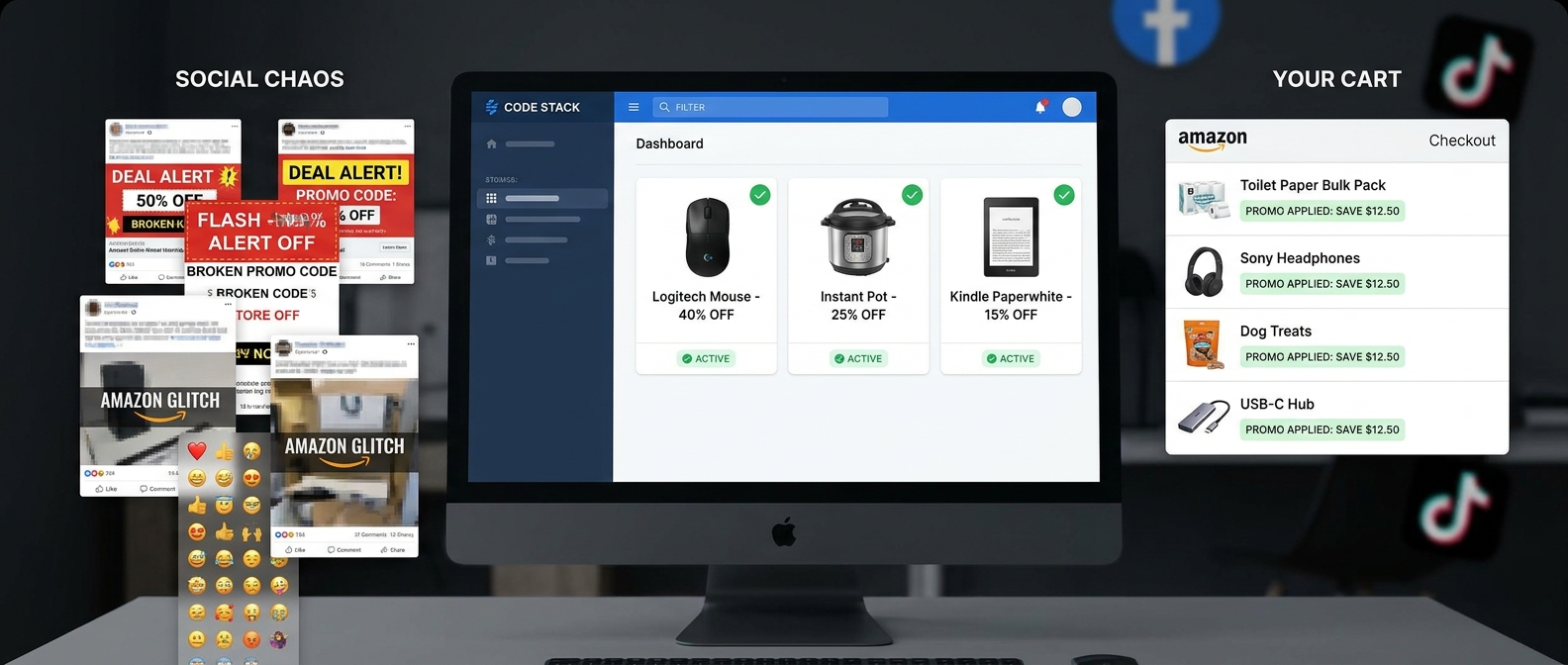
You are not imagining it. Hunting Amazon promo codes right now feels like a part-time job. One minute TikTok says there is 70% off a kitchen gadget. Ten minutes later the code is dead, the item is out of stock, or the discount only works on some random color from a brand you have never heard of. That is where the hidden code stack filter hack comes in. It is not a secret tool from Amazon. It is a simple way to sort the chaos so you only chase deals on things you would actually buy. The goal is to stop treating every viral code like a treasure hunt and start using a quick filter: product you need, sold by a trustworthy seller, coupon still clickable, code still active, and final checkout price actually worth it. If a deal fails one of those tests, you move on fast and keep your time, your money, and your sanity.
⚡ In a Hurry? Key Takeaways
- Use an amazon promo code stacking hack as a filter system, not a gamble. Check need, seller, stock, coupon, code, and final price before you bother.
- Build a short watchlist of products you already plan to buy, then test only codes that match those items or categories.
- Never trust screenshots alone. The only price that matters is the one Amazon shows at checkout after every discount is applied.
What the “Hidden Code Stack Filter” Really Means
Despite the dramatic name, this is not about breaking Amazon or using shady browser tricks. It is really a screening method.
Most people see a promo code first, then go looking for a reason to use it. That is backwards. The better way is to start with your own shopping list, then let the promo codes compete for your attention.
Think of it like this. Instead of asking, “What can I buy with this code?” ask, “Does this code improve something I was already going to buy?”
That one shift cuts out most of the nonsense.
Why Viral Amazon Code Hunting Wastes So Much Time
The current deal cycle is built for speed, not clarity. A creator posts a screenshot. A Facebook group copies it. A deal blog reposts it. By the time you click, four things may have changed.
- The code has expired.
- The listing has switched sellers.
- The coupon box is gone.
- The “deal” only works on a variation nobody wants.
This is why so many shoppers feel like Amazon discounts are fake. They are often real for a small window, but they are messy, selective, and easy to misunderstand.
If you have also noticed prices acting strangely even when discounts look big, it is worth reading The “Business Price Backdoor” Hack: How a Free Amazon Business Upgrade Quietly Unlocks Hidden Promo-Level Discounts. It explains another layer of pricing that many regular shoppers never see.
How to Use the Hidden Code Stack Filter
Step 1: Make a “Would Buy Anyway” List
Start with 5 to 15 items you actually need in the next month. Paper towels. Phone charger. Vitamins. Air fryer liners. Dog treats. A specific toy for a birthday. Real stuff.
This list is your anchor. If a viral code does not connect to that list, it probably is not a deal for you.
Step 2: Ignore Category Hype and Match by Product Type
“70% off home deals” means almost nothing. “40% off the exact under-sink organizer I needed” means something.
When you see a code posted, classify it fast:
- Exact item match
- Useful substitute
- Totally random
Only spend time on the first two.
Step 3: Check Seller and Listing Quality First
Before you test the code, look at the listing itself. Is it sold by Amazon, the brand, or a third-party seller with a decent history? Are the reviews believable? Are there weird title changes or mismatched photos?
A giant discount on a sketchy listing is not a win. It is just a faster route to buyer regret.
Step 4: Look for Stackable Pieces
This is where the amazon promo code stacking hack idea comes in. Many of the best deals are not from one code alone. They come from layers.
Common layers include:
- On-page coupon checkbox
- Promo code at checkout
- Prime discount
- Subscribe & Save
- Business pricing, if available
Not every layer works with every item. Some cancel each other out. But if you want the real number, you need to test the full mix in cart.
Step 5: Use the Cart as Your Truth Meter
Never trust the headline discount. Add the item to your cart. Clip the coupon. Enter the code. Check shipping. Then look at the final total.
If the checkout price is not clearly better than your normal buy price, skip it.
This matters because some promo codes look huge but apply to an inflated base price. Others work only after quantity changes. Some only trigger when a tiny checkbox is clicked first.
Step 6: Save the Winners, Not the Drama
When you find a working setup, save the listing and note what stacked:
- Item name
- Seller
- Coupon amount
- Promo code amount
- Final checkout price
- Time tested
This turns random coupon hunting into a repeatable habit.
A Simple Example of the Filter in Action
Let’s say you need a new USB-C charger.
You see three viral posts in a group:
- 80% off beauty organizer
- 50% off USB-C wall charger
- 70% off car vacuum
Using the filter, you ignore the organizer and vacuum unless they were already on your list. You open the charger listing. You check if it is in stock. You look at seller quality. You clip the 20% coupon. Then you test the posted code in checkout.
If it drops from $25 to $11 with decent reviews and fast shipping, great. That is a real deal.
If it drops from $25 to $19 after lots of fiddling, that is probably not worth your time.
Red Flags That Mean “Move On”
Here is where a lot of people get stuck. They keep trying to force a dead code to work because the screenshot looked amazing.
Walk away if you see any of these:
- The code only works on a color or size you do not want
- The seller changed since the deal was posted
- The product page has a strange brand name and weak reviews
- The item ships in weeks, not days
- The final price is still higher than a known good alternative
- The deal requires buying extras you do not need
A skipped bad deal is still a win.
How to Keep FOMO From Driving Your Cart
Fast promo codes create panic. That is the whole mood online right now. If you are not refreshing Telegram or TikTok every hour, it can feel like everyone else is grabbing bargains you missed.
Most of that feeling is noise.
The truth is simple. Missing a discount on junk saves more money than grabbing it. Your goal is not to catch every code. Your goal is to catch the right code at the right moment on something useful.
Make Your Own Two-Minute Deal Checklist
If you want a practical system, use this before every purchase:
- Was this already on my buy list?
- Is the seller trustworthy?
- Is it in stock and shipping soon?
- Is there an on-page coupon?
- Does the promo code still apply?
- Does it stack with any other discount?
- Is the final total actually good?
If you cannot say yes to most of those in under two minutes, it is probably not a deal worth chasing.
At a Glance: Comparison
| Feature/Aspect | Details | Verdict |
|---|---|---|
| Random viral code chasing | You click whatever is trending, then find out later if it fits your needs or still works. | High effort, low payoff |
| Hidden code stack filter | You start with your own shopping list, then test only codes that match, stack, and produce a strong final checkout price. | Best balance of speed and savings |
| Screenshot-only deal trust | Relies on social proof, often without checking seller, variation, expiration, or final cart total. | Risky and often misleading |
Conclusion
Today’s coupon chatter is built around surprise glitches, fleeting promo codes, and screenshots that spread faster than the actual deals last. That sends FOMO through the roof and often leaves real savings disappointingly low. The hidden code stack filter fixes that by giving you a calm, repeatable way to sort the mess. Start with what you truly need. Test only the codes that match. Verify the stack in cart. Ignore the rest. That way, the Best Amazon Coupons community gets the upside of the frenzy without wasting an evening on dead links, fake screenshots, or impulse buys. You do not need to be online all day to win. You just need a better filter, and a little discipline, to catch the real steals while they are still live.