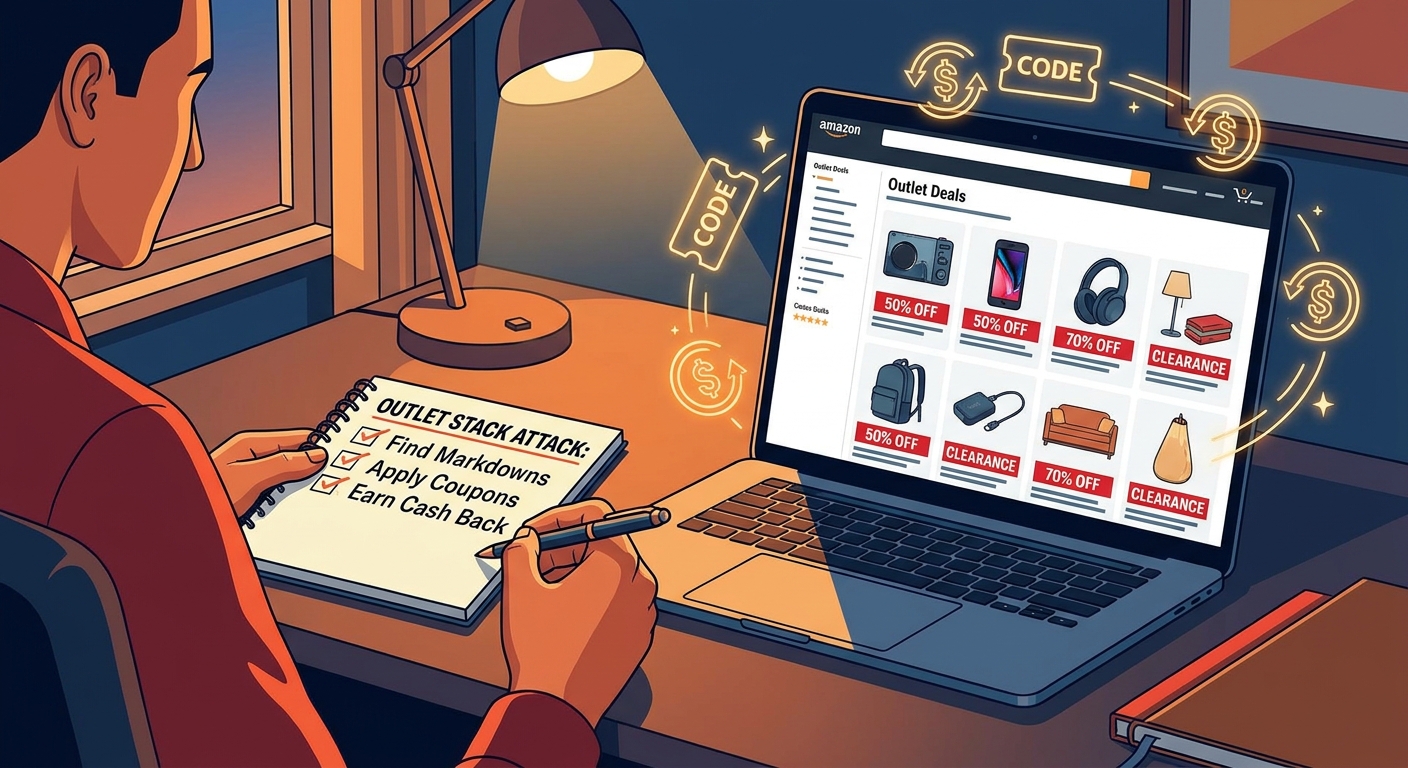
You are not imagining it. Hunting for an Amazon promo code can feel like chasing a coupon unicorn. You click through roundups, paste in codes, and half of them are expired, product-specific, or not much of a deal in the first place. Meanwhile, the real discounts often show up somewhere much less flashy: Amazon Outlet. That is where overstock, clearance items, and slow-moving inventory quietly get marked down, sometimes hard, and often with very little warning. The trick some smart shoppers use is what I call the amazon outlet promo code hack. It is not a shady loophole. It is simply knowing where Amazon hides deep markdowns, and checking before the crowd shows up. With early Prime Day pricing already shaking things loose, Outlet stock is moving fast right now. If you know how to spot the right listings, 50 to 70 percent off can be very real, especially on everyday basics, home gear, and lower-profile brands.
⚡ In a Hurry? Key Takeaways
- The best “amazon outlet promo code hack” is not a secret code. It is checking Amazon Outlet for sudden clearance drops before deal blogs catch up.
- Filter by discount, watch price history when you can, and move quickly on common items because colors, sizes, and top brands disappear first.
- Stick with items sold or fulfilled by Amazon when possible, and always compare the Outlet price with the regular listing so you do not get fooled by a weak markdown.
What the “Outlet Stack Attack” really means
Let’s clear up the name first. This is not some hacker trick, and it is not about piling sketchy coupon codes on top of each other.
The “stack” part is about stacking Amazon’s quiet markdown systems. Outlet deals can overlap with normal sale pricing, subscribe-and-save offers, on-page coupons, and temporary inventory drops. When that happens, the final price can look like a promo-code miracle, even though it came from plain old clearance logic.
That is why this works so well during big shopping periods. Early Prime Day buzz tends to push sellers to cut prices, move extra stock, and reshuffle inventory. Outlet often catches the leftovers and the overstock. If you arrive early, you get the deal. If a major blog posts it six hours later, the best options are usually gone.
Where Amazon Outlet actually lives
Amazon does not exactly put Outlet in giant flashing lights. That is part of why so many people miss it.
You can usually find it by searching “Amazon Outlet” directly on Amazon, or by going through the site menu and looking for deals, then outlet or clearance sections. The exact path changes from time to time, because Amazon loves rearranging the furniture.
Once you are in, think of it less like a polished storefront and more like a digital bargain aisle. It is full of random categories, mixed quality, and prices that can change fast.
How the amazon outlet promo code hack works in real life
1. Start with boring products, not viral ones
The biggest savings often show up on everyday stuff. Cleaning supplies. Phone accessories. Storage containers. Socks. Small kitchen tools. Basic electronics from lesser-known brands.
Why? Because that is the inventory Amazon and sellers need to move quickly.
If you only search for the hottest gadgets, you will still find deals sometimes, but the competition is much higher.
2. Sort for discount, then sanity-check the price
A 65 percent off badge looks exciting. But always compare it with the regular product page, and if possible, with the recent price elsewhere.
Some listings are genuinely excellent. Others are just “marked down” from a hopeful list price nobody really paid.
Your goal is not just a big percentage. Your goal is a low real-world price.
3. Look for extra savings on the page
This is where the “stack” can happen. Check whether the item has:
- An on-page coupon checkbox
- Subscribe & Save for household items
- A multi-buy discount
- A lower price in a less popular color or size
Sometimes the Outlet price is already strong, and one extra checkbox pushes it into “buy now before it vanishes” territory.
4. Watch the seller and shipping details
If you want fewer headaches, lean toward items sold by Amazon or fulfilled by Amazon. Returns tend to be easier, shipping is more predictable, and you are less likely to deal with weird third-party surprises.
This matters even more with electronics, personal care products, and anything brand-sensitive.
5. Move fast, but not blindly
Outlet inventory is thin by nature. Once a certain size, finish, or model is gone, that may be it.
So yes, speed matters. But do not panic-buy. Give yourself a 30-second check: Is this the right item, the right seller, and a price that beats the normal listing? If yes, go for it.
Best categories for 40 to 70 percent drops
Not every corner of Amazon Outlet is equally useful. Some categories tend to produce much better clearance swings than others.
Home and kitchen
This is one of the strongest sections. Storage bins, organizers, water bottles, baking tools, small appliances, and replacement accessories can fall hard in price.
Beauty and personal care
Good for staples, especially when brands overproduce or rotate packaging. Just check expiration details if they are shown, and avoid anything that looks too old or oddly sourced.
Clothing and shoes
This is where sizes and colors vanish first. If you are flexible, you can score absurd discounts. If you need one exact size in black, good luck.
Tech accessories
Cables, chargers, stands, sleeves, smart plugs, and desk accessories are all worth watching. This is often where an ordinary Outlet deal can feel like a true promo-code-level steal.
Seasonal items
This is the sleeper category. Holiday decor after the season, patio gear in a weather shift, school supplies after the rush. Timing matters here.
Common mistakes that kill the deal
The biggest mistake is assuming every Outlet item is automatically a bargain. It is not.
Here are the traps to avoid:
- Buying because of the discount percentage instead of the final price
- Ignoring seller quality and return terms
- Forgetting to check alternate colors or sizes
- Waiting too long after a deal starts trending
- Confusing Outlet with used or damaged inventory
That last point matters. Amazon Outlet generally focuses on overstock and clearance, not just used returns. Still, always read the listing carefully so you know what condition you are getting.
A simple routine that works
If you want this to pay off without eating your whole evening, keep it simple.
The 5-minute check
- Open Amazon Outlet
- Pick one or two categories you actually buy from
- Sort or filter for bigger discounts
- Open anything that looks promising
- Check final price, coupon box, seller, and shipping
Do that once in the morning and once in the evening during heavy sale periods. That is often enough to catch the good stuff before the internet crowd piles on.
Why this works especially well right now
Early Prime Day season tends to create weird price motion across Amazon. Sellers test discounts. Amazon pushes competing listings around. Overstock gets moved faster. Some products get temporary markdowns just to clear shelf space for incoming inventory.
That is exactly the kind of churn bargain hunters want.
So while lots of people are still refreshing pages full of recycled coupon codes, Outlet shoppers are catching the products that quietly fell in price overnight.
Is this better than waiting for Prime Day?
Sometimes, yes.
Prime Day is great for big headline deals. But it is also noisy. Inventory gets hammered fast, and everyone is looking at the same promoted products.
Outlet is different. It is less glamorous, less organized, and often better for practical purchases. You may not find the year’s hottest laptop there. But you may save a surprising amount on the kind of stuff you actually need this month.
At a Glance: Comparison
| Feature/Aspect | Details | Verdict |
|---|---|---|
| Discount depth | Outlet listings can quietly hit 40 to 70 percent off, especially on overstock and less-hyped items. | Excellent if you care more about real savings than flashy promo codes. |
| Ease of use | Deals take a bit more digging, and Amazon does not always make Outlet easy to browse. | Worth the extra effort once you know where to look. |
| Risk level | Main risks are weak “discounts,” fast sellouts, and third-party seller issues on some listings. | Low risk if you compare prices and stick with solid seller and return terms. |
Conclusion
The smart move is not waiting around for some magical code that may never work. It is learning where Amazon quietly dumps the real markdowns. Right now, early Prime Day buzz is already pushing prices all over the place, which means Outlet and overstock inventory are moving faster than usual. That gives ordinary shoppers a real shot at 50 to 70 percent off on useful, everyday items, before everyone else catches on. Check often, compare quickly, and do not get distracted by the coupon-code circus. The best deal on Amazon is often hiding in plain sight.