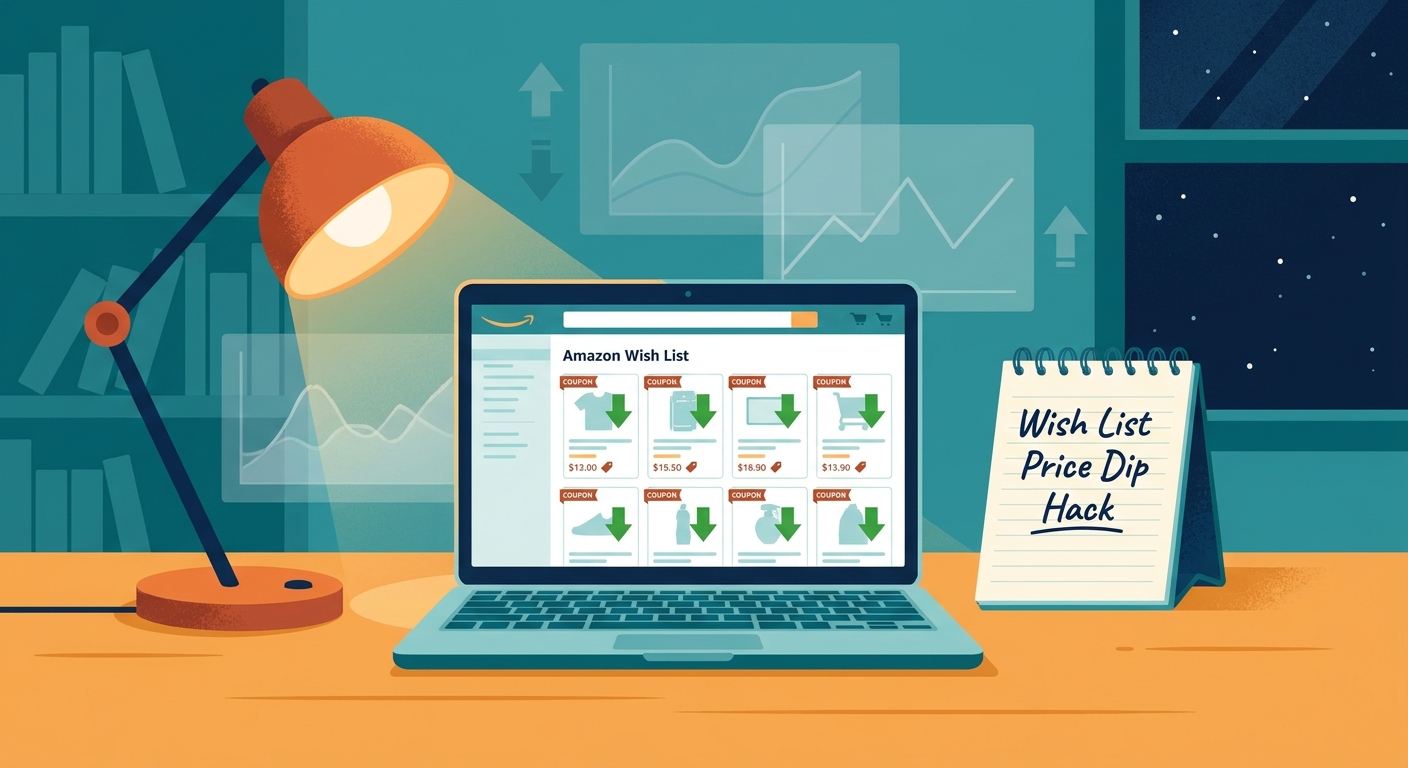
You are not imagining it. Amazon deals really do seem to appear at odd hours, then vanish before breakfast. One minute an item sits at full price. The next minute there is a clipped coupon, a seller discount, or a lightning deal that was never obvious on the main page. If you have been staying up late refreshing tabs and still missing the best moment to buy, the fix is not more screen time. It is a better system. The smartest amazon wish list price drop hack is to stop using one giant wish list and start building smaller, purpose-based lists that are easier to scan and track. Once you sort your items by urgency, price range, and deal type, you can catch real drops faster, notice when a coupon gets layered on top, and avoid buying just because Amazon put something flashy on the homepage. This turns deal hunting from stressful guessing into something calm, quick, and much more accurate.
⚡ In a Hurry? Key Takeaways
- Amazon wish list price drop hack: create several small wish lists by category and urgency so price changes stand out right away.
- Check for stacked savings, especially coupons, seller promos, and lightning deals that may sit on top of a lower listed price.
- Do not trust the homepage alone. Some of the best Prime Day cuts are buried and change hour by hour.
Why the usual Amazon shopping method fails
Most people use Amazon the same way. They search, open five tabs, add a few items to cart, maybe toss some things into a single wish list, then keep checking back.
That works for normal shopping. It is terrible for deal hunting.
The problem is that Amazon does not always show a discount in one clean, obvious place. A product can drop in base price. Then a coupon box appears. Then a seller promo quietly gets added. Sometimes only one of those changes. Sometimes all three do. If you are watching a messy mix of tabs, it is hard to tell what actually happened.
That is where a cleaner wish list setup helps. You are making your own filtered deal board.
The amazon wish list price drop hack that actually helps
The trick is simple. Do not keep one giant “Stuff I Want” list.
Instead, make several smaller wish lists with a job for each one.
Start with these list types
Buy Soon
Items you would purchase this week if the price dips enough.
Prime Day Watch
Products you expect may get a short-term promo during the event.
Under $25
Small buys where coupon overlays matter more than huge base-price drops.
Big Ticket
TVs, robot vacuums, tablets, and other items where even a 10 percent cut matters.
Replace Eventually
Boring essentials like razors, batteries, filters, pet food, or detergent.
When each list has a theme, changes are easier to spot. If your “Big Ticket” list has eight products instead of 80 random products, a new discount jumps out.
How segmented wish lists help you catch hidden promos
Here is why this works better than stalking the homepage.
Amazon’s front page pushes what Amazon wants to move. Your wish list shows what you care about.
That sounds basic, but it matters. A segmented list makes it easier to notice:
- A lower listed price on the exact item you wanted
- A new clickable coupon under the price
- A seller discount that appears only on the product page
- A lightning deal badge that was not there earlier
- A Prime-only offer that changes the final checkout total
This is especially useful during early Prime Day waves, when deals roll out in uneven bursts instead of one big clean launch.
How to set up your lists in 10 minutes
1. Make your lists small
Try to keep each wish list to 10 to 20 items. More than that, and your eyes glaze over. Less than that, and you can scan fast.
2. Rename lists like a normal person
Use names you will understand at a glance. “Kitchen Prime Day” is better than “List 3.” “Need by August” is better than “Shopping.”
3. Add price notes in the description or your phone notes
Amazon does not always make historical pricing easy to understand in the moment. Write down your personal target price. Example: “Buy if under $79” or “Worth it only with coupon.”
4. Separate wants from needs
This one saves real money. If coffee pods and air filters are sitting beside gaming accessories and patio lights, your brain starts treating all of them like urgent buys. Split them up.
5. Review at set times, not all day
Morning, lunch, evening. That is enough for most people. The point of the system is to stop doom-refreshing.
What counts as a real deal?
A lot of Amazon “discounts” look better than they are. You want to watch for genuine savings, not just loud labels.
Look for these signs
- The item price dropped compared with your target
- There is an extra coupon to clip
- The final checkout price is lower than the product page first suggests
- The seller is reputable and the item is the exact version you wanted
Watch out for these traps
- A tiny discount dressed up as a major event deal
- A coupon that applies only to a different color or size
- A price cut on an older model while the newer one is barely more expensive
- Third-party listings with weaker return terms
If you are already browsing for food and household extras during Prime Day week, the same rule applies there too. A good example is New Prime Day Pizza Hack: How a Hidden Amazon Promo Slashes Your Dinner Bill to $5. It is a reminder that the best savings are often not front-and-center. They hide in promo codes and short-lived offers.
How to spot coupon overlays before they disappear
This is the part many shoppers miss.
Amazon coupons often sit in a small checkbox area near the price. They can be easy to miss, especially on mobile. A product may look unchanged at first glance, but the coupon is the real story.
So when scanning your wish list items, do not just compare the big price number. Open the product page and check for:
- “Save X percent” coupon boxes
- Dollar-off coupons
- Prime-exclusive discounts
- Buy-more-save-more seller promos
That is the hidden part of the amazon wish list price drop hack. You are not just tracking price drops. You are tracking price plus promo layers.
A simple routine that works while you sleep
You do not need to become a night-shift deal hunter.
Use this routine
At night: Add any item you are seriously considering to the right segmented wish list.
Set your target: Know the number that would make you buy.
In the morning: Open each short list and scan for changes. Small lists make this take just a few minutes.
Before buying: Open the product page and confirm there is not an extra coupon or seller promo waiting.
After buying: Remove the item from the list so your tracking stays clean.
The magic here is not some secret Amazon button. It is reducing clutter so changes are visible.
Who should use this hack most?
This system is especially useful for:
- People shopping early Prime Day offers
- Parents tracking school, home, and tech buys at once
- Anyone watching expensive electronics
- Households trying to stock up without overspending
- Shoppers who keep missing lightning deals
If that sounds like you, this setup can save both money and sanity.
At a Glance: Comparison
| Feature/Aspect | Details | Verdict |
|---|---|---|
| One giant wish list | Too many items mixed together. Price changes and coupons are easy to miss. | Bad for fast deal spotting |
| Segmented wish lists | Small themed lists make it easier to see real drops, coupon overlays, and urgent buys. | Best method for Prime Day tracking |
| Homepage deal browsing only | Shows whatever Amazon is pushing, not necessarily the items you actually want. | Useful for discovery, weak for precision |
Conclusion
Amazon is already rolling out early Prime Day offers, but the best savings are often buried inside random lightning deals, short coupon windows, and quiet seller discounts that can change by the hour. That is why this amazon wish list price drop hack matters. When you build a smart, segmented wish list system, you stop guessing, stop overpaying, and start seeing genuine changes in real time. Instead of chasing whatever Amazon puts on the front page, you can focus on the exact items you actually want and catch those blink-and-you-miss-it promo windows before they are gone. Less refreshing. Less stress. Better buys.