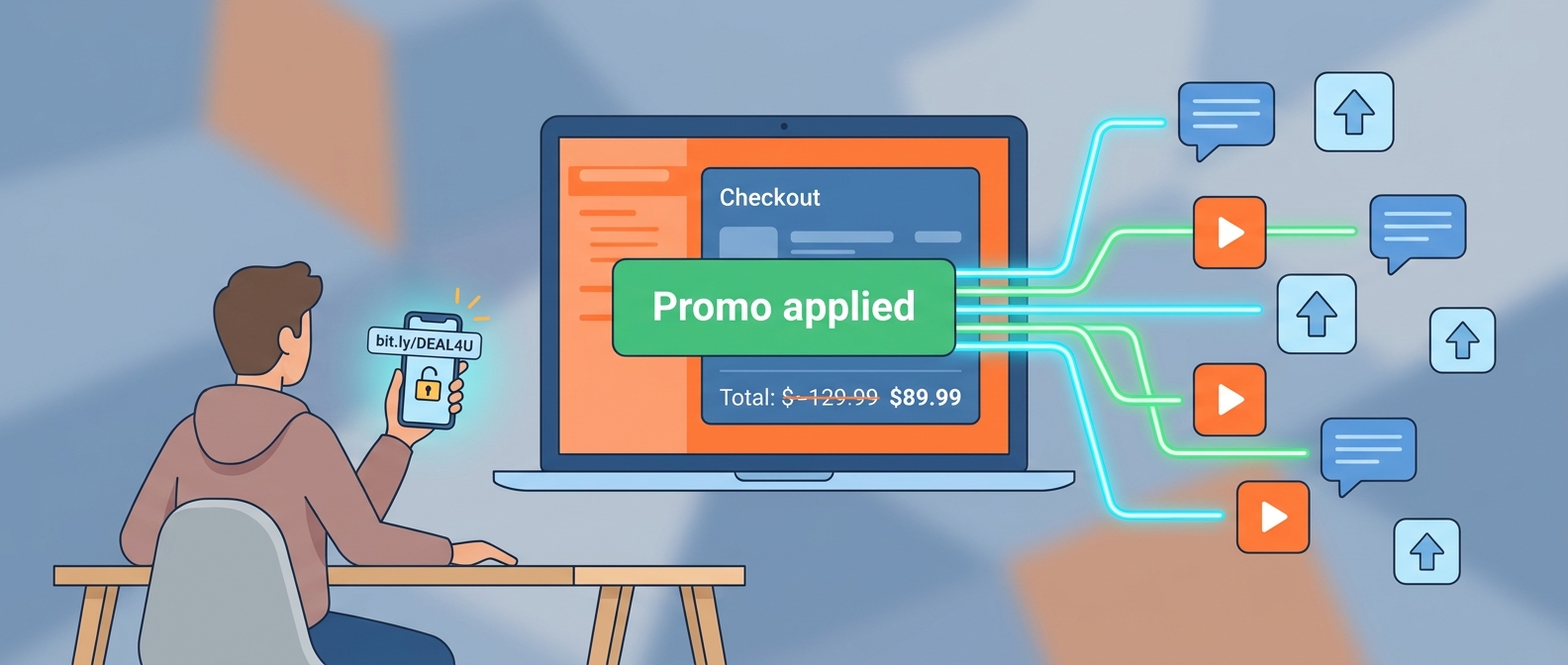
You are not imagining it. You see someone on TikTok or Reddit grab an Amazon gadget for 60 percent off, then you search the exact same item and get the plain old full price. It is frustrating, and it makes a lot of shoppers feel like they are always arriving five minutes too late. The annoying part is that you are often not doing anything wrong. Amazon has been pushing more of its steep discounts into off-platform campaigns, creator links, and social-share funnels instead of the older public promo pages people used to check. So the deal is real, but it may only appear if you enter through the right link. That is the hidden social share trick. If you know how these links work, and where to find fresh ones, you can often trigger checkout prices that never show up in regular Amazon search results. That is where the real savings are hiding right now.
⚡ In a Hurry? Key Takeaways
- Many of the best Amazon discounts now live inside social-share or creator links, not in normal search results or old promo hubs.
- If a deal video shows a huge discount, tap the exact link, add the item quickly, and always verify the final price at checkout before paying.
- Be careful with random coupon sites. Dead codes and recycled listings are common, so tested live links are worth more than copied promo text.
What the “hidden social share” hack actually is
Despite the word hack, this is not shady. You are not breaking into anything. You are simply entering Amazon through a campaign link that was built for a creator, a social ad, or a limited promo push.
Think of it like a side door. The product is the same. The seller is the same. But the discount is attached to that entry path, not always to the public listing you see in search.
That is why a regular Amazon search can show $39.99 while a weird, shortened social link quietly drops it to $19.99 at checkout.
Why this is happening more now
Amazon used to make some discounts easier to spot through public promo pages and broader coupon visibility. That system has become less useful, and some of those old pages have been deprecated or just stopped being the best place to look.
At the same time, brands still want fast sales. They want outside traffic. They want creators posting “look what I found” videos. So more aggressive percentage-off offers are being routed through off-platform promotions instead.
That means the best amazon secret promo code social media links often show up in places like:
- TikTok creator captions
- Reddit deal threads
- Facebook deal groups
- Telegram bargain channels
- Influencer storefront pages
- Shortened tracking links shared in comments or bio pages
Why normal searching fails
Most shoppers do what seems logical. They copy the product name into Amazon search, find the item, and expect the same discount to appear. Usually, it does not.
That is because many of these offers are attached to one or more of the following:
A specific referral path
The link itself may carry tracking or campaign details that help trigger the promo.
A clipped coupon plus hidden promo stack
You might need to enter through the campaign link, then clip a coupon, then see the rest come off at checkout.
A limited audience or time window
Some deals are live only for a short burst, or until a set number of redemptions is used up.
A variation-specific offer
The blue version might be discounted. The black one might not. The social post often skips that detail.
How to spot a real social-share discount
The easiest clue is when a creator or deal hunter does not post a plain coupon code by itself. Instead, they tell you to “use my link” or “tap the product link in bio.”
That usually means the discount is not fully public.
Other signs a deal may be tied to a hidden social-share link:
- The product page shows a small coupon, but the huge savings only appear at checkout
- The URL looks long, messy, or shortened
- The deal works for some people but not others after they search manually
- The creator warns that the promo may disappear fast
If this sounds familiar, you may also want to read The ‘Influencer Cart Clone’ Hack: How To Hijack TikTok’s Secret Amazon Promo Codes Before They Vanish, which explains why those flashy creator discounts seem to vanish the second you try to copy them.
How to use these links without wasting your time
This is the practical part. If you want the best shot at a secret campaign price, use a simple routine.
1. Open the exact link first
Do not search the item manually right away. Start with the creator or social-share URL exactly as posted.
2. Check the listing details carefully
Look at size, color, pack count, and seller. Social deals often apply only to one specific version.
3. Clip any visible coupon
Even when the social link is the key, there may still be a checkbox coupon on the page that needs to be clipped.
4. Add to cart and go to checkout
This is where the truth shows up. The final discount often appears only in the last step before payment.
5. Move quickly, but do not panic-buy
These promos can expire fast. Still, always confirm the final total before placing the order.
6. If it fails, do not keep testing random codes forever
That is where people waste 20 minutes. If the live link no longer works, the promo may simply be dead.
Why coupon sites keep letting shoppers down
A lot of coupon websites are basically graveyards. They copy promo text, keep expired pages up, and hope something still sticks. That is why you end up trying five codes at checkout and watching every one fail.
Social-share links are different because they are often tied to a currently running campaign, not a dusty list of old promo attempts.
That does not mean every social link works. Plenty expire. But a tested live link is much more useful than a page full of recycled coupon guesses.
Where these “secret” links usually surface first
If you want a better system, stop relying on generic searches like “Amazon promo code today.” Those broad searches are usually the slowest path.
Fresh off-platform promo links usually appear first in smaller communities where people post in real time. That can include niche subreddits, creator comments, short-form video descriptions, and private bargain groups.
The ugly truth is that the best deal is often hidden inside the ugliest URL.
How to stay safe while chasing hidden Amazon deals
You should absolutely be a little cautious here. Not because the concept is dangerous, but because the internet is messy.
Stick to links that still land on Amazon
If the final checkout happens on Amazon and the seller looks normal, that is a good sign. If the link sends you through multiple strange pages, back out.
Never trust screenshots alone
People love posting “look what I paid” screenshots. Nice, but not proof the deal is still live.
Watch for fake urgency
Some promos are truly limited. Others use countdown drama to rush you. The final checkout price is what matters.
Do not save payment info on random third-party sites
The whole point is to use an outside link that ends on Amazon, not to buy through a mystery page.
What to do when the price does not match the video
This happens all the time. A creator shows a huge discount, but when you click, you get something less exciting.
Usually, one of four things happened:
- The promo reached its redemption limit
- The creator linked a specific variation and you landed on another one
- The coupon needed to be clipped before checkout
- The video is old, but still being pushed by the algorithm
If you miss one deal, do not assume the whole method is fake. It just means these campaigns are moving targets. Timing matters.
Why this matters for regular shoppers
You should not need a secret decoder ring to buy a kitchen gadget at the same price you just saw online. But that is where things are right now.
Amazon and sellers are rewarding outside traffic. Creators are acting like mini deal funnels. Public promo pages are no longer the whole story. So if you only search on Amazon the old-fashioned way, you are often seeing the least interesting price.
That is exactly why communities that monitor and test working social-share links have become useful. They cut through the dead-code clutter and focus on promos that still fire at checkout.
At a Glance: Comparison
| Feature/Aspect | Details | Verdict |
|---|---|---|
| Regular Amazon search | Shows standard listing price and visible coupons, but often misses creator or social campaign discounts. | Easy, but often not the cheapest path. |
| Old coupon-code sites | Frequently filled with expired, copied, or generic codes that fail at checkout. | Low trust, high time-waste. |
| Social-share promo links | Can unlock hidden campaign pricing tied to creators, niche communities, or limited external funnels. | Best chance at “secret” discounts if the link is still live. |
Conclusion
The big takeaway is simple. If you keep missing those flashy Amazon deals from TikTok and Reddit, the problem is not always bad luck. Right now Amazon is quietly shifting more aggressive percentage-off promos into creator campaigns, targeted social pushes, and external funnels instead of the old public promo-code hub. That means the best savings are often locked inside short, awkward links that never show up in a normal search. Once you know that, you can stop wasting time on dead code lists and start looking where the live discounts actually are. Better yet, when a community is actively monitoring and testing which social-share links still work at checkout, you get a real shortcut to those hidden prices before they vanish. That is not gaming the system. It is finally shopping with the right map.