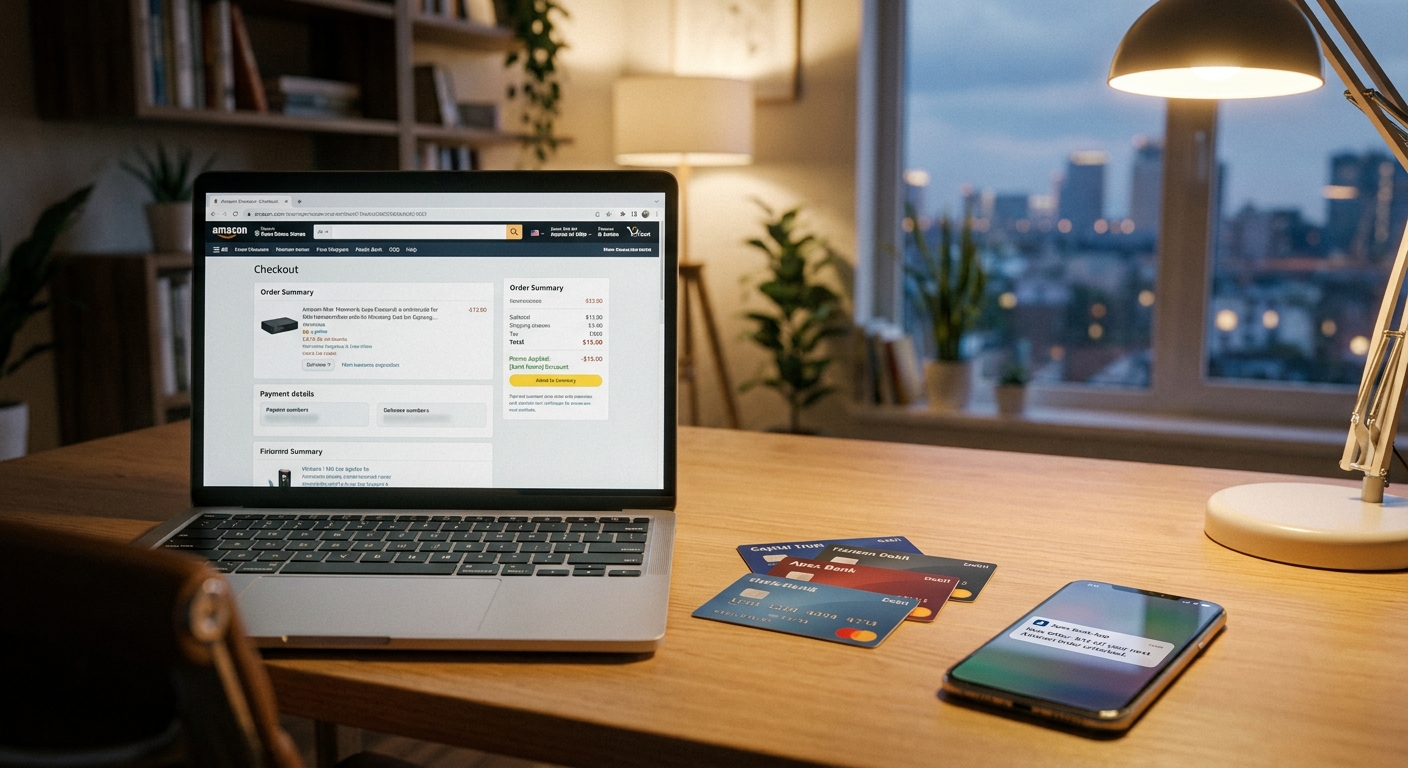
You are not crazy if Amazon coupon hunting feels like a waste of time. Most public promo codes are either expired, tied to one oddly specific product, or dead the second a deal blog posts them. Meanwhile, someone else checks out with the same paper towels, charger, or coffee pods and somehow knocks $10, $15, even $50 off the order. The difference is usually not luck. It is a quieter class of deals hiding inside bank and card accounts. These are the hidden amazon promo codes with credit card offers that never really make it to the noisy coupon roundups. If you have an Amex, Chase card, Discover, Capital One, or even a regional bank card, there is a decent chance you already have access to one of these offers. You just need to know where Amazon and your bank hide them, and how to trigger them without wasting half your afternoon.
⚡ In a Hurry? Key Takeaways
- Private bank-linked Amazon offers often beat public coupons because they are targeted, still live, and apply to normal purchases.
- Check your bank’s offers page, add the eligible card to Amazon, and test a qualifying item in your cart before assuming no deal exists.
- Stick to offers shown in your bank or Amazon account, read the terms, and never buy things you do not need just to “save.”
Why these hidden Amazon deals work better than public coupon codes
Public codes get hammered fast. Once a blog posts them, thousands of people try the same code at once. Some expire. Some hit a usage cap. Some only work on seller-shipped products that look like regular Amazon listings until checkout.
Bank-tied promos are different. They are often tied to your specific card, your login, or a limited group of customers. That means less competition, fewer dead ends, and a better chance the discount actually sticks.
You will usually see them in one of two forms. First, “add this card and get $10 to $15 off” deals. Second, “use rewards points and get a discount” promos, where using as little as one Membership Rewards point or one Chase point can unlock a bigger instant discount.
It is a little like the trick behind The ‘Alexa Cart Whisper’ Hack: How Voice-Only Promos Quietly Beat Prime Day Prices At Checkout. The best savings are often not sitting on the obvious deals page. They are tucked inside a different corner of the system.
Where to actually find bank-only Amazon offers
Inside your credit card or bank account
Start with the offers section in your card account. Amex Offers is the best-known version, but Chase, Bank of America, Wells Fargo, Discover, Capital One, and some regional banks run similar programs.
Look for wording like:
- Spend at Amazon, get $10 back
- Add eligible card and receive an Amazon promotional credit
- Use points at Amazon and save 20% or up to $15 off
- Get bonus rewards when using this card at Amazon
These offers may not say “coupon code” at all. That is why so many shoppers miss them.
Inside Amazon after adding a card or points account
Some offers only appear after you add the eligible card to your Amazon wallet. Others show up only after you link your points account, such as American Express Membership Rewards or Chase Ultimate Rewards.
Amazon may then show a banner during checkout, a promo message on a product page, or a line under payment settings telling you a discount is available.
On targeted Amazon promo pages
Amazon also uses dedicated landing pages for targeted offers. If your account qualifies, the page will confirm enrollment. If not, it may show nothing useful at all. That can be frustrating, but it is normal.
How the “hidden card link” trick usually works
This is the simple version.
- Find an Amazon-related offer in your bank or card login.
- Click to add or activate the offer if your bank requires that step.
- Add that exact card to your Amazon account if it is not already there.
- Make sure the cart contains qualifying items. Often these must be sold by Amazon, not a third-party marketplace seller.
- At checkout, use the eligible card, or in some cases use the card plus a tiny amount of points.
- Watch for the discount to appear before you place the order.
That is the whole “hack.” It is not really a hack in the shady sense. It is just a private offer path that most people never check.
The three most common types of hidden Amazon card offers
1. Add-a-card discounts
These are the easiest to understand. Add an eligible card, then get a one-time discount like $10 off $50 or $15 off $100.
Best for: normal household orders when you already planned to spend enough to hit the threshold.
2. Points-triggered discounts
This is the classic Amazon card promo that seasoned deal hunters love. You connect your Amex or Chase points account, use a tiny amount of points, sometimes as little as one point, and unlock a larger discount like 20% off up to a set cap.
Best for: bigger carts where the percent-off cap gives you a real savings boost.
Important note. You usually do not want to pay for the whole order with points. The value is often poor. The smart move is to use the minimum points needed to trigger the discount, then pay the rest with cash or card.
3. Statement-credit or cash-back card offers
These are less flashy but still useful. Spend a required amount at Amazon with the enrolled card, then the bank gives you cash back or a statement credit later.
Best for: shoppers who do not mind waiting a billing cycle to see the savings.
How to avoid the usual gotchas
Check who is selling the item
This is the big one. Many offers only work on items sold by Amazon.com or fulfilled in a specific way. If your cart is full of marketplace items from third-party sellers, the promo may not apply.
Read the minimum spend carefully
A $10 off $50 offer may require $50 before tax and after other discounts. Or it may exclude gift cards, digital goods, subscriptions, and certain categories.
Do not assume all accounts are eligible
Your spouse may have the offer. You may not. One Chase card might qualify while another does not. These deals are often targeted, which is annoying, but that is how they work.
Do a test checkout before giving up
Sometimes the offer will not show on the product page at all. It only appears on the final payment screen. So if everything else looks right, run a checkout test and stop before placing the order if the discount does not appear.
A practical step-by-step routine that takes five minutes
If you want a repeatable way to use hidden amazon promo codes with credit card offers, try this routine once a week.
- Open your Amex, Chase, Discover, and other card apps.
- Scan the offers section for Amazon mentions.
- Add or activate any Amazon offer you see.
- Open Amazon and confirm those cards are saved in your wallet.
- If you collect points, check whether your points account is linked.
- Build your cart with items sold by Amazon whenever possible.
- Test checkout using the eligible card or one-point method if the terms call for it.
That sounds like a lot written out, but in real life it is quick. And it is much faster than trying ten random coupon codes from search results.
When these offers are worth your time, and when they are not
They are worth it when you already planned to buy something. This is where hidden card offers shine. You are turning a regular order into a discounted one.
They are not worth it if the offer pushes you to overspend, buy filler items, or choose a worse product just to hit a threshold. Saving $15 by spending an extra $30 is not a win.
Also, if the item is cheaper at Target, Walmart, or Costco, then the Amazon promo is not really a deal. Always compare the final price, not just the size of the discount.
Why these offers stay under-used
Most shoppers look in the obvious places. Search engines. Coupon blogs. Retail deal roundups. Those are fine, but they are crowded and often outdated.
Private offers stay quieter because they are fragmented. One lives in Amex Offers. Another is buried in a Chase account. Another only shows after linking points on Amazon. They do not spread as easily because not everyone qualifies.
That is also why they can be more reliable. Fewer eyes. Less competition. Less chance the deal is dead by lunch.
At a Glance: Comparison
| Feature/Aspect | Details | Verdict |
|---|---|---|
| Public Amazon coupon codes | Easy to find, but often expired, limited, or tied to niche products and sellers. | Good when they work, but unreliable. |
| Bank-linked card offers | Hidden in your bank or card account, targeted, and often apply to regular Amazon purchases. | Best balance of effort and real savings. |
| Points-triggered Amazon promos | Use a tiny amount of linked rewards points to unlock a larger instant discount at checkout. | Excellent if you use the minimum points needed. |
Conclusion
If you are tired of dead promo codes and endless coupon pages, this is the better route to start with. Right now a wave of fresh bank-tied Amazon offers is rolling out, from targeted “add this card, get $10 to $15 off” deals to bonus-credit promos that only appear inside your Amex, Chase, or regional bank login and never hit the big coupon blogs. That is why they still have life in them. They are under-used, quieter, and often much more dependable at checkout. The real win here is simple. You do not need a new card or some secret membership. You may already have what you need sitting in your wallet. Check your bank offers, link the right card, make sure your cart qualifies, and let those private promos do the work. That beats hoping some random public 20 percent code still works every single time.