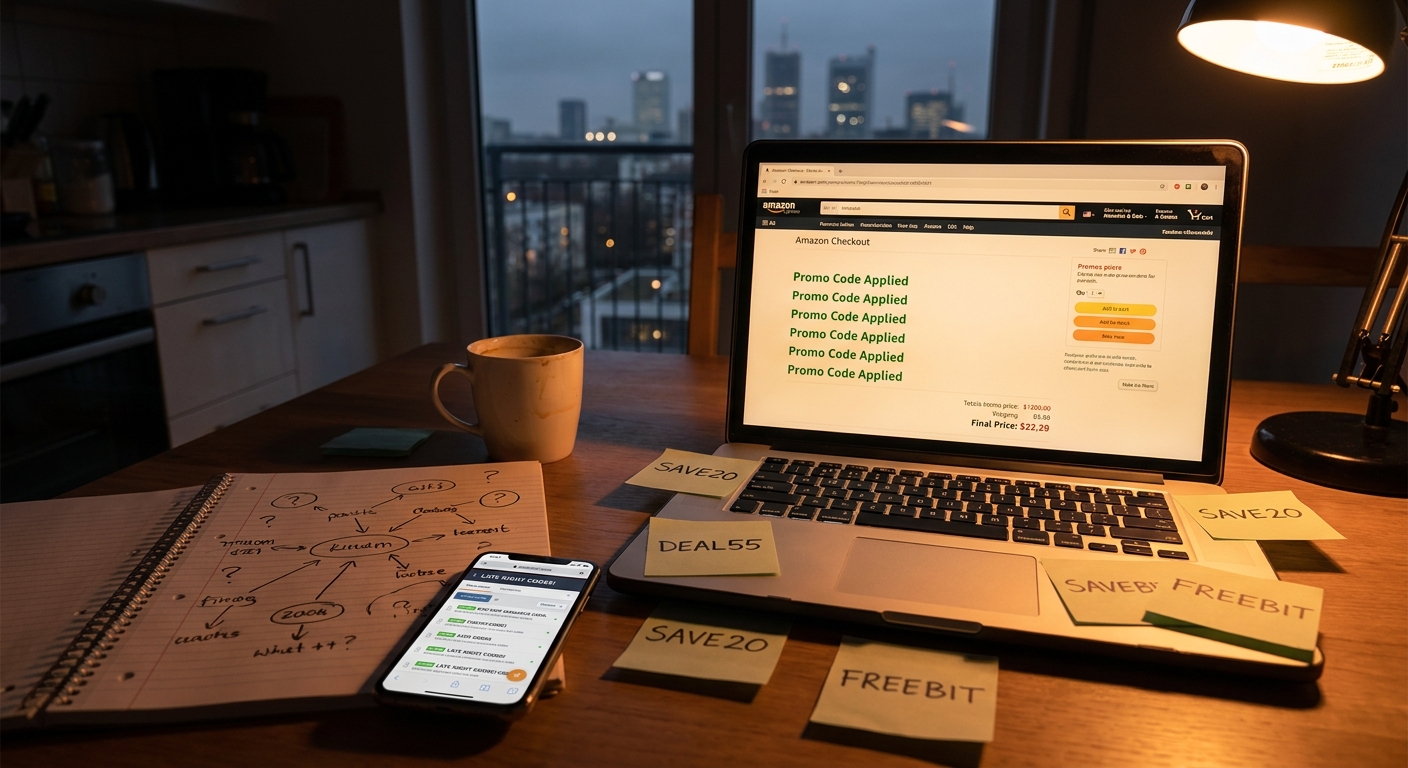
You know the routine. You see a TikTok comment promising 50 percent off on some random kitchen gadget, copy the code, race to Amazon, and get hit with “promotion code you entered cannot be applied.” It is annoying, and after a few tries it starts to feel like the whole internet is built to waste your checkout time. The good news is that some hidden amazon promo code hacks that actually work are not really about finding one magic coupon. They are about spotting where fresh seller codes leak before they get burned out. That is the real play right now. Tiny Amazon sellers launch promo codes for niche products, those codes spill into Reddit threads, deal pages, and social posts, and for a short window they are still underused. If you can do a quick 30-second leak check before trying a code, you can skip the dead bait, find the live ones faster, and start building your own repeat list of brands that keep doing this over and over.
⚡ In a Hurry? Key Takeaways
- The best Amazon coupon trick right now is not one secret code. It is checking how recently a code leaked and whether it is already overused.
- Spend 30 seconds checking Reddit, deal sites, and product page coupons before testing a promo code at checkout.
- Stick to Amazon checkout and public promo listings. Never pay for “VIP code lists” or hand over account details.
What the “Hidden Overstacked Code Vault” hack really means
The name sounds dramatic, but the idea is simple.
Amazon sellers often create promo codes to push a new product, boost reviews, or get sales moving during a big shopping week. Those codes are meant for a small audience at first. Maybe an influencer. Maybe a Facebook group. Maybe a coupon page.
Then someone shares it wider.
That is the leak. And that leak is where the opportunity sits.
If you catch the code early, before thousands of people pile on, it can still work. If you find it after it has bounced around TikTok and five deal blogs, it is usually dead. So the hack is not “use this exact code.” The hack is learning to tell the difference fast.
The 30-second leak check
Before you paste any code into Amazon, do this quick scan:
1. Check how fresh the post is
If the code was posted six hours ago, you may still have a shot. If it is from three days ago and has a hundred “worked for me” replies, it is probably cooked.
2. Search the product name plus the code
Open a search tab and look up the product name, brand, or promo code. If the same code is already on Reddit, deal forums, and social comments all at once, that usually means it leaked hard and got used fast.
3. Look for a clickable coupon on the product page
Sometimes the best savings come from stacking a page coupon with a seller promo code. If the product page shows a 10 percent or 20 percent coupon checkbox, that is a very good sign the seller is actively pushing sales right now.
4. Read the top recent reviews and Q&A
This sounds unrelated, but it helps. If reviews suddenly spike in the last few days, the seller may be in launch mode. Launch mode often means coupons are still floating around.
5. Test once, not ten times
If the code fails and every sign says it already went public hours ago, move on. Do not sit there retyping it like Amazon is going to change its mind.
Why this works better than doom-scrolling for “secret” codes
Most people hunt coupons backward. They start with viral posts and hope something still works.
You want to work forward instead. Follow the path of new seller promos as they start to leak. That gives you a small timing advantage, and timing is everything here.
This is also why some shoppers swear they always “just miss” the best deals. They are seeing the code after the useful part is over. The real window is often just a few hours.
Where live codes usually leak first
You do not need to camp on ten websites all day. Just know the pattern.
Small deal communities
Niche Reddit threads and smaller deal forums often get codes before giant coupon sites catch up.
Seller social posts
Brands sometimes drop codes in comments, stories, or tiny creator partnerships. That is one reason The “Hidden Influencer Code Cascade” Hack: How One Follow Turns Amazon’s Secret Social Discounts Into Stackable Checkout Savings is worth a look. It explains how these social-only discounts spread and why some end up stacking better than the obvious public deals.
Coupon pages for new or unknown brands
Big established brands do not need to get aggressive as often. Lesser-known brands do. That is why off-brand gadgets, pet tools, storage gear, and beauty accessories are common places to find these promo leaks.
How to build your own private “vault” of repeat brands
This is where the savings stop being random.
When you find a seller whose code works, do not just buy and forget it. Save the brand name. Make a note in your phone. Better yet, keep a simple list with:
- Brand name
- Product type
- Where you found the code
- Whether it stacked with a page coupon
- How long it stayed active
After a couple of shopping events, patterns show up.
Some brands always launch around Prime Day. Some always offer a page coupon plus a 15 percent promo. Some push codes through influencers first, then those codes spill into public threads later. Once you know the repeat players, you stop searching blind.
What “overstacked” really looks like at checkout
People use the word “stacked” loosely, so let’s keep it simple.
The best-case Amazon discount setup often looks like this:
- A sale price already on the listing
- A clickable coupon on the product page
- A seller promo code at checkout
Not every product allows all three. But when they line up, the discount can look much bigger than what casual shoppers see.
This is also why screenshots on social media sometimes look unbelievable. The person did not find one super code. They likely combined multiple discounts during a short launch window.
Red flags that tell you a code is bait
Some coupon posts are just stale. Others are straight-up junk.
Watch out for these signs:
- No product link, only a vague claim like “works on everything”
- Comments full of people asking if it still works, with no recent success
- Posts pushing you to join a private chat or pay for access
- Codes that supposedly give huge discounts on major name brands
- Creators showing no final checkout proof
If it smells like bait, it probably is.
A smarter routine for deal hunters
If you want hidden amazon promo code hacks that actually work, start using a repeatable routine instead of chasing every “secret” post:
- Pick a few product categories you actually buy.
- Track small and mid-size Amazon brands in those categories.
- Check for product page coupons first.
- Search for fresh leaks on Reddit and deal threads.
- Try only the newest, least-circulated codes.
- Keep notes on which sellers repeat the pattern.
That is boring compared to viral coupon hype. It is also way more useful.
At a Glance: Comparison
| Feature/Aspect | Details | Verdict |
|---|---|---|
| Viral TikTok code | Usually already seen by thousands, often copied from older promo drops | Low success rate |
| Fresh leak from a small thread or deal page | Less circulated, more likely to still have redemptions left | Best opportunity |
| Saved list of repeat seller brands | Lets you spot familiar promo behavior during major shopping events | Most reliable long-term strategy |
Conclusion
The real secret is not one forever-working Amazon code. It is understanding how seller promos leak, spread, and burn out. Once you start doing that quick leak check, your whole deal-hunting experience gets better. You stop wasting checkout attempts on exhausted TikTok bait, you catch higher-value launch codes while they are still underused, and you slowly build your own private list of seller brands that keep repeating the same pattern every time a big shopping event rolls around. That is the edge. While everyone else is doom-scrolling for one code that still works, you are running a simple system that turns other people’s accidental overshare into your own repeatable checkout win.