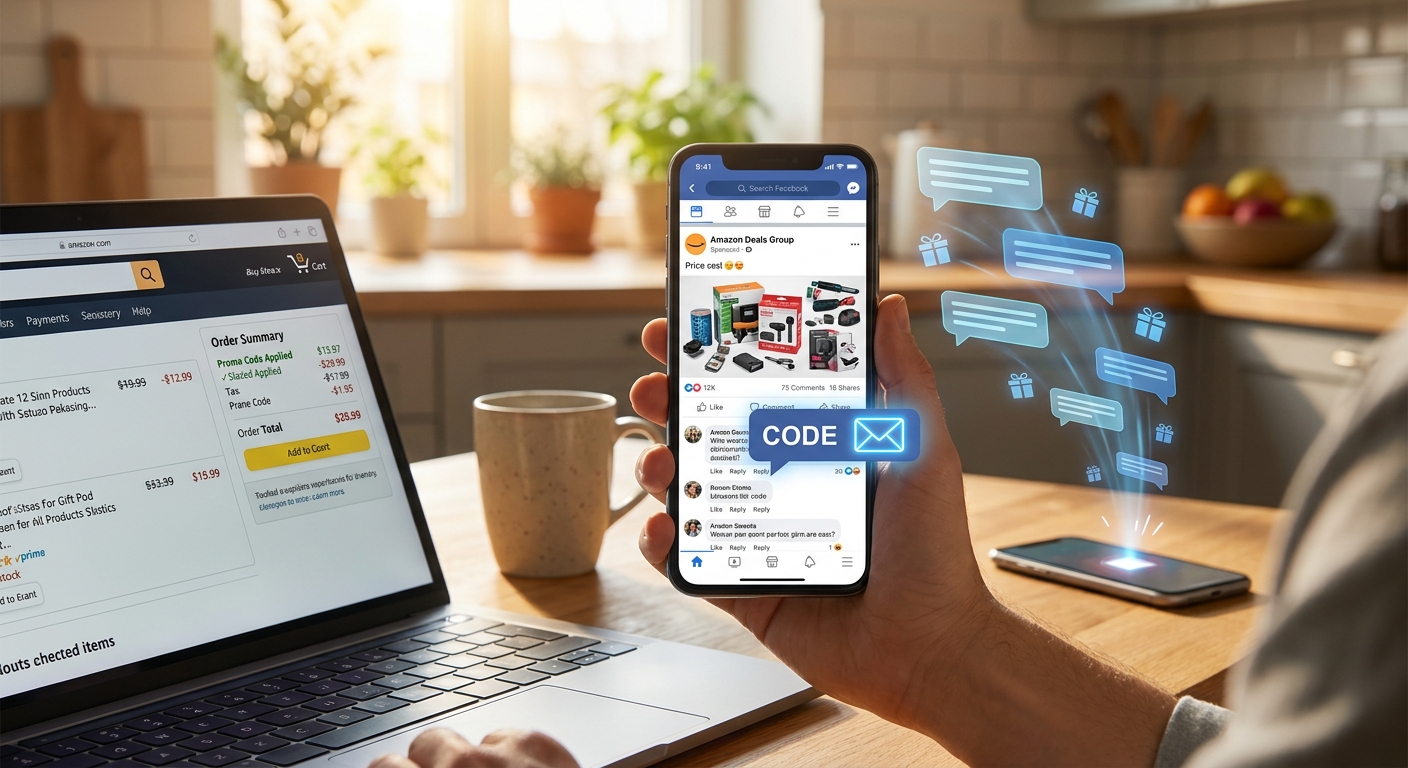
You have probably seen the post. A Facebook deal page shows a deep Amazon discount, then tells people to comment one word like “code,” “deal,” or “link.” Most people keep scrolling, assuming it is engagement bait or some annoying gimmick. Fair enough. Coupon hunting is already frustrating enough without playing social media games. But here is the part many shoppers miss. The real discount often is not in the post at all. It gets sent privately through an automated message, and that is where the better Amazon promo code lives.
This amazon secret promo code facebook comment hack works because brands and influencers want to control who gets the code, slow down abuse, and avoid having a discount blasted across every coupon site in an hour. If you understand how the system works, you can spot the real offers faster, skip the junk, and grab fresher codes on household basics, storage items, home goods, and fashion before they burn out.
⚡ In a Hurry? Key Takeaways
- The “comment-to-cart” trick is real. Many Facebook deal posts send Amazon promo codes by auto-reply or DM after you comment a trigger word.
- To use it well, look for recent posts, clear instructions, and checkout screenshots, then test the code quickly before it gets overused.
- Stay safe. Never pay for access, never give out your Amazon password, and be cautious if a seller pushes you off-platform.
What the comment-to-cart hack actually is
At its simplest, this is an automated funnel. A creator, brand, or deal page posts an Amazon product and asks followers to comment a specific word. Once you do, a tool tied to Facebook or Instagram sends you a reply, a direct message, or both.
That message usually includes one of three things. A clipped coupon code. A product link with instructions to clip an on-page coupon. Or a short step list telling you what discount appears at checkout.
Why not just post the code in public? Because public codes die fast. The minute a juicy code lands in the open, it gets copied to coupon sites, browser extensions, Telegram groups, and Reddit threads. Then the code hits its usage cap, gets pulled by the brand, or stops working for many accounts.
Why brands are hiding codes this way
This is not just about being secretive. It is about control.
Less code abuse
If a seller shares a public 50 percent off code, thousands of random shoppers can pile in, including resellers. A private message slows that flood down.
Better tracking
Brands can see which post, creator, or keyword drove the sale. That makes it easier for them to decide which influencer to keep working with.
Longer code life
A less-visible promo code can sometimes last longer because it is not instantly scraped by every deal aggregator online.
Platform changes
Amazon and social platforms keep changing how outside sellers promote deals. As older social promo tricks fade, private channels are becoming the safer bet for sellers who still want social traffic without turning every offer into a free-for-all.
How to use the amazon secret promo code facebook comment hack
You do not need any special app. You just need to know what to look for.
1. Find a fresh post
Timing matters. A post from two hours ago has a much better chance than one from last week. Comment-triggered codes can disappear fast.
2. Read the instructions carefully
Some posts want “code.” Others want “link,” “deal,” or even the product name. If you type the wrong word, the automation may not fire.
3. Check your replies and DMs
On Facebook, the response may appear as a public reply first, with a prompt to open Messenger. On Instagram, it often lands in direct messages. Also check your message requests folder.
4. Follow the exact checkout steps
Many Amazon offers stack discounts. For example, you may need to clip a coupon on the product page and then enter the code at checkout. Miss one step and the math will look wrong.
5. Move quickly, but do not panic buy
These offers can expire without warning, but that does not mean you should buy junk you do not need. Use the trick for things already on your list.
How to tell if a post is worth your time
Not every comment-for-code post is a gem. Some are recycled. Some are already dead. Some are just farming engagement.
Good signs
Look for recent timestamps, real user comments saying the code worked, and screenshots showing the discount in cart or at checkout. Bonus points if the post tells you the exact final price and the product size or color involved.
Red flags
Be cautious if the post is vague, the product link keeps changing, or commenters are saying they never got a message. Also be wary if the savings claim sounds absurd and there is no proof.
If you are tired of wasting time on expired discounts, this guide on The “Hidden Leaked-Code Tracker” Hack: How One Simple Cross‑Search Stops Dead Amazon Promo Codes From Wasting Your Time is worth a look. It pairs nicely with the comment trick because it helps you weed out dead codes before you get your hopes up.
What kinds of Amazon deals show up in these private messages
You will usually see products where sellers have room to discount hard for a short time. Think practical, mid-priced items rather than big-name electronics.
- Storage bins and organizers
- Kitchen tools and home basics
- Phone accessories and charging gear
- Fashion extras like leggings, bags, or sunglasses
- Small beauty and personal care items
This is where the trick shines. Not on a new iPhone. On the boring stuff you were going to buy anyway.
Why these codes often beat public coupon sites
Public coupon sites are useful, but they have a speed problem. By the time a code gets copied, indexed, reposted, and clicked a few thousand times, it is often cooked.
Private DM codes are not always better, but they are often fresher. They may also be less abused, which gives regular shoppers a fairer shot. That is the real value here. You are not finding magic discounts. You are finding discounts before they turn into internet roadkill.
Safety tips so you do not get burned
This is the part where common sense matters more than bargain fever.
Never share your Amazon login
No legit deal requires your password. Ever.
Stick to checkout on Amazon
If someone tries to move you to a weird payment page, walk away.
Do not pay for access to “VIP” codes
Some pages build trust with a few real deals, then start charging for entry. That is usually where the value drops off fast.
Watch for rebate tricks
A clean promo code at Amazon checkout is one thing. A promise that you will get paid back later by PayPal, gift card, or app credit is much riskier.
Check the seller and reviews
A huge discount is not a deal if the product is junk. Read recent reviews, not just the star average.
How to build your own small system for finding the best ones
You do not need to live on Facebook all day. A simple routine works.
Follow a handful of reliable deal pages
Pick creators who post clear instructions, not endless hype.
Turn on notifications for a few accounts
Not twenty. Just the ones that regularly share practical products you actually buy.
Save posts with good comment engagement
If a page often has users reporting successful checkouts, keep it on your short list.
Cross-check before buying
Search the product on Amazon, compare recent prices, and make sure the “deal” is a real drop, not a padded list price.
At a Glance: Comparison
| Feature/Aspect | Details | Verdict |
|---|---|---|
| Comment-triggered code posts | Codes are shared privately through replies or DMs after you comment a keyword. | Often fresher and less picked-over than public coupon pages. |
| Traditional coupon sites | Easy to search, but many Amazon codes are already expired or limited by account. | Good for backup, not always best for fast-moving social deals. |
| Safety and trust | Best offers stay on Amazon checkout and never require outside payment or login sharing. | Useful if you stay picky and avoid anything that feels shady. |
Conclusion
The amazon secret promo code facebook comment hack sounds silly until you realize how many real deals now move through these private little message funnels. That is why it matters right now. Comment-triggered promo codes are spreading fast across Facebook and Instagram, while Amazon and sellers keep nudging discounts into more controlled, private channels. If you understand the system, you can get access to hotter, less-abused Amazon codes on everyday items like storage, home goods, and fashion, instead of battling over the same expired coupons everyone finds on Google. Think of it as less of a trick and more of a new shopping habit. Once you know where the real code is hiding, you stop scrolling past savings that were meant for people who knew to ask.