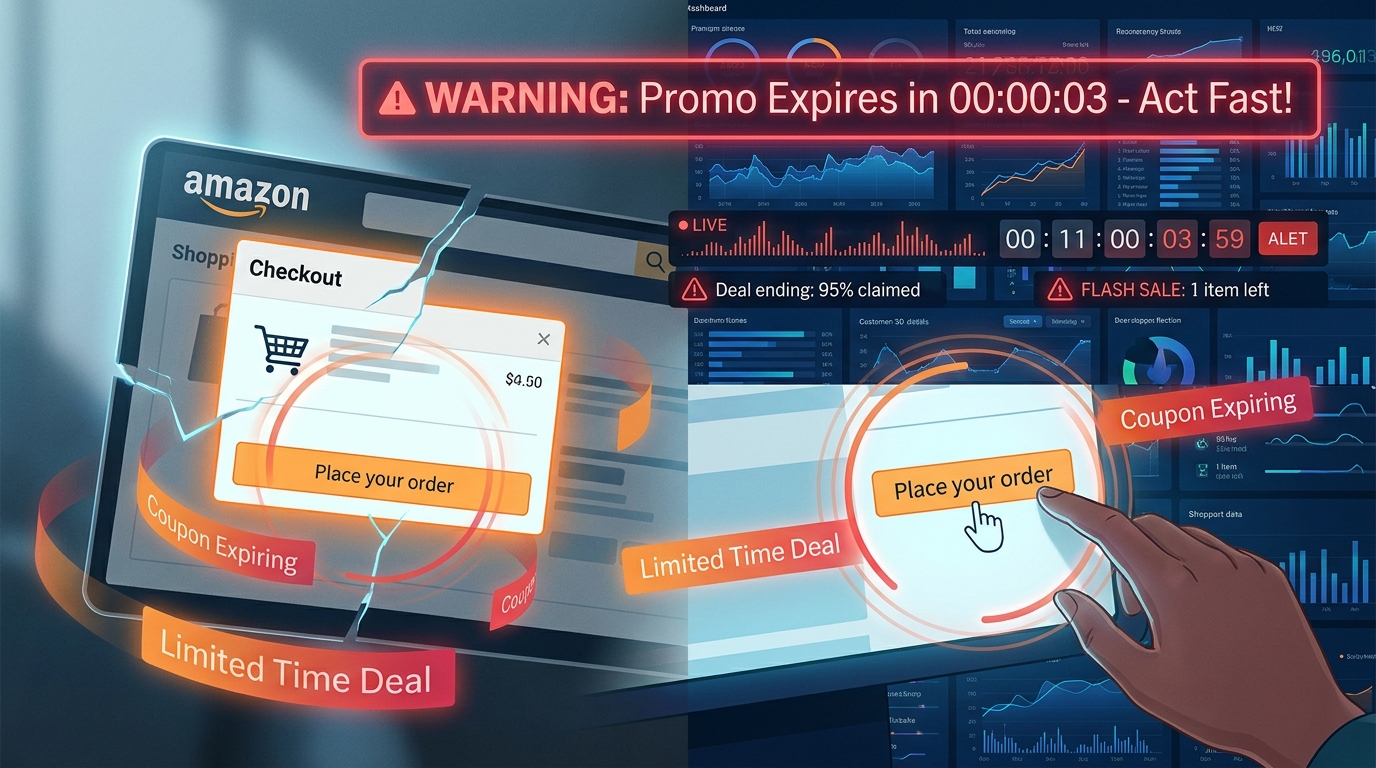
You found a real Amazon promo code. You copied it fast. You added the item to your cart, raced through checkout, and then got the message nobody wants to see: this promotion has reached its redemption limit. That is maddening, especially because the code may still be posted on a deals page, shared on X, or bouncing around TikTok like it is still alive. If you are wondering why my amazon promo code stopped working even though it’s still listed, the answer is often simple. The code did work. You were just a few redemptions too late. A lot of Amazon promos are not only time-limited. They are unit-limited, too. Once enough people use them, they quietly shut off. The good news is you can sometimes spot the warning signs before checkout and give yourself a much better shot at getting the discount before the door closes.
⚡ In a Hurry? Key Takeaways
- Amazon promo codes often stop working because they hit a hidden redemption cap, even if the code is still publicly listed.
- Your best move is to watch for low-stock signals, verify the deal with real-time deal accounts, and check out immediately with one item first.
- Do not buy from sketchy code sites or waste time testing dozens of random codes. Speed and timing matter more than volume.
What the “unit cap tripwire” actually means
Think of some Amazon promo codes like concert tickets. The show may not have started yet, but all the seats are gone. Promo campaigns often have two limits. One is the clock. The other is the number of times the code can be used.
That second limit is what trips people up. A code can still be within the valid date range and still be dead. If the seller or brand set a cap of, say, 500 redemptions, code number 501 is out of luck.
That is usually the answer to why my amazon promo code stopped working even though it’s still listed. The listing is old. The code was real. The stock of discounted redemptions is simply gone.
Why this is happening more right now
Across TikTok, X and Reddit, the mood has shifted. People are complaining less about fake codes and more about codes that were real for a brief window but are already maxed out by the time normal shoppers see them.
That makes sense. Deal accounts move fast. A popular promo can get hammered in minutes. Add in resellers, coupon groups, and browser extension users all hitting the same offer, and the cap can disappear long before the original post gets updated.
Amazon also does not always show a friendly countdown for this stuff. There is rarely a big warning that says “12 redemptions left.” It just works until it does not.
How to spot last-unit behavior before you waste time
1. Check the product page for low-stock clues
This is the heart of the hack. If a code is tied to a specific product and that product is showing signs of low inventory, the promo may be near its own limit too.
Watch for phrases like:
- Only 3 left in stock
- More on the way
- Usually ships within several days
- Limited quantities available
These messages do not guarantee the code is about to die. But when a hot promo and low visible inventory show up together, it is a strong clue that you are in the final stretch.
2. Look for coupon clipping changes
If the product had a clickable on-page coupon and that coupon suddenly disappears while the code is still being shared elsewhere, that is another warning sign. Sellers often pull one discount layer when demand spikes.
3. Watch the seller and buying options
If the item flips between “Sold by Brand X” and a third-party reseller, the promo may only apply to one seller. A code that looked valid an hour ago can fail simply because the default seller changed.
Always confirm that the seller and the exact variation match the deal post.
4. Be careful with color and size variants
This catches people all the time. The code may work only on one color, one pack size, or one specific listing. If you click a different version, the promo can vanish even though the product looks basically the same.
The final-5-minutes playbook
If a deal looks hot and fragile, do this in order.
Open the item first, not the code page
Make sure the product is in stock, sold by the right seller, and eligible for Prime or the shipping terms mentioned in the deal post.
Add one unit first
Do not start by loading up your cart with three or four. Some promos are one per customer. Others have a cap that burns out fast. Testing one unit gets you the fastest yes or no.
Paste the code at checkout immediately
Do not wander off to comparison shop. Do not open five tabs. If this is a real, trending promo, speed matters more than perfection.
Cross-check with a real-time source
Search X or Reddit for the code or product name sorted by newest. If people are posting “still works” in the last few minutes, you may still have a shot. If the latest comments all say dead, save yourself the headache.
Refresh the product page once before giving up
Sometimes the listing updates. Sometimes the seller changes. Sometimes the coupon stack disappears. One refresh can tell you if the conditions shifted.
How to tell the difference between a dead code and a mismatched code
Not every failed promo means the redemption cap was reached. Here is the quick filter.
It is probably capped out if:
- The error mentions redemption limit reached
- Multiple shoppers report it just died
- The code was working publicly a short time ago
- The item is low stock or suddenly surging in rank
It is probably mismatched if:
- You changed size, color, or quantity
- The seller is different from the original deal post
- The deal requires Prime and you are not logged in
- The discount only applies to a subscribe-and-save order or a specific shipping option
Why listed codes stay up after they are effectively dead
This part feels unfair, but it is common. Deal sites, social posts, coupon aggregators, and even browser extensions are not all checking redemption caps live. They often show a code until someone manually marks it expired.
So if you keep asking why my amazon promo code stopped working even though it’s still listed, the reason is often lag. The internet has not caught up to the fact that the promo already hit its internal ceiling.
What not to do
Do not test random coupon sites for 20 minutes
By then, the real deal window is usually over. Most of your effort should go toward confirming one promising code fast, not hunting 50 questionable ones.
Do not assume “available until midnight” means anything
That may be the posted date, not the real life of the promotion.
Do not ignore the exact listing details
A lot of Amazon deals are razor-specific. The wrong variation kills the promo.
Do not over-order on a fragile promo
If the code is near its limit, a bigger quantity can fail even when one unit still works.
A safer way to improve your odds tonight
Here is the practical routine I would use.
- Find the code from a source with recent comments or timestamps.
- Open the exact Amazon product listing.
- Check seller, stock message, and variant.
- Add one unit only.
- Apply the code right away.
- If it works, then decide whether to try a second quantity.
- If it fails, search the code on X or Reddit by newest before trying again.
This is not glamorous, but it is effective. You are basically trying to beat the hidden tripwire before the last few redemptions disappear.
At a Glance: Comparison
| Feature/Aspect | Details | Verdict |
|---|---|---|
| Code still listed online | May simply mean the post has not been updated, not that the discount is still redeemable. | Do not trust the listing alone. |
| Low-stock signals on product page | “Only X left,” delayed shipping, or seller changes can hint that a promo is near its limit. | Useful warning sign. |
| Testing one item first | Helps you confirm the code quickly before quantity rules or final redemptions ruin the deal. | Best first move. |
Conclusion
If Amazon promo codes have been making you feel like you are always one click too late, you are not imagining it. Across TikTok, X and Reddit in the last 24 hours, shoppers are complaining less that there are “no real Amazon promo codes” and more that every legit discount they find is already maxed out or silently dead by the time they try it. The real problem right now is not discovering codes, it is getting in before the campaign’s internal unit cap quietly shuts the door. Once you know how to spot last-unit behavior on a product page, cross-check a deal with real-time chatter, and read the difference between a dead code and a mismatched listing, you have something useful you can do tonight. That turns a frustrating maybe into a much better shot at actual checkout savings, instead of yet another “code not valid” error.