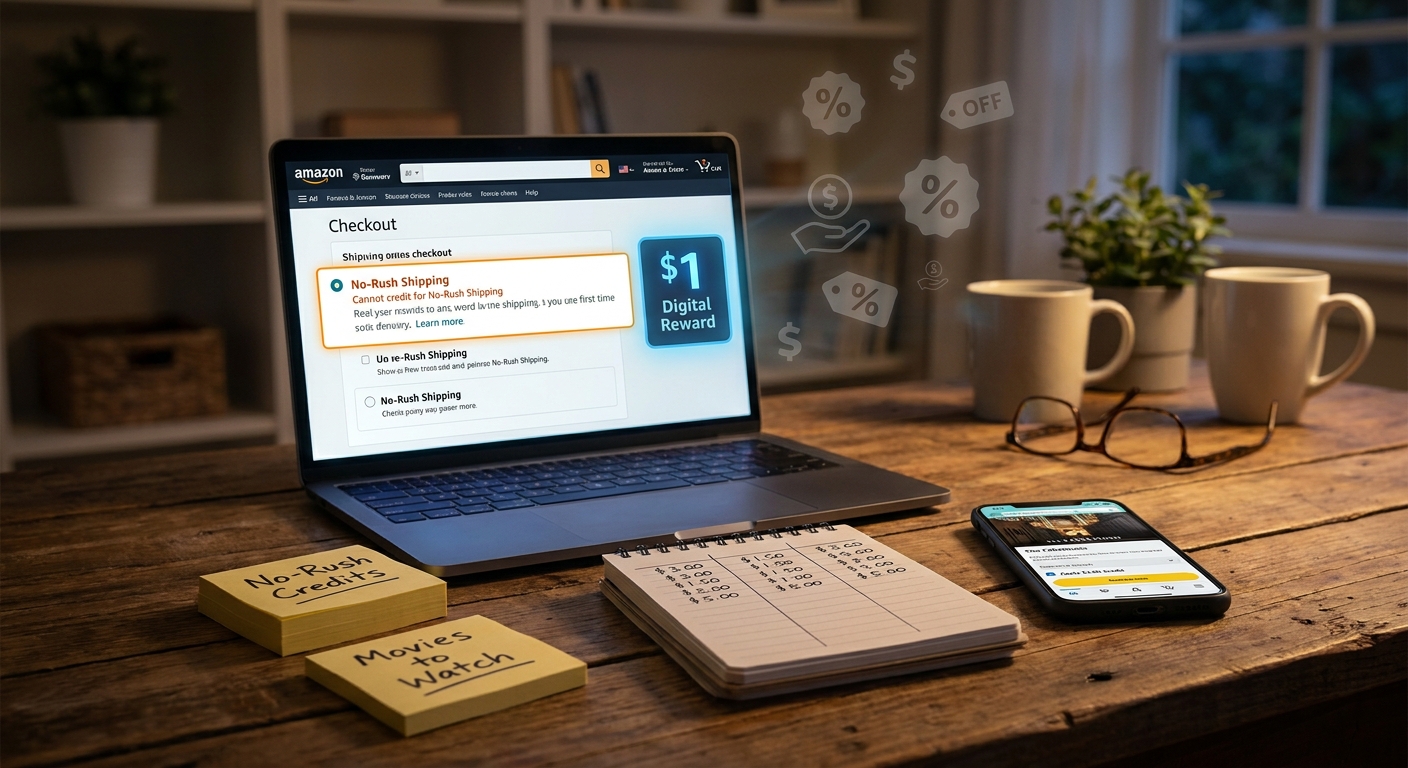
You have probably seen it at checkout. Amazon offers a tiny reward if you pick no-rush shipping, and your first thought is usually, “A whole dollar? For waiting longer?” Fair reaction. Most people either skip it or tap yes a few times, forget the credits exist, and never cash them in before they expire. That is the annoying part. The reward is real, but Amazon does not exactly put a spotlight on it once the order is done.
The smarter move is to treat those little no-rush offers like mini promo codes you are pre-earning for later. If you order from Amazon anyway, this can turn routine purchases into free movie rentals, discounted Kindle books, cheap apps, or other digital extras you would normally pay for out of pocket. It is not flashy. It is not some coupon trick from a sketchy extension. It is just a simple system. Earn the credits when the item is not urgent, keep track of them, and use them before they disappear. Done right, the amazon no rush shipping credits hack is less of a hack and more of a habit that quietly saves money.
⚡ In a Hurry? Key Takeaways
- Amazon no-rush shipping credits can act like small promo codes for digital purchases, but only if you remember to use them before they expire.
- Pick no-rush shipping on non-urgent orders, then track the credits in one note or reminder so they do not quietly vanish.
- This is one of the safer savings tricks around because it uses Amazon’s own checkout offer, not third-party coupon tools or shady code sites.
Why this tiny checkout option is better than it looks
On paper, a $1 reward sounds almost silly. Waiting several extra days for a package does not feel exciting. But the math changes when you stop judging each credit by itself.
One dollar here, one dollar there, and suddenly you have enough for a Kindle book, a movie rental, or a discount on a digital add-on you were going to skip. That is the flip. The no-rush reward feels too small when you think of it as cash back. It feels much better when you think of it as a stack of future promo codes.
That is why I call this the hidden no-rush credit flip. You are turning patience into entertainment money.
What Amazon no-rush credits usually apply to
The exact wording can vary by account and by promotion, but these rewards commonly work on Amazon digital purchases. Think:
- Prime Video rentals or purchases
- Kindle books
- Amazon apps or digital downloads
- Sometimes music or other Amazon-delivered digital content
The key thing is this. These credits often do not work like regular gift card money that covers anything in your cart. They are usually tied to a category. That is where people get tripped up.
Why people lose the value
They earn the credit. Then they forget what it can be used for. Then the expiration date hits. Amazon keeps the sale, and your reward quietly dies in the background.
That is not a conspiracy. It is just how small credits work when busy people do not track them.
How to do the amazon no rush shipping credits hack the smart way
1. Only use no-rush on things you truly do not need fast
This sounds obvious, but it matters. Do not make yourself miserable waiting on toothpaste, charger cables, pet food, or anything time-sensitive just to earn a dollar.
Use no-rush for boring, non-urgent orders. Refill items. Pantry extras. Household basics. Replacement filters. Stuff where a few extra days changes nothing.
2. Treat every credit like a coupon with an expiration date
The second you accept a no-rush reward, assume it has a timer on it. Because it probably does.
Open your notes app and make one simple running list:
- Date earned
- Credit amount
- Likely use, such as Prime Video or Kindle
- Expiration date if Amazon shows one
You do not need a spreadsheet unless you love spreadsheets. A plain phone note is enough.
3. Build a redemption routine
The easiest system is monthly. Once a month, check whether you have credits sitting there. If you do, use them that week on a digital item you actually want.
This is where the trick becomes real savings instead of checkout clutter.
4. Aim for things you would actually buy
Do not waste credits just because they exist. If you never rent movies, then a movie credit is not saving you money. It is just nudging you into spending.
Best uses are the ones that replace a purchase you were already likely to make. Maybe that is a weekend movie night. Maybe it is a Kindle title on your reading list. Maybe it is a low-cost app or kids’ content.
The stealth promo code angle most people miss
Here is the simple version. Most promo codes reduce the price before you buy. No-rush credits reduce the price after a future purchase, because you earned them earlier by waiting.
That makes them feel less valuable, but functionally they can be just as useful. In some cases, better. You are not hunting codes that fail at checkout. You are creating your own future discount pool from orders you were already placing.
If you also like stacking savings, this pairs nicely with product-level discounts. For example, if you are already using deals like The “2‑Unit Trigger Stack” Hack: How Multi‑Buy Coupons Quietly Beat Most Single‑Item Amazon Promo Codes, you can save on the physical order first, then still collect no-rush credit on eligible checkouts later. Different layers. Same idea. Stop letting small offers slip away.
Where to check your credits
Amazon changes menus often, which is part of the headache. In general, your credits may show up:
- In the checkout message when buying eligible digital content
- On a promotions or rewards page in your account
- In order confirmation or promotional emails tied to the original no-rush order
If you cannot find them easily, search your email for terms like “No-Rush Rewards,” “Promotional Credit,” or “Amazon promotional credit.” Amazon does not always make this clean, so your own tracking note helps more than anything.
Common mistakes that kill the deal
Forgetting the category restriction
A digital credit is not the same as a sitewide dollar. Always assume it has limits unless the offer says otherwise.
Waiting too long
Small credits expire quietly. If you wait for the perfect use, you may end up with no use at all.
Choosing no-rush on urgent orders
This is the fastest way to resent the whole thing. If the delay annoys you, the dollar was not worth it.
Spending extra just to use a credit
If a rental costs $4.99 and you only wanted to spend because you had $1 in credits, ask yourself whether you would have bought it anyway. A discount is only a win if it lowers spending, not if it creates it.
Who should use this and who should skip it
Great fit for:
- People already placing regular Amazon orders
- Households that rent movies or buy Kindle books sometimes
- Anyone trying to trim fun spending without cutting it completely
- Shoppers who are patient on non-urgent deliveries
Probably not worth it for:
- People who need most items quickly
- Shoppers who never buy Amazon digital content
- Anyone who knows they will not keep track of expiration dates
Make it a repeatable system, not a random surprise
The real secret is not the credit itself. It is the routine.
Here is a simple version that works:
- At checkout, choose no-rush only on non-urgent items.
- Add the reward to a note on your phone right away.
- Set one monthly reminder called “Use Amazon credits.”
- Spend them on a movie, book, or digital item you already wanted.
That is it. No browser extension. No rebate app maze. No weird gift card flipping.
At a Glance: Comparison
| Feature/Aspect | Details | Verdict |
|---|---|---|
| Ease of earning | Credits are offered during normal checkout on some eligible orders when you choose slower delivery. | Very easy, if you are already shopping on Amazon. |
| Best use case | Works best for Prime Video rentals, Kindle books, and other digital extras you already buy sometimes. | Good value for budget-conscious households. |
| Main downside | Credits can expire, may be category-limited, and are easy to forget without a tracking system. | Worth it only if you stay organized. |
Conclusion
Right now Amazon is quietly pushing no-rush shipping again, and most people still do not treat those credits like real money. That is the missed opportunity. If money is tight, digital extras are usually the first thing to get cut, but Amazon is basically offering $1 coupons in exchange for a little patience on orders you were already going to place. The win comes from having a system. Earn the credits on non-urgent items. Track them somewhere simple. Use them before they expire on books, rentals, or apps you would actually enjoy. That makes the amazon no rush shipping credits hack realistic, repeatable, and far more useful than it looks at checkout. Small savings count. Especially the ones that keep showing up in plain sight.