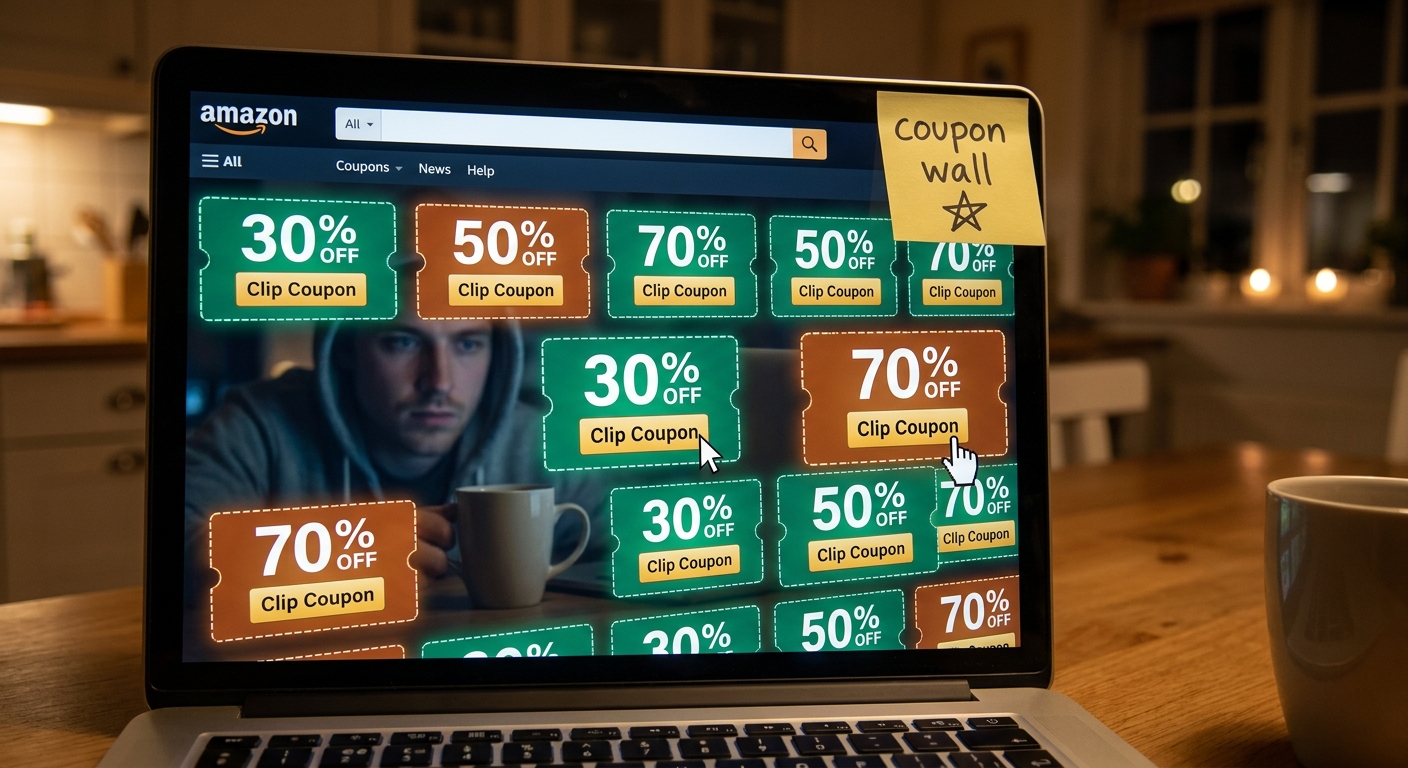
You are not imagining it. Finding real Amazon promo codes has gotten weirdly annoying. You search for a discount, land on a cluttered coupon site, copy a code that expired three weeks ago, and then watch checkout reject it like you made it up. Meanwhile, other shoppers are quietly getting 30%, 40%, even 70% off with coupons Amazon never puts front and center. The trick is that many of the best offers are not promo codes you type. They are clip-only discounts hiding on Amazon’s own coupons page, tucked under prices or buried in deal sections most people scroll right past. The good news is this is fixable with one simple habit. Bookmark the amazon hidden coupons page, sort smart, and verify the savings before you place the order. Once you do that, Amazon starts feeling less like a scavenger hunt and more like a store that finally shows you the real price.
⚡ In a Hurry? Key Takeaways
- The fastest way to find real Amazon clip-only discounts is to bookmark Amazon’s own Coupons page and check it before you shop.
- Filter for the biggest percentage-off deals, then confirm the coupon shows as clipped in cart or at checkout before you buy.
- Do not trust fake “was” prices. Compare the final after-coupon total, not the flashy badge.
The bookmark that changes the whole game
Here is the basic hack. Stop hunting random codes on search engines first. Start on Amazon’s own Coupons page instead.
The page is usually available through Amazon’s deals area, but it is often buried. That is why the bookmark matters. One click, and you skip the carousel maze.
Create a bookmark in your browser for Amazon’s Coupons page. Name it something obvious like “Amazon Hidden Coupons” so you actually use it. On most browsers, you can do this by opening the page and clicking the star icon in the address bar.
That one small step turns the amazon hidden coupons page into a daily tool instead of a lucky accident.
Why this works better than coupon sites
Most coupon sites are guessing. Amazon’s own coupon page is live inventory. If a coupon is there and you can clip it, you have a much better shot at getting the discount to stick at checkout.
It also saves time. No copying. No pasting. No “invalid code” message after three tries.
How to use the hidden coupons page like a pro
Once you are on the page, do not just scroll mindlessly. Use a repeatable system.
Step 1: Start with categories you actually buy
The easiest wins are usually everyday items. Think cleaning supplies, vitamins, razors, batteries, pet stuff, snacks, coffee pods, and phone accessories.
These categories often get aggressive clip-only offers during Prime Big Deal Days and all the copycat sales around them.
Step 2: Look for percentage-off first
A $3 coupon can be fine. But a 30% to 70% coupon is where the hidden value usually is. Percentage-off deals scale better, especially on essentials you were going to buy anyway.
If Amazon gives you sorting or filtering tools, use them. If not, scan for the larger percentages in the coupon badge text.
Step 3: Open the product page before you get excited
This is where people get fooled. A big green coupon label does not always mean a great deal. Open the item and check the base price.
If the item says “20% off with coupon” but the starting price is already inflated, the deal may not be special at all.
How to tell a real deal from a fake “was” price
Amazon pricing moves around constantly, and not every crossed-out price means much. Your job is simple. Ignore the drama. Focus on the final number you will actually pay.
Good signs
The coupon applies to an item sold at a normal-looking price. The brand is familiar. Reviews are reasonably established. The final total beats what you have seen recently at Amazon, Walmart, Target, or your local store.
Warning signs
The product has a giant claimed discount but a sketchy brand name, a thin review history, or a suspiciously high regular price. Those are classic signs that the “deal” may look bigger than it really is.
If you want to be extra careful, check the item’s recent pricing with a price tracker or simply compare it with the same type of product from better-known brands.
The sanity check that saves you from checkout regret
This part matters. Clipping a coupon is not enough. You need to confirm it actually fired.
What to look for before placing the order
Add the item to your cart. Then check for language like “Coupon Savings” in the order summary or under the item line. On some items, the discount appears only late in checkout. On others, it shows in the cart right away.
If you do not see the discount reflected somewhere clear, pause. Do not assume it will magically appear on the final screen.
And yes, this is where many shoppers miss savings. They clip, get distracted, and then place the order at the higher price.
Watch for limits and one-per-account rules
Some coupons work only once per account. Some require a minimum quantity. Others apply only to a specific color, size, or seller. Read the small print under the coupon text if anything looks off.
How to make this a 60-second daily habit
The real win is not finding one lucky deal. It is building a routine that keeps paying off.
Here is a simple version:
- Open your Amazon Hidden Coupons bookmark once a day.
- Check your usual categories first.
- Clip anything you know you buy regularly.
- Add needed items to cart, then confirm the discount appears.
- Buy only if the final total still looks good.
That is it. You do not need a spreadsheet or some extreme bargain-hunter setup. Just a quick check before regular shopping.
When clip-only coupons stack with other deals
This is where things get fun. Sometimes the coupon stacks with an on-page sale price, Subscribe & Save, or a limited-time lightning-style markdown.
Not always. But often enough that it is worth checking.
If you are already using smarter tools while shopping, you might also like The “Hidden AI Checkout Swarm” Hack: How One ChatGPT Prompt Hunts Live Amazon Promo Codes While You Shop. It pairs nicely with the coupons-page method because one helps you find clip-only discounts, while the other helps check for live promo code options during checkout.
Best stacking candidates
Household basics are common winners here. So are beauty items, supplements, office supplies, and accessories. During big sale events, Amazon often piles multiple incentives on the same item to boost conversion fast.
Common mistakes people make with the amazon hidden coupons page
They only check during big sale days
Prime Big Deal Days are busy, yes. But coupons appear all year. Sale weeks just make them more aggressive.
They clip and forget
If the discount is not visible by the final checkout screens, it may not be applying the way you think.
They chase percentage badges on junk products
A 60% discount on a bad product is still a bad buy. Stick to things you already need or brands you trust.
They ignore seller details
Check who is selling the item. A good coupon on a questionable third-party listing is not as reassuring as a discount on a product shipped by Amazon or a known brand storefront.
Best times to check for hidden Amazon coupons
If you want the short answer, check in the morning and around major sale windows.
Coupons can rotate quickly. Inventory can disappear fast. The best opportunities tend to show up:
- During Prime Big Deal Days
- Right before and during Black Friday build-up
- At the start of the month for household restocks
- Before common shopping weekends and holiday pushes
If you buy essentials on a schedule, try checking the coupons page the same day each week. It helps turn random savings into predictable savings.
At a Glance: Comparison
| Feature/Aspect | Details | Verdict |
|---|---|---|
| Amazon hidden coupons page | Live clip-only discounts hosted on Amazon, often hidden below price or inside deal sections | Best starting point for real savings |
| Third-party coupon sites | Often filled with expired, generic, or unverified promo codes | Useful only as a backup |
| Checkout verification | Confirms the coupon actually applied in cart or order summary before purchase | Absolutely worth doing every time |
Conclusion
If Amazon shopping has started to feel like a game where everyone else knows the cheat code, this is the part that levels things out. Prime Big Deal Days and all the similar sale events are packed with limited-time, clip-only coupons that most people never notice because the flags sit below the price or get buried inside those endless deal carousels. Big tech sites mention the coupon page, but they rarely show how to make it useful every day. That is the real trick. Bookmark the amazon hidden coupons page, check it before you shop, filter for the strongest percentage-off offers, ignore fake “was” pricing, and confirm the coupon fired before you tap Place Your Order. Do that consistently, and you are not just finding random bargains. You are building a simple routine that acts like your own private promo code generator at checkout, and that can quietly shave 20% to 40% off the stuff you were going to buy anyway.