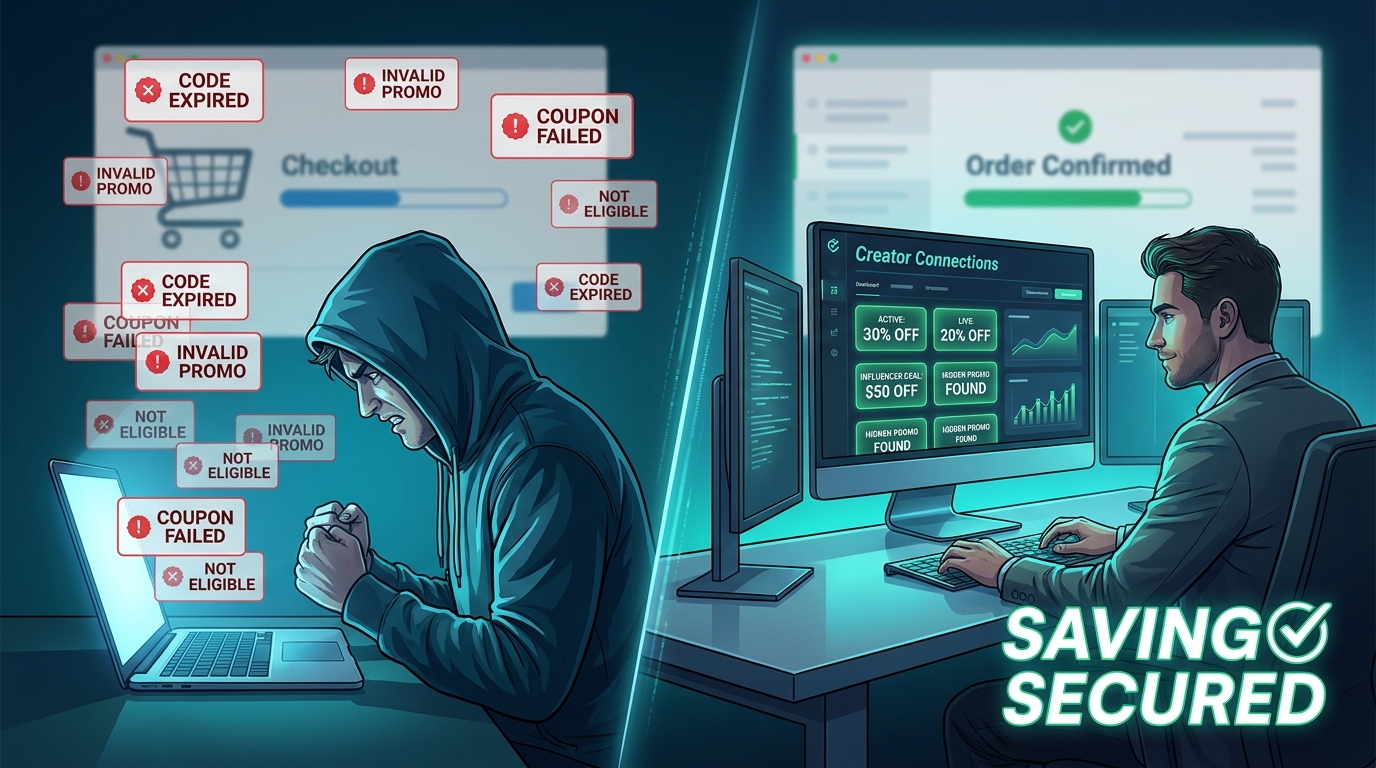
If you have been trying to find Amazon promo codes this week, you are not imagining it. The usual tricks are falling apart. The old Promo Codes page is gone, coupon sites are stuffed with expired junk, and even influencer storefronts look weirdly thin. That is why so many shoppers feel like Amazon deals have suddenly “disappeared.” They have not disappeared. They have moved. A lot of the better discounts are now getting pushed through Amazon’s Creator Connections system, where sellers set up campaign-based offers for creators instead of dumping everything onto one public promo page. The good news is that some of those offers still spill into public-facing links, videos, storefront posts, and creator landing pages. That is where the real hunt is now. If you understand that shift, you stop wasting time on dead code lists and start finding the same 30 to 70 percent checkout drops people keep bragging about on TikTok.
⚡ In a Hurry? Key Takeaways
- Amazon did not end promo codes completely. It shifted many of the best ones into Creator Connections and campaign-style creator offers.
- The smart move is to follow fresh creator posts, storefront idea lists, and product links instead of relying on the dead Promo Codes hub or random coupon farms.
- Stick to Amazon-hosted pages and checkout-visible discounts. If a code needs weird browser extensions, fake logins, or off-site payment steps, skip it.
What actually changed
Amazon quietly killed the old habit loop.
For years, shoppers could check a central promo code page, stack a coupon, maybe find a code on social media, and call it a day. Now that central page is either gone, trimmed down beyond usefulness, or no longer where the best deals show up first. Sellers and influencers have been pushed toward campaign offers inside Creator Connections instead.
That matters because Creator Connections is not built for normal shoppers. It is built for creators and brands. Sellers create offers there, creators pick campaigns, and then those promotions get shared through influencer content, custom links, product roundups, and storefront posts.
So when people talk about an amazon creator connections promo code hack, the “hack” is usually not some shady exploit. It is just understanding where the offers are surfacing now.
Why the old promo-code hunting method is failing
Most coupon sites do three things badly.
1. They recycle old codes
A code that worked for one ASIN, one seller, or one campaign window gets copied everywhere. A week later, it is still ranking in Google, but it is dead at checkout.
2. They miss product-level offers
Many newer Amazon discounts are tied to one exact item, variation, seller, or creator link. That means a code may work only on the beige version of a kitchen organizer sold by one merchant, not the whole brand catalog.
3. They do not track creator drops fast enough
Creator-led promos can appear and vanish quickly. By the time a generic coupon site picks one up, the campaign may already be capped, changed, or over.
What Creator Connections is doing behind the scenes
Think of Creator Connections like a matchmaking layer between Amazon sellers and content creators.
A seller says, “I want creators to push this blender, pet bed, or skin serum.” They may attach a commission incentive, a limited-time discount, or a coupon angle to help conversions. Creators then share those products in videos, social posts, storefront collections, or idea lists.
From a shopper’s point of view, the offer can show up in a few different ways:
- A visible code in a Reel, TikTok caption, YouTube description, or Amazon Live mention
- A clipped coupon on the Amazon product page that seems to have appeared “out of nowhere”
- A discounted price that only appears after clicking a creator’s product link
- A combination of on-page coupon plus checkout promo code
- A storefront collection where several products are temporarily tied to campaign discounts
That is why two people can look at “the same deal” and get different results. One clicked through the creator path. The other searched manually and landed on the plain listing without the campaign context.
The real “scrape” people are talking about
Let’s be clear. I am not suggesting breaking into anything, violating terms, or scraping private dashboards.
What people mean in practice is much simpler. They are watching where creator-only or creator-first offers spill into public view, then following those trails. In plain English, they are piggybacking on the public side of influencer campaigns.
That usually means:
- Checking creator storefronts instead of the old promo page
- Reading captions and comments on recent product videos
- Opening Amazon product links shared by creators, not just searching the item name yourself
- Comparing the product page before and after using a creator link
- Looking for “Apply coupon” checkboxes plus a separate checkout code
It is less glamorous than the word “hack” makes it sound. But it works better than the old method right now.
How shoppers can still find these discounts without an influencer account
You do not need to be an influencer. You just need a better map.
Start with recent content, not old search results
If a creator posted about a product three months ago, that deal is probably gone. Look for content from the last few days. Freshness matters more now than it used to.
Use the creator’s actual Amazon link
Do not just copy the product name into Amazon search. Click through the creator’s direct link first. Sometimes the discount path is attached to that route, or at least easier to spot once you land there.
Check both the product page and the cart
Some offers show on the listing page. Some only show after adding to cart. Some need a coupon box checked before the code will stack. Always test the full path to checkout before giving up.
Look for storefront roundups
Many creators gather active deals into themed pages like “home finds,” “travel must-haves,” or “Prime Day prep.” Those pages can be more useful than their standalone social posts because they often get updated faster.
Search social platforms by product type plus discount terms
Try practical phrases like “Amazon organizer code,” “Amazon beauty code today,” or “Amazon creator deal.” You are not looking for big polished coupon websites. You are looking for the messy, current posts where creators actually share what is live.
Signs a creator-linked Amazon code is likely real
Here is the quick smell test.
- The product page is on Amazon, not a lookalike site
- The code is tied to one specific item or seller
- The creator says when the deal ends or notes it is limited
- The listing also shows a coupon checkbox, sale badge, or seller promotion
- Comments from recent viewers say it worked at checkout
None of that guarantees success, but it is a much better sign than a generic “AMAZON70” code pasted on a random coupon directory.
Signs it is probably junk
- The code is described as “sitewide” on Amazon
- No product link is provided
- The post is old but still being recycled
- The discount sounds too broad, like “50 percent off everything in electronics”
- You are asked to install strange software, join a Telegram group, or pay for access
If it does not work directly through a normal Amazon checkout flow, walk away.
Why some deals still look “secret” even when they are public
Because public does not always mean easy to discover.
Amazon’s newer setup rewards distribution through creators, not through one central page every bargain hunter can scan in 30 seconds. Sellers like that because it gives them more control. Creators like it because it makes their links more valuable. Shoppers hate it at first because it feels messy.
But once you understand the system, the pattern is obvious. The discounts are often not hidden. They are just scattered.
The best way to use this without wasting an hour
Here is the practical routine I would use.
- Pick one category you actually want, like kitchen gadgets, skincare, pet gear, or phone accessories.
- Find 3 to 5 creators who post Amazon finds in that category regularly.
- Sort for their newest content first.
- Open the direct Amazon links they shared.
- Check the item page for clip coupons, then test the cart for extra code discounts.
- Compare two or three creators if the same product keeps appearing.
This narrows the chaos. Instead of hunting “Amazon promo codes” in general, you follow the fresh campaign trails where the discounts are actually landing.
Is this safe and allowed?
Following public creator links and using public promo codes is normal shopping behavior. That part is fine.
The line you do not want to cross is pretending to be a creator, trying to access private dashboards, or using scraped private data. None of that is needed anyway. The useful information is already leaking into public view through storefronts, social posts, and product links.
So the safe version of the amazon creator connections promo code hack is really just this: track public creator deal paths better than everyone else.
What this means for deal hunters going forward
The era of one clean Amazon promo-code page is basically over. At least as a reliable shopper tool.
From here on out, good Amazon discount hunting will be more like following live traffic than reading a printed map. More creator-first. More product-specific. More short-lived. More dependent on timing and exact links.
That sounds annoying, because it is. But it also means genuine deals still exist for people who adapt faster than the coupon spam sites do.
At a Glance: Comparison
| Feature/Aspect | Details | Verdict |
|---|---|---|
| Old Amazon Promo Codes page | Used to be the easy first stop, but it no longer surfaces many of the freshest campaign-based discounts. | Not reliable anymore |
| Generic coupon websites | Often packed with expired, copied, or overly broad codes that do not match the exact product or seller. | High frustration, low hit rate |
| Creator links and storefronts | Best place to spot fresh campaign offers, stacked coupons, and item-specific checkout drops tied to current promotions. | Best current strategy |
Conclusion
If Amazon promo codes feel harder to find this week, that is because the old system really did break. Amazon quietly deprecated the classic Promo Codes hub and pushed sellers and influencers toward Creator Connections campaigns, so the old “just check the promo code page” advice is dead. The upside is that the deals did not vanish. They moved into creator-driven paths that are messier, faster, and more item-specific. If you keep relying on stale coupon lists, you will keep hitting expired garbage. If you follow fresh creator links, storefronts, and checkout-tested product pages, you still have a real shot at those 30 to 70 percent discounts people keep whispering about online. That is the edge right now. Not a magic code. Just knowing where Amazon moved the treasure map.