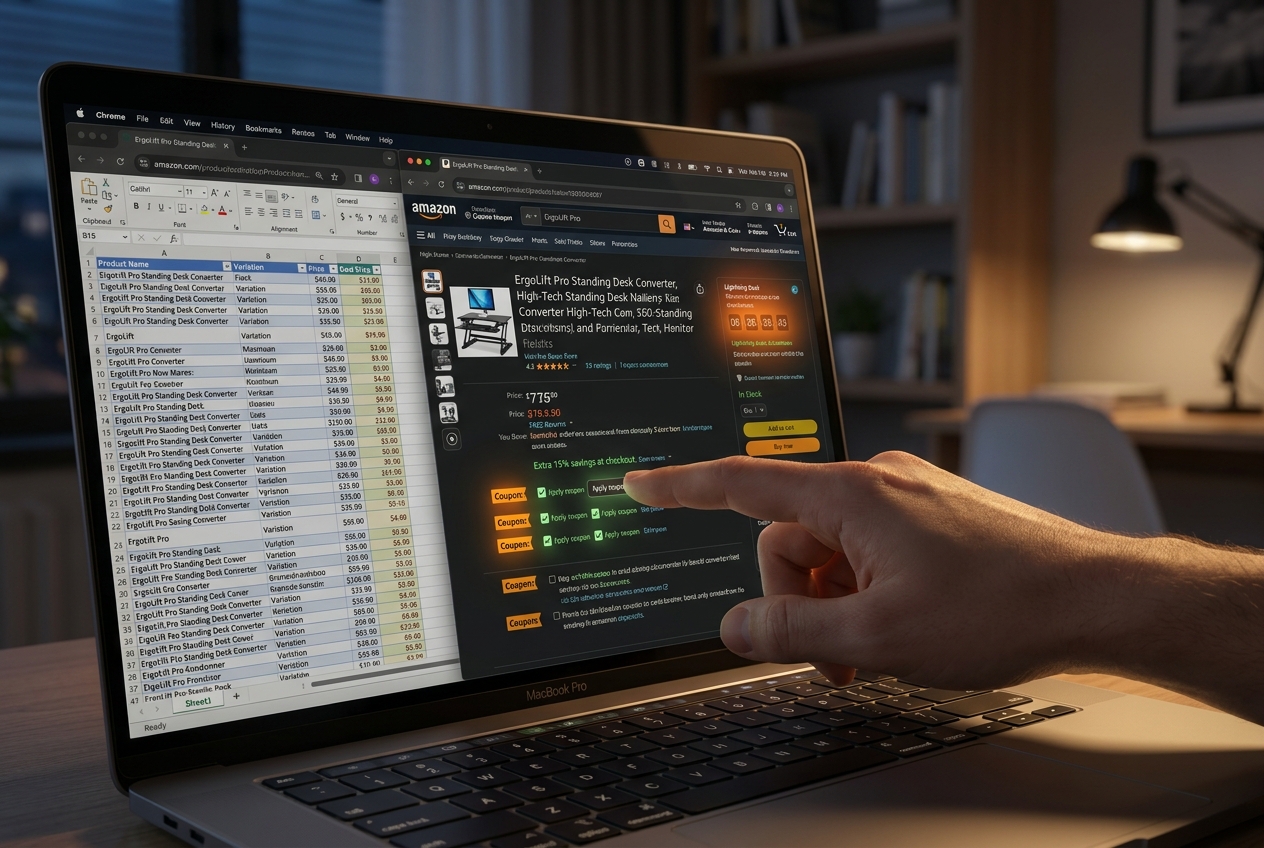
You know the feeling. You finally spot a decent Amazon deal, click fast, and then realize the best version of that deal disappeared an hour earlier. The coupon box is gone. The promo code people are talking about on Reddit is nowhere to be found. And now you are staring at a price that is just okay instead of great. That is the annoying part of today’s Amazon sale game. The best discounts often do not sit neatly on the main product page for long. They pop up as short Lightning Deals, extra coupon checkboxes, and hidden promo code stacks on similar listings from the same brand. The good news is this is not magic, and it is not just for deal hunters with six browser tabs open all day. If you learn how to read the signals around a Lightning Deal, you can often find a second layer of savings and get much closer to true promo-level pricing.
⚡ In a Hurry? Key Takeaways
- Yes, the amazon lightning deal promo code stacking hack is real, but it usually means pairing a public Lightning Deal with an on-page coupon, a related listing, or a short-lived promo code.
- Check brand storefronts, variant listings, and “other sellers” pages during the Lightning Deal window. That is often where the extra savings hide.
- Never buy just because a timer is running. Make sure the stacked price beats the recent normal price, not just the crossed-out one.
Why Lightning Deals matter more than most people think
Most shoppers see a Lightning Deal as a countdown clock. That is only half the story.
Right now, a Lightning Deal often acts like a flare in the sky. It tells you Amazon or the brand is pushing traffic to that product family. When that happens, extra discounts sometimes go live on nearby listings too. Same item, different color. Same brand, slightly different bundle. Same product, but sold under a close variation with a coupon attached.
That is where the real savings can show up.
Amazon has also been under more pressure to clean up fake list prices and lazy markdowns. So when you do see a deep drop today, it is more likely to be tied to a short, real promo window. That makes speed important, but it also means the discount may be worth the effort.
What the “code stack” usually looks like in real life
Despite the dramatic name, this is usually pretty simple. You are not hacking Amazon. You are just combining discounts that happen to overlap for a short time.
The most common stack
A real stack often looks like this:
- Lightning Deal price drops the item by 20 to 35 percent
- An on-page coupon adds another 5 to 20 percent off
- A promo code from the listing, brand page, or search results cuts a bit more
Sometimes the code is shown plainly on the page. Sometimes it appears as “Extra savings at checkout.” Sometimes it only works on one color or one pack size. That is why people miss it.
The quieter version that people overlook
The public Lightning Deal listing gets all the clicks. But the better value may be on a close variant.
Example. The blue water bottle gets the Lightning Deal. The black version does not. But the black version still has a 25 percent coupon and a hidden “Save 10% when you apply promo code” note. End result, the non-featured listing is cheaper.
This is the part many shoppers never test.
How to spot the signals that a hidden stack may be live
You do not need special software. You just need a quick routine.
1. Treat the Lightning Deal as the starting point, not the finish line
Open the deal page, then immediately check:
- Other colors or sizes
- The brand storefront
- Sponsored listings from the same brand
- The “Compare with similar items” section
If one product in a line is on a Lightning Deal, related items often get small side promos around the same time.
2. Look for the magic phrases
These are the wording clues that matter:
- “Extra savings”
- “Apply coupon”
- “Redeem”
- “Savings applied at checkout”
- “Limited time deal” paired with a coupon checkbox
If you see two of those together, it is worth testing the cart.
3. Check the cart, not just the product page
Amazon is not always great at showing the final price clearly on the listing page. Add the item to cart and watch what changes. Some discounts only appear in the cart or at the final checkout screen.
Do not assume the page tells the whole story.
4. Search the brand name plus “coupon” during the deal window
This sounds almost too basic, but it works. Search Amazon for the brand name plus the product type. Then scan nearby listings. Brands often spread promos unevenly across duplicate or near-duplicate pages.
The 10-minute method I would use
If you want a repeatable system, here it is.
- Open the Lightning Deal listing.
- Clip any visible coupon.
- Check all variants, especially colors and bundles.
- Open the brand storefront in a second tab.
- Search the product name on Amazon again and scan for duplicate listings.
- Add the top two or three candidates to cart.
- Compare final checkout prices, not headline discounts.
This entire process takes about 10 minutes once you get used to it.
And yes, it often finds prices that are 30 to 60 percent below the normal going rate on everyday items like chargers, kitchen gear, storage products, supplements, and small home gadgets.
Where promo codes usually hide
People often expect a promo code to be pasted in big letters near the buy button. Sometimes it is. Often it is not.
On-page code boxes
These are the easiest. Amazon may display a small promo field or a note saying a discount is applied at checkout.
Brand-funded coupon pages
Some brands push traffic to a coupon page or a store page with offers that do not show cleanly from the main listing.
Trial or targeted codes
These are hit or miss. During heavy sale periods, some shoppers test known types of brand promo codes or landing offers within the short window. Not every code will work, and many are targeted, but it is worth checking if you are already close to buying.
And if you want to stack even further, card-linked savings can sometimes add one more layer. That is where The ‘Bank Card Shuffle’ Hack: How Hidden Issuer Offers Turn Regular Amazon Orders Into Secret Promo-Size Discounts fits nicely. It covers a separate trick many shoppers miss, where the discount comes from your card issuer rather than the listing itself.
What not to do
This is where people get burned.
Do not trust the crossed-out list price
The only number that matters is the final out-the-door price compared with the item’s usual recent selling price.
Do not wait too long once the stack is confirmed
If you have verified the final price is genuinely good, move. These coupons and codes can vanish in hours, sometimes minutes.
Do not buy junk just because the stack looks dramatic
A 60 percent discount on something you do not need is still wasted money.
Best categories for this trick
This works best on items where sellers use aggressive short-term promotions to climb rankings or clear stock.
- Phone accessories
- Small kitchen tools
- Home organization items
- Personal care products
- Supplements and wellness gear
- Budget electronics and smart home accessories
Big-name products can do this too, but third-party brands tend to be more generous with stackable discounts.
When the deal window is most useful
The best time is usually right before or just ahead of major sale events.
That is when brands are trying to build momentum. You will often see a public deal used as bait, then a coupon or promo layered onto close variants to catch shoppers who keep digging.
That is also why this works better now. As Amazon gets stricter about fake markdown theater, brands need real short-window offers to stand out.
At a Glance: Comparison
| Feature/Aspect | Details | Verdict |
|---|---|---|
| Lightning Deal alone | Fast, visible, easy to spot, but often not the absolute lowest final price | Good starting point, not always the best endpoint |
| Lightning Deal plus coupon or code | Can cut another 5 to 25 percent if the listing or close variant carries extra savings | Best value when verified in cart |
| Waiting too long | Coupons disappear, codes stop working, and variant prices change quickly | Main reason people miss the deepest discount |
Conclusion
The big lesson here is simple. A Lightning Deal is often a clue, not the whole deal. Right now Amazon is ramping up short-window markdowns ahead of major sale events, and that means more real discounts are showing up as brief stacks of deal price, coupon, and promo code that vanish fast. Most shoppers still treat Lightning Deals like simple timers. If you start treating them like signals, then check related listings, extra-savings notes, and quick cart totals, you can turn ordinary browsing into regular 30 to 60 percent wins on useful items. That matters even more now because as fake markdowns get trimmed back, the deep cuts left standing are more likely to be genuine, time-boxed promos. You do not need insider access. You just need to know where to look, and to look while the window is still open.