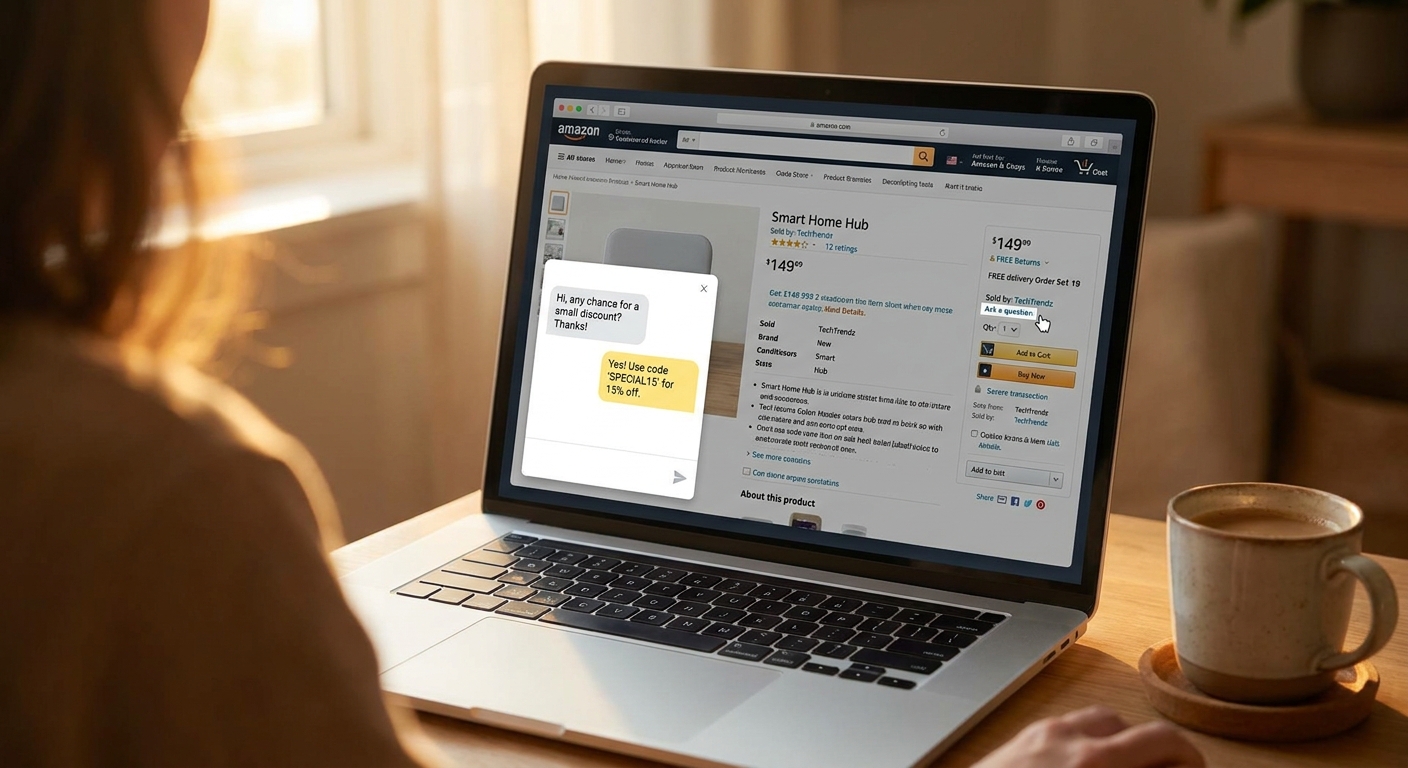
You are not imagining it. A lot of Amazon promo codes floating around Reddit, coupon sites, and “secret deal” lists are stale, limited, or never meant for your account in the first place. That is why you hit checkout, paste in the code, and get the digital equivalent of a shrug. Meanwhile, another shopper somehow gets 20 percent off an item that looks full price to everyone else. Frustrating, right?
Here is the part most deal roundups miss. Many smaller Amazon sellers quietly send one-off discounts through Amazon Messages when a buyer asks the right way. It is not magic, and it is not a scam by default. It is more like a backchannel sales tactic. Sellers want movement, reviews from verified buyers, and fewer abandoned carts. If you know how to contact them politely, and you know what to look for, this amazon secret promo code hack contact seller method can turn hidden seller DMs into real discounts that actually work at checkout.
⚡ In a Hurry? Key Takeaways
- This “hack” is usually just contacting an Amazon seller and asking whether they have a private promo code or buyer discount for that item.
- Your best shot is with smaller third-party brands, especially on products with no visible coupon but lots of competition.
- Stay inside Amazon messaging, never pay off-platform, and avoid any seller asking for reviews in exchange for a discount.
What the “Third-Party Message Match” trick actually is
The name sounds more dramatic than the reality. In plain English, this is what happens.
You find a product sold by a third-party seller on Amazon. There is no visible coupon box, no lightning deal, and no public promo listed on the page. Instead of hunting random code databases, you contact the seller through Amazon and ask if they have any current promotion for your account, or for first-time buyers, or for that specific item.
If the seller is trying to boost sales, clear stock, or compete with similar listings, they may reply with a private code, a percentage-off offer, or instructions to apply a discount at checkout. Sometimes the code is generic. Sometimes it is limited-use. Sometimes it is tied to a specific ASIN or buyer account.
That is why these discounts feel “secret.” They are often real, but they are not broadly advertised.
Why sellers do this in the first place
Small Amazon brands are under pressure all the time. They are fighting for attention against bigger names, sponsored listings, and constantly shifting prices. Public discounts can attract bargain hunters, but private discounts let a seller be more selective.
Here is what a seller gets out of it:
- A better chance of saving a sale that might otherwise disappear
- Control over how many discounts get used
- A way to move slower inventory without publicly slashing the price
- A direct line to a buyer who is already interested
In other words, they are not doing you a personal favor. They are trying to close the deal. That is fine. You just want the discount to be real and safe.
How to use the amazon secret promo code hack contact seller method
Step 1: Pick the right kind of product
This works best on items sold by third-party sellers, not items sold directly by Amazon. You usually have a better chance with:
- Small kitchen gadgets
- Phone accessories
- Home organizers
- Beauty tools
- Fitness add-ons
- Private-label brands with lots of competitors
If the listing already has a coupon checkbox, a big sale banner, or a lightning deal, the seller may have less reason to offer more. But if the product looks full price and the seller seems active, it is worth a try.
Step 2: Confirm it is a third-party seller
On the product page, look for the “Sold by” line. If it says a brand or storefront name rather than Amazon, you are in the right neighborhood.
If it says “Ships from Amazon” but “Sold by” a third party, that can still work. Fulfillment method matters less than who controls the listing and promotions.
Step 3: Contact the seller through Amazon
Use the seller profile or the “Ask a question” option. Keep the message short, polite, and specific. You are not writing a novel. You are opening a sales conversation.
Message template that actually sounds normal
You can send something like this:
“Hi, I’m interested in buying this item today. I don’t see any coupon on the listing, so I wanted to ask if you currently have any promo code or discount available for this product. Thanks.”
Or this:
“Hello, I’m comparing a few similar products and wanted to check whether you have any current buyer discount or promo for this item before I place the order.”
That is it. No games. No fake sob story. No weird coupon-hunter language.
Step 4: Wait for the reply and read it carefully
If the seller responds with a code, check three things:
- Where it should be entered
- Whether there is a minimum quantity or order value
- How long it is valid
Some sellers send a clean promo code. Others tell you the discount will appear at checkout. A few may say they can only offer a price break if you buy multiple units.
That can still be useful. Just make sure the savings are real before you click Buy Now.
How to tell a real seller discount from nonsense
This is where people get burned. A valid private discount should still follow Amazon’s normal order flow. You should not have to leave the platform, use a strange payment method, or message a phone number.
Green flags
- The seller replies through Amazon Messages
- The discount applies during normal checkout
- The offer is tied to the product you asked about
- The seller does not ask you to change how you pay
Red flags
- The seller asks you to email them directly
- The seller offers PayPal, gift cards, or off-Amazon payment
- The seller promises a rebate after you leave a review
- The seller asks for a five-star review in exchange for a discount
That last one matters a lot. Amazon does not allow compensated reviews in that form. If a seller is trying to trade discounts for ratings, walk away.
Why this works better than random coupon lists
Public coupon lists are a mess. Some are scraped from old posts. Some are copied from limited-use influencer campaigns. Some were valid for 100 buyers and died three weeks ago.
By contrast, contacting the seller gives you a live answer. It is current. It is tied to a real listing. And if the seller sends you a code, you know it came from the source rather than from a recycled “secret deals” page that has not been updated since spring.
That means fewer wasted checkouts and fewer “promotion code you entered is not valid” messages.
Best times to try it
You do not need a major sales event for this to work. In fact, it can work better outside the biggest shopping holidays because small brands are trying harder to get attention.
Good times to ask include:
- End of month, when sellers may want to hit sales targets
- Right after a competitor cuts pricing
- On newer listings that need sales momentum
- On items with lots of reviews in a crowded category
If you are watching a full-price product for a few days and it never drops, that is exactly the kind of item worth messaging about.
What kind of savings are realistic?
Think modest, not miraculous. Most legitimate private discounts are likely to be in the 5 to 20 percent range. Sometimes you might see more, especially on lower-cost accessories with big margins, but do not expect every message to unlock some hidden half-off deal.
The real win is not “I got a $200 item for $8.” The real win is getting a genuine extra discount on something that looked like it had no deal at all.
How to improve your odds without sounding pushy
Polite buyers get better results. Sellers can tell when they are dealing with someone serious versus someone firing off spammy “discount pls” messages to twenty brands.
Here is what helps:
- Mention the exact item
- Say you are ready to buy soon
- Ask once, clearly
- Do not demand a specific percentage
It is also smart to compare the final price with other retailers and similar Amazon listings. A “private” 10 percent off code is not special if the same item is cheaper elsewhere.
When this method will not work
Some categories are tightly priced. Some sellers simply do not respond. Some brands only run public promotions through Amazon’s built-in tools. And if the item is sold directly by Amazon, your odds drop fast.
Also, if a listing is already heavily discounted, the seller may not stack another offer. Amazon promo rules can be picky. Some discounts combine. Some do not.
So yes, this is useful. No, it is not a magic button.
A simple rule of thumb
If the product is from a smaller third-party seller, has no visible coupon, and you were already considering buying it, send the message. It takes two minutes. Worst case, the seller says no or never replies. Best case, you get a valid code other shoppers never see.
At a Glance: Comparison
| Feature/Aspect | Details | Verdict |
|---|---|---|
| Public promo-code lists | Often outdated, mass-copied, or limited to expired campaigns | Low reliability |
| Contacting the seller directly | Gets a current answer tied to the specific product and seller | Best for hidden discounts |
| Safety | Safe if everything stays inside Amazon and no review trade or off-site payment is involved | Use with caution, but useful |
Conclusion
The real trick here is not some mystical coupon vault. It is knowing that small Amazon sellers sometimes hand out private, make-the-sale discounts if you contact them the right way. That matters right now because most deal coverage stays glued to giant public sale events while ignoring the quieter backchannel where brands are trying to win buyers one message at a time. If you stop refreshing sketchy code lists and start asking sellers directly, you can uncover account-specific or listing-specific reductions on items that appear to be full price. That means fewer checkout dead ends, fewer fake-code headaches, and more real savings on products that otherwise would not seem to be on sale at all.