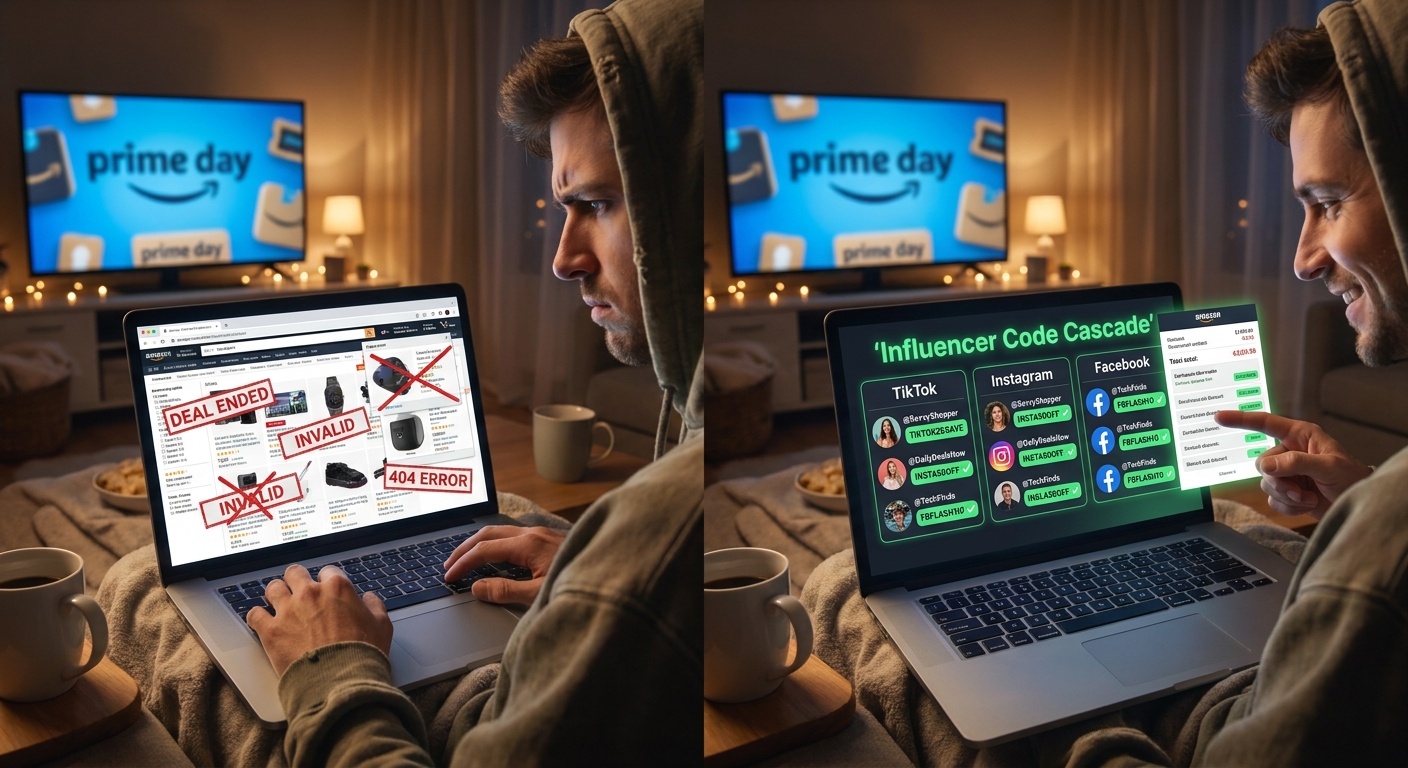
You are not imagining it. Amazon deal hunting feels weird right now. One person on TikTok shows a cart full of gadgets at 40 percent off, you click the same product, and all you get is the normal sale price. That gap is where the real trick sits. A lot of Amazon sellers are quietly handing out limited promo codes through influencers on TikTok, Instagram, and Facebook. The catch is simple. These discounts often do not show on the product page, they expire fast, and many only work when entered at checkout. That is why so many shoppers think the code was fake, when really they just found it too late or followed the wrong account. The good news is you do not need to become a full-time deal hunter. You need a better system. Once you know which creator accounts actually get fresh codes, and how to check for stackable savings before you pay, Amazon influencer promo code hacks start feeling a lot less mysterious.
⚡ In a Hurry? Key Takeaways
- Amazon sellers are testing hidden influencer-only promo codes that often stack with public sale prices and on-page coupons.
- Follow a small, focused list of deal creators in your favorite categories, then check captions, comments, and checkout before buying.
- Skip random coupon sites and never buy from off-platform links that look shady. Fresh, source-linked codes are usually the safest bet.
What the “Influencer Code Cascade” really means
This is not one magic coupon. It is a chain reaction.
A seller gives a code to a creator. The creator posts a reel, short, story, or caption. Early followers use it first. Then the best versions get reshared by other deal pages, often after the best redemptions are already gone. By the time the code hits a generic coupon site, it may still look alive but no longer work.
That is the cascade. The first wave gets the real deal. Everyone else sees the leftovers.
What makes this more confusing is that Amazon discounts can come from several places at once. You might have:
- A public sale price on the listing
- An on-page coupon you have to click manually
- A promo code entered at checkout
- A Prime-only discount
- A limited redemption creator code from social media
When those line up, the savings look huge. When one piece is missing, the product looks ordinary.
Why most shoppers miss the best codes
The biggest reason is timing. The second biggest is source.
1. They follow broad “deal dump” accounts
These pages post everything. Vacuum bags. Dash cams. Protein powder. Office chairs. Half the posts are already stale by the time you see them.
2. They do not check the caption or comments
Some influencers put the code in the video. Some hide it in the caption. Others pin it in the comments after the post goes live.
3. They never test the stack
A code may not change the product page at all. It may only show up during checkout. So people assume there is no discount and quit too early.
4. They trust coupon graveyards
This is where frustration really sets in. Old codes linger forever. If this sounds familiar, it is worth reading The “Hidden Social Stream” Hack: How Secret Creator Codes Turn Amazon Reels Into 70% Off Checkout Steals, which explains why social posts now beat old-school coupon pages almost every time.
How to spot influencer accounts that actually get fresh Amazon seller codes
You do not need to follow 100 creators. In fact, that makes things worse. You need a tight list.
Look for category consistency
The best accounts tend to stick to one lane. Home deals. Beauty tools. Kitchen gadgets. PC gear. Baby products. Pet supplies.
If an account posts in one or two product categories over and over, that usually means sellers in that space know them and send them recurring promo codes.
Check how they present the deal
Good signs include:
- Exact percentage off listed clearly
- Direct Amazon link
- Code shown in caption or comment
- Expiration warning or limited redemption note
- Screenshots showing checkout price
Bad signs include:
- “DM me for link” with no details
- A mystery redirect site before Amazon
- Old posts with no update when codes die
- Comments full of “doesn’t work” with no response
Watch posting speed after sales events
Right after Prime Big Deal Days, many sellers start testing follow-up promos quietly. That means creators who suddenly post more often after the big event may be getting fresh inventory-clearing codes.
Read the comment section like a detective
If people are saying “worked at 8:10 AM” or “gone now,” that is useful. It tells you the creator is posting real, time-sensitive codes, not filler.
Build your own small “discount engine” on social media
This is the part that saves money long term.
Step 1. Pick 3 product categories you buy most
Do not start with everything. Start with what you actually spend money on. Maybe it is cleaning supplies, earbuds, phone accessories, supplements, or kitchen tools.
Step 2. Follow 3 to 5 creators in each category
That gives you a list of about 9 to 15 useful accounts. Plenty. More than that and your feed gets noisy.
Step 3. Turn on notifications for the best two
You do not need alerts from everyone. Just the creators who consistently post codes that still work when you check.
Step 4. Save successful creators, unfollow weak ones
After a week, patterns show up fast. Some accounts post real deals. Others just recycle expired hype. Be ruthless.
Step 5. Use separate social folders or collections
On Instagram, TikTok, and Facebook, save the posts that worked. Soon you will know exactly where to check first when you need something.
The simple pre-checkout checklist that stops overpaying
This is where Amazon influencer promo code hacks either pay off or fall apart.
Before adding to cart
- Check if the item has a visible coupon box on the listing page
- Read the creator caption fully
- Check pinned comments for an updated code
- Confirm size, color, or model, since codes often apply only to one variation
At cart and checkout
- Apply the on-page coupon first if available
- Enter the creator promo code at checkout
- Verify whether the discount appears before placing the order
- Compare the final price to the one shown in the social post
After checkout review
- Take a screenshot if the deal was excellent
- Note which creator posted it
- Save the post in case the seller runs a similar promo again
If the price does not match, stop. Do not force the purchase just because the post looked exciting. The whole point is to avoid paying “close enough” prices when the real discount is gone.
How stacking usually works
Not every product stacks. Many do.
A common stack looks like this:
- Product listed at a public sale price
- 5 percent to 20 percent on-page Amazon coupon
- 10 percent to 30 percent influencer promo code at checkout
That is why a boring-looking listing can turn into a very good deal only at the last step. The trick is that the product page alone rarely tells the full story.
There is one important limit, though. Some sellers set codes to work only for the first chunk of buyers. Maybe 100 redemptions. Maybe 500. That is why speed matters more than bookmarking.
Where these hidden discounts show up most often
You can find them almost anywhere, but some categories seem to get more social-code testing than others.
- Small kitchen appliances
- Phone chargers, cables, and accessories
- Headphones and Bluetooth speakers
- Beauty devices and grooming tools
- Storage and home organization products
- Pet gear
- Office accessories
Big-name electronics can have hidden codes too, but third-party seller brands tend to use this strategy more often because they are trying to gain rank and reviews during slow periods after major sale events.
Red flags that mean “skip this one”
Not every so-called deal is worth your time.
Watch for these warning signs
- The influencer never shows the final checkout price
- The link goes somewhere other than Amazon first
- The code only works if you buy a strange bundle you do not need
- The “discount” is based on an inflated list price
- The seller has weak reviews or a brand-new store page
A 40 percent discount on junk is still junk. A smaller discount on something you already planned to buy is usually the smarter win.
A practical example of the system in action
Let’s say you need a new power bank.
You follow four creators who post mobile accessory deals. One of them posts a reel at 9:00 AM. The listing shows a normal sale price. Nothing special. But the caption includes a 20 percent code, and the product page also has a 10 percent coupon box.
You click the coupon. Add the item to cart. Enter the code at checkout. Now the final price drops well below the public deal that everyone else is seeing.
That is the whole point. You are not finding a secret website. You are seeing the last-mile discount before it gets copied, diluted, or used up.
Why this matters more right now
Prime Big Deal Days just ended, but the deal season did not. In many ways, this is when things get more interesting.
After a big event, sellers often test smaller, lower-profile campaigns. They want to move extra stock, rank products, and keep momentum without slashing the public listing for everyone. Influencer codes are perfect for that. Quiet. Trackable. Limited. Easy to switch off.
That is why shoppers who only browse Amazon’s main deals page often miss some of the best follow-up discounts.
At a Glance: Comparison
| Feature/Aspect | Details | Verdict |
|---|---|---|
| Public Amazon deal page | Easy to browse, but often shows only the base sale price and misses hidden checkout codes. | Good starting point, not the full story. |
| Generic coupon sites | Convenient, but many Amazon codes are expired, copied late, or missing key product details. | Use with caution. |
| Focused influencer follow list | Fresh codes, better timing, and more chances to stack sale price, coupon, and promo code together. | Best option for active deal shoppers. |
Conclusion
The smart move is not chasing every leaked code on the internet. It is building a small, reliable system you can repeat. Right now, after Prime Big Deal Days, Amazon sellers are clearly experimenting with hidden influencer codes, limited redemption promos, and quiet follow-up discounts that never make the main deals page. If you learn which creators actually get fresh codes, keep a tight follow list, and run a quick pre-checkout routine every time, you can stop missing the extra savings that other shoppers keep bragging about. This helps because it turns social media from random noise into a daily discount tool you can actually use. For household basics, small gadgets, and even bigger electronics, that simple habit can mean the difference between paying the sale price and paying the real deal price.